
Distinct groups of people within a society who share certain characteristics such as age, gender, geographic location, socioeconomic status, cultural background, or exposure to particular risk factors that may influence patterns of substance use, vulnerability to substance use disorders, and access to services. In the context of substance use systems, identifying and understanding different populations helps guide the design of prevention, treatment, recovery, and policy responses that are appropriate, equitable, and responsive to specific needs. Examples may include youth, women, people experiencing homelessness, individuals in the criminal justice system, or communities affected by specific social or economic conditions.

Populations
Predictors of Burden and Resilience in Family Caregivers of Individuals With Opioid Use Disorder.
Background Family caregivers are an essential resource for individuals with opioid use disorder (OUD). Overburdened caregivers often experience detrimental effects to their emotional and physical well-being. Method A cross-sectional...
Alcohol and substance use prevention in Africa
Substance use continues to be a key public health concern in Africa. Despite this, there have been few reviews that have examined the current research on the subject. This study examines the existing research on the prevention of alcohol...
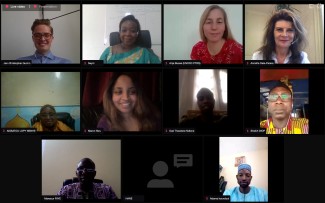
UNODC supports a Quality Assurance Training for Drug Use Disorder Treatment Services in Senegal
The UNODC Regional Office for West and Central Africa (ROSEN) and the Prevention, Treatment and Rehabilitation Section in Vienna (PTRS), organized from June 14th to June 18th, an online Quality Assurance training, benefitting 16 drug...
Mental Health of Youth and Substance Use: Self-harm and Suicide in Young
ISSUP Ukraine are pleased to present the First Webinar in their Three-Part Series on 'Mental Health of Youth and Substance'. The First Webinar will centre specifically on Self-Harm and Suicide in Young.
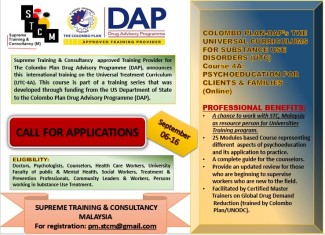
Online Training on UTC 4A
Psychoeducation for Clients & Families. Organized by Supreme Training & Consultancy Malaysia. For registration, please email pm [dot] stcm [at] gmail [dot] com
President Biden issues proclamation for overdose awareness week
President Biden issued the first ever Presidential Proclamation recognizing August 29, 2021 – September 4, 2021 as Overdose Awareness Week – a time to honor the lives lost to the overdose epidemic and recommit to both preventing overdoses...
Monitoring and evaluation for community based prevention systems
Monitoring and evaluation (M&E) are essential in strengthening Community-Based Prevention Implementation Systems, through this process organizations collect and analyze data, and determine if the Substance use prevention- intervention (EBIs...
WHO-UNODC “Stop Overdose Safely (S-O-S)” initiative
Overdose is the leading cause of avoidable death among people who inject drugs. The ‘Stop Overdose Safely’ is a joint initiative from UNODC and the World Health Organization (WHO) to address opioid overdose and provide life-saving...
Community-based prevention implementation system in Uganda
Uganda is one of the countries in East Africa with an outdated policy on substance use and abuse. The World Health Organization highlights Uganda as a country with hazardous drinking patterns due to the high prevalence of alcohol...
Factors influencing engagement and utilization of opium tincture-assisted treatment for opioid use disorder: A qualitative study in Tehran, Iran
Abstract Introduction In response to a high burden of opioid use disorder (OUD), Iran established a network of opioid agonist treatment (OAT) centers beginning in 2002. To increase treatment diversity, particularly for patients who use...