
Distinct groups of people within a society who share certain characteristics such as age, gender, geographic location, socioeconomic status, cultural background, or exposure to particular risk factors that may influence patterns of substance use, vulnerability to substance use disorders, and access to services. In the context of substance use systems, identifying and understanding different populations helps guide the design of prevention, treatment, recovery, and policy responses that are appropriate, equitable, and responsive to specific needs. Examples may include youth, women, people experiencing homelessness, individuals in the criminal justice system, or communities affected by specific social or economic conditions.

Populations
Guiding Principles of Recovery
ISSUP Global, in collaboration with Faces & Voices of Recovery, presents its webinar titled Guiding Principles of Recovery.
MI in Action: Turning Conversations into Change Pt. 2
What does it really mean to “step back” in a helping conversation? And how can practitioners cultivate genuine curiosity and empathy while still focusing on change? In this second episode of our four-part ISSUP Exchange series, Dr. Goodman...
The Spark Behind MI: Stephen Rollnick on the Origins of Motivational Interviewing Pt. 1
If you've ever wondered how Motivational Interviewing (MI) came to be and why it remains essential across so many fields today, join Dr Goodman Sibeko in a compelling four-part conversation with Professor Stephen Rollnick, clinical...
From Policy to Possibility: Rethinking Municipal Impact Through Intersectionality and Prevention
This blog post explores how Sweden’s municipal policymaking often falls short of its stated commitments to equality and evidence-based governance—particularly when it comes to addressing intersecting identities and structural inequalities...
Improving reach and access to health promotion and preventive services for vulnerable children and adolescents
Across Europe, one in four children faces poverty or social exclusion, with vulnerable groups—such as migrants, refugees, and children from disadvantaged families—bearing the greatest burden. These disparities were worsened by the COVID-19...
Key findings from the 2024 European School Survey Project on Alcohol and Other Drugs (ESPAD)
This publication presents key findings from the 8th round of the European School Survey Project on Alcohol and Other Drugs (ESPAD), conducted in 2024 among 113,882 students aged 15–16 across 37 European countries. Marking 30 years of...
Psychologists are innovating to tackle substance use by building new alliances in treatment efforts
Recent data from the U.S. highlights a concerning rise in substance use and related harms. In 2022, over 109,000 drug overdose deaths were recorded—a 54% increase since 2019. The majority involved illicit fentanyl, often mixed with...
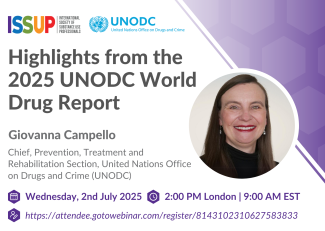
Highlights from the 2025 UNODC World Drug Report
ISSUP in collaboration with UNODC present a webinar highlighting key findings from the 2025 edition of the UNODC World Drug Report. The session is presented by Giovanna Campello, Chief of the Prevention, Treatment and Rehabilitation Section at the United Nations Office on Drugs and Crime (UNODC).
Highlights from the 2025 UNODC World Drug Report
Attendance
online
Join our upcoming webinar highlighting key findings from the 2025 edition of the UNODC World Drug Report. The session will be presented by Giovanna Campello, Chief of the Prevention, Treatment and Rehabilitation Section at the United Nations Office on Drugs and Crime (UNODC).
Smoking and bladder cancer: insights into pathogenesis and public health implications from a bibliometric analysis (1999–2023)
Background Cigarette smoking is a major risk factor for bladder cancer. Harmful substances in tobacco smoke can damage cells and lead to cancer. Understanding this link is important for better prevention and treatment. Objective This study...