
Distinct groups of people within a society who share certain characteristics such as age, gender, geographic location, socioeconomic status, cultural background, or exposure to particular risk factors that may influence patterns of substance use, vulnerability to substance use disorders, and access to services. In the context of substance use systems, identifying and understanding different populations helps guide the design of prevention, treatment, recovery, and policy responses that are appropriate, equitable, and responsive to specific needs. Examples may include youth, women, people experiencing homelessness, individuals in the criminal justice system, or communities affected by specific social or economic conditions.
Populations
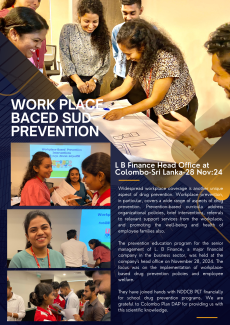
L B Finance Head Office at Colombo-Sri Lanka-28 Nov:24
Widespread workplace coverage is another unique aspect of drug prevention. Workplace prevention, in particular, covers a wide range of aspects of drug prevention. Prevention-based curricula address organizational policies, brief...
Joint Meeting on Youth Prevention, Treatment, and Recovery
Attendance
person
Rebuilding the clinical and public health infrastructure for our nation’s youth
The assessment of drug use experiences among Junior Secondary School students: a pre-evaluation for Keepin’it REAL pilot intervention in Lagos State
Background: The study aimed to assess junior students’ experiences with drug use to identify theneeds for the implementation of the keepin’it REAL intervention, an efficaciousschool-based program that aims to reduce drug and substance use...
Risk Factors for Substance Use among University Students in Ukraine during Wartime
INTRODUCTION: The impact of ongoing conflict in the country on substance use among youth remains unclear. This study aims to identify the risk factors for substance use among university students and their association with mental health...
Resilience and Depressivity among Czech Adolescents in Relation to Internet Gaming Disorder: Representative Sample
INTRODUCTION: Existing research highlights current issues in youth mental health that are often related to the overuse of modern technology, the experience of depression, or reduced resilience to mental stress. The main aim of this study is...
Feasibility Study of Linking Anonymous Data of Children in Longitudinal School-Based Prevention Research
INTRODUCTION: Longitudinal prevention research in adolescents often involves sensitive data collection, necessitating anonymity. Self-Generated Identification Codes (SGICs) have emerged as a tool for linking anonymous data while preserving...
Technoference in Parents of Primary School-Aged Children and its Associations with Parental Problematic Screen Use and Sociodemographic Characteristics
INTRODUCTION: Parental technoference (PTF) refers to the behaviour of a parent who looks at the screen of their smartphone (or other electronic device) instead of their child’s face during parent-child interaction. The parent’s inattention...
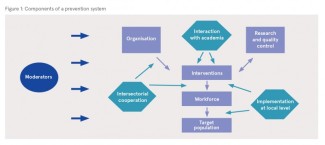
A rationale for an orientation towards systems of prevention
Prevention aligned with science and standards advocates for a person-focused rather than a drug-focused perspective when articulating responses and services. Such a perspective follows a narrative that early initiation to substance use is...
Prevention Systems: An ISSUP Scientific Council Discussion
The ISSUP Scientific Council presents its inaugural webinar, "Prevention Systems: An ISSUP Scientific Council Discussion."
A Reflection on Prevention Systems: A European perspective
Prevention science over the past years has accumulated evidence on the effectiveness of drug prevention interventions (Sloboda et al. 2014). In Europe this improvement has been a consequence of priorities defined by EU drug strategies since...