
The activities of authorised agencies such as police, customs, border services, and investigative bodies to enforce drug control laws and address criminal activities related to the production, trafficking, and distribution of illicit substances. These activities may include investigations, intelligence gathering, interdiction, and collaboration with national and international partners to disrupt organised crime networks. Law enforcement plays an important role in protecting public safety and maintaining the rule of law, and is most effective when coordinated with broader public health, prevention, treatment, and recovery efforts as part of a balanced and comprehensive response to substance use.
Law Enforcement
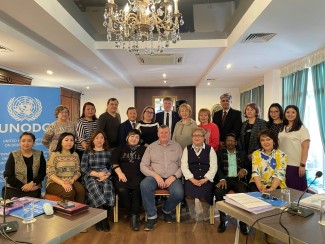
UNODC Training for Albanian Policymakers on the Nature, Prevention, Treatment and Care of Drug Use Disorders
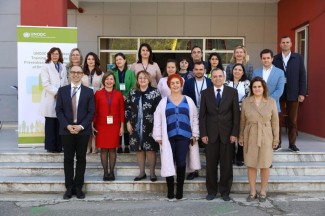
UNODC organized a training for 19 Albanian policymakers on the Nature, Prevention, and Treatment of Drug Use Disorders from 12-14 April 2022 in Tirana, Albania. Participants from the Ministries of Health and Social Protection, Education...
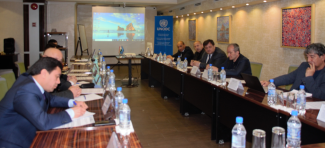
Introduction of new methods and tools for drug use disorders diagnostics and treatment discussed in Tajikistan
On 8 April 2022 UNODC conducted a national round table meeting on the introduction of new methods and tools for drug use disorders diagnostics and treatment in Dushanbe, Tajikistan. The event brought together some 20 experts from the...
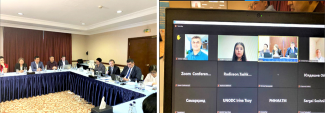
National Round Table Discussion on application of new methods and tools of drug use disorders diagnostics and treatment in Uzbekistan
On 25 March 2022 the UNODC Regional Office for Central Asia held a National Round Table Discussion on application of new methods and tools of drug use disorders’ diagnostics and treatment in Tashkent, Uzbekistan. The meeting was attended by...
New European mini guides on responding to drug use in specific settings by EMCDDA
Focusing treatments on specific settings where problems may develop is an important approach to implementing health and social responses to drug problems. As a result, the EMCDDA's Health and social solutions to drug problems: a European...
UNODC Trains Team of National Trainers from Central Asia within the Advanced Level of the Universal Treatment Curriculum for Substance Use Disorders
The UNODC Regional Office for Central Asia supported a training of trainers (ToT) on Course 13 – “Contingency Management: A Reinforcement Based Treatment” and “Course 18 – “Clinical Supervision” which took place in person in Bishkek...
ISSUP The Gambia Launch
ISSUP The Gambia would are pleased to present their launch event followed by a webinar on Community Resilience in Substance Use.
Join us at the COMMISSION ON NARCOTIC DRUGS this week!
Dear friends and colleagues, The Commission on Narcotic Drugs is starting very soon! In fact, tomorrow, Monday, 14 March 2022. Once again, all sessions, as well as the side events, are to be held online due to the pandemic. The good thing...
Sex Trafficking and Substance Use Identifying High-Priority Needs Within the Criminal Justice System
Substance use disorder (SUD) is common among victims of sex trafficking. Traffickers may exploit individuals' existing opioid use or other SUDs to coerce them into sex trafficking, or they may facilitate substance use to keep trafficking...
Law Enforcement in Prevention Programming
An APSI Prevention Talk on how to appropriately engage law enforcement in the implementation of evidence-based prevention strategies, with specific reference to the prevention of substance use.
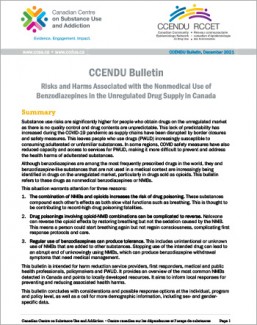
Risks and Harms Associated with the Nonmedical Use of Benzodiazepines in the Unregulated Drug Supply in Canada
Summary Substance use risks are significantly higher for people who obtain drugs on the unregulated market as there is no quality control and drug contents are unpredictable. This lack of predictability has increased during the COVID-19...