
The activities of authorised agencies such as police, customs, border services, and investigative bodies to enforce drug control laws and address criminal activities related to the production, trafficking, and distribution of illicit substances. These activities may include investigations, intelligence gathering, interdiction, and collaboration with national and international partners to disrupt organised crime networks. Law enforcement plays an important role in protecting public safety and maintaining the rule of law, and is most effective when coordinated with broader public health, prevention, treatment, and recovery efforts as part of a balanced and comprehensive response to substance use.
Law Enforcement
The complexity and challenge of ‘dual diagnosis’
This Drug and Alcohol Finding publication addresses a hot topic which generates heated debate- dual diagnosis. Whether to focus on mental health problems or substance use problems when the patient exhibits both is a long-standing conundrum...
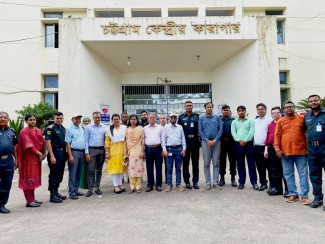
Training of trainers (TOT) on mental health for prison staffs
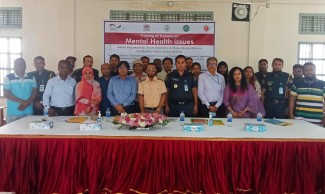
Dhaka Ahsania Mission (DAM) and Bangladesh Prison Directorate jointly organized a four-day long ToT on mental health for prison officials from 22-25 August 2022, in the meeting room of Dhaka Central Jail. A total of 21 participants...
Road traffic injury risk from alcohol and cannabis use among emergency department patients in Argentina
ABSTRACT Objective. To report the risk from alcohol, cannabis, and their combined use for non-fatal road traffic injuries for drivers, passengers, and pedestrians. Methods. Risk was estimated using the case-crossover method. Participants (N...
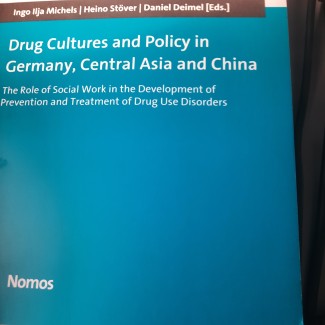
Drug Cultures and Policy in Germany, Central Asia and China
This volume emerged from the 25th International Week at Frankfurt University of Applied Sciences. The contributions it contains are based on papers that examine social work in the areas of drug use and treatment, HIV/AIDS and other...
Training of Trainer (TOT) on Drug Treatment and Management for prison officers
As part of Dhaka Ahsania Mission (DAM) capacity building initiatives with prison staff for the better management of drug dependent prisoners, a four-day long Training of Trainers (ToT) on Drug Treatment and Management Training for prison staff was held on 25 July 2022.
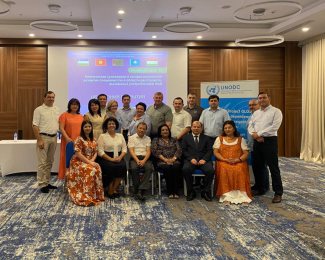
UNODC conducted Regional Training of Trainers on UTC 13 in Central Asia
The UNODC Regional Office for Central Asia held a Regional Training of Trainers (ToT) on Course 13 – “ Contingency Management: A Reinforcement Based Treatment” which took place in person in Almaty, Kazakhstan on 27-29 July 2022. This course...
UNODC supports introduction of Advanced Level of the Universal Treatment Curriculum for Substance Use Disorders in Central Asia
The UNODC Regional Office for Central Asia (UNODC ROCA) organized a Regional Training of Trainers (ToT) on Course 18 – “Clinical Supervision” of the Advanced Level of the Universal Treatment Curriculum for Substance Use Disorders (UTC...
The prevalence of comorbid serious mental illnesses and substance use disorders in prison populations: a systematic review and meta-analysis
Comorbid mental illnesses and substance use disorders are associated with adverse criminal, social, and health outcomes. Yet, their burden is not reliably known among prison populations. We therefore aimed to estimate the prevalence of comorbid serious mental illnesses and substance use disorders (dual disorders) among people in prison worldwide.
Jamaica to update national drug policy
National Security Minister, Dr Horace Chang, says the Government is taking the necessary steps to implement an updated National Policy and Plan of Action for Drug Control
Training on UTC 01 - Sri Lanka
At the start of may 2022 the Preventive Education and Training Unit of the National Dangerous Drugs Control Board has conducted training on Universal Treatment Curriculum, Course 01 (UTC - 01) for 32 staff members in NDDCB. The training...