
Distinct groups of people within a society who share certain characteristics such as age, gender, geographic location, socioeconomic status, cultural background, or exposure to particular risk factors that may influence patterns of substance use, vulnerability to substance use disorders, and access to services. In the context of substance use systems, identifying and understanding different populations helps guide the design of prevention, treatment, recovery, and policy responses that are appropriate, equitable, and responsive to specific needs. Examples may include youth, women, people experiencing homelessness, individuals in the criminal justice system, or communities affected by specific social or economic conditions.

Populations
Health & Wellness in Recovery: Programs & Topics
The American Addictions Centers provide insights into how a healthy diet and exercise can enhance overall health and recovery. This resource offers an overview of the root of addiction and how to overcome it through healthy life habits...
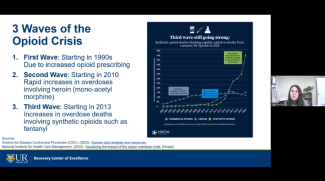
Synthetic Opioids: Navigating a Changing Landscape in the Treatment of Opioid Use Disorder
This 35-minute module focuses on how primary care providers can navigate the changing landscape of opioid use disorder in relation to synthetic opioids.
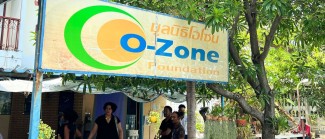
Thailand: Moving from punishment to treatment of people who use drugs
People who use drugs in Thailand are receiving more help to reduce the harm caused by their habit thanks to a change in formerly punitive drug laws and support from the UN Office on Drugs and Crime.
Supporting people who use methamphetamine through SMART Recovery Mutual-help Groups
This Cracks in the Ice webinar was held on Wednesday 6th of September and provided attendees with information about • Mutual-help groups like SMART Recovery • Recent research findings that highlight the potential of SMART Recovery for...
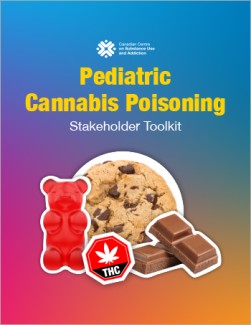
Pediatric Cannabis Poisoning Stakeholder Toolkit Cannabis
Recent research has revealed an increase in child hospitalisations resulting from accidental cannabis poisoning in various regions of Canada. Toddlers find cannabis edibles enticing due to their resemblance to common treats like candies...
Gender differences in physical morbidity in opioid agonist treatment patients: population-based cohort studies from the Czech Republic and Norway
Background: Physical health problems are common in people receiving opioid agonist treatment (OAT). A study was conducted on these health issues in OAT patients in the Czech Republic and Norway from 2010 to 2019, with a focus on gender...
Regional, circuit and network heterogeneity of brain abnormalities in psychiatric disorders
Abstract The substantial individual heterogeneity that characterizes people with mental illness is often ignored by classical case–control research, which relies on group mean comparisons. Here we present a comprehensive, multiscale...
Contemporary Drug Problems Conference
Building on CDP’s previous conferences, which have opened up questions of how drugs are problematised; how the complexity of drug use can be attended to; how drug use might be understood as an event, assemblage or phenomenon; how drugs and their effects are constituted in various forms of practice and interactions/intra-actions, and how we might rethink change.
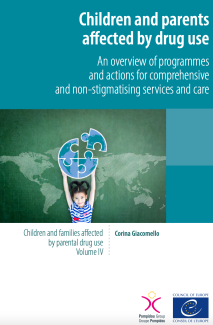
Children and parents affected by drug use: An overview of programmes and actions for comprehensive and non-stigmatising services and care
After exploring the views of women and children, respectively, in Volumes II and III of this series, the fourth volume offers a perspective of how to develop more comprehensive, child-centred approaches in drug policies in general and in...
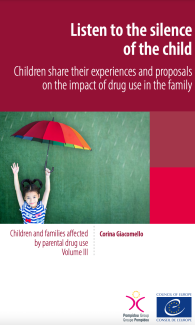
Listen to the silence of the child: Children share their experiences and proposals on the impact of drug use in the family
Following an initial publication in 2022 on children whose parents use drugs, the Pompidou Group has continued research on this topic by giving 110 women who use drugs, in 11 different countries, the opportunity to provide their testimonies...