
Distinct groups of people within a society who share certain characteristics such as age, gender, geographic location, socioeconomic status, cultural background, or exposure to particular risk factors that may influence patterns of substance use, vulnerability to substance use disorders, and access to services. In the context of substance use systems, identifying and understanding different populations helps guide the design of prevention, treatment, recovery, and policy responses that are appropriate, equitable, and responsive to specific needs. Examples may include youth, women, people experiencing homelessness, individuals in the criminal justice system, or communities affected by specific social or economic conditions.
Populations
The Punjabi Problem: Drug Use in One of India’s Wealthiest Regions
According to the BBC, a recent government-conducted investigation suggests that more than 860,000 young men (15 – 35) in the Punjab region of India take drugs. This is three times the national average. Heroin is used by 53% of all addicts...
Reducing Risk: Assessing the Effectiveness of Computer-Based Interventions
A new study reveals that computer-based intervention programmes could reduce the risk of substance use among early adolescents living in an urban setting.
Guidelines for the Identification and Management of Substance Use and Substance Use Disorders in Pregnancy
These guidelines contain recommendations on the identification and management of substance use and substance use disorders for health care services which assist women who are pregnant, or have recently had a child, and who use alcohol or...
Whole Family Recovery
This document provides an overview of themes that emerged from the Adfam’s Whole Family Recovery and Alcohol Focus Groups and interviews. This research was conducted to scope the impacts of the recovery of someone with an alcohol problem on...
Adfam’s Manifesto for Families: 5 Key Challenges for Supporting Families Affected by Drug and Alcohol Use
“You don’t have to use drugs to be affected by them.” In 2010 Adfam identified five key challenges for families that the Government should address, identified by stakeholders across England. They were: Supporting families in their own right...
Working with Grandparents Raising Their Grandchildren Due to Parental Substance Use
This guide offers advice and suggestions to support service providers to deliver effective services to grandparents who are carers for their grandchildren due to parental substance misuse. It draws heavily on the work of Adfam’s Grandparent...
Supporting Families Affected by Substance Use and Domestic Violence
This research report analyses how domestic violence and abuse is more likely than not to occur within intimate partner relationships where one partner has a problem with alcohol or drugs. The aims of this research project were: To explore...
Validity and Reliability of the Alcohol, Smoking, and Substance Involvement Screening Test (ASSIST) in University Students
The Alcohol, Smoking and Substance Involvement Screening Test (ASSIST), developed by the World Health Organization (WHO), has been used successfully in many countries, but there are few studies of its validity and reliability for the...
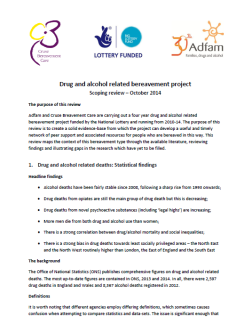
Drug and Alcohol Related Bereavement - Scoping Review
Adfam and Cruse Bereavement Care carried out a four year drug and alcohol related bereavement project funded by the Big Lottery and running from 2010-14. The purpose of this review is to create a solid evidence-base from which the project...
Consultation Findings for the BEAD Project
Adfam and Cruse Bereavement Care undertook an exploration of the experiences of families and friends bereaved through drug and/ or alcohol use, with the aim of developing a range of peer support services and targeted information...