
Distinct groups of people within a society who share certain characteristics such as age, gender, geographic location, socioeconomic status, cultural background, or exposure to particular risk factors that may influence patterns of substance use, vulnerability to substance use disorders, and access to services. In the context of substance use systems, identifying and understanding different populations helps guide the design of prevention, treatment, recovery, and policy responses that are appropriate, equitable, and responsive to specific needs. Examples may include youth, women, people experiencing homelessness, individuals in the criminal justice system, or communities affected by specific social or economic conditions.
Populations
Between a Rock and a Hard Place: How Parents Deal with Children Who Use Substances and Perpetrate Abuse
This report has been written by Adfam and Against Violence and Abuse (AVA) and covers the processes and findings of a joint project carried out by the two organisations in 2011/12 on child to parent violence and abuse. It reveals that every...
Real Voices in Volunteering
Adfam published this volunteering toolkit to provide all the information, policy, law and resources needed on volunteering, families and substance use. Volunteers have always played an essential role in the family support and substance use...
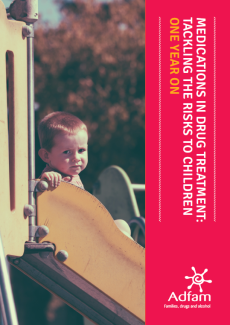
Medications in Drug Treatment: Tackling the Risks to Children – One Year on
This ‘One Year On’ report expands upon the findings and recommendations of Adfam’s Medications in Drug Treatment: Tackling the risks to children, published in 2014, and further contributes to the debate on reducing the risks to children...
Families, Drugs and Alcohol - Policy and Research since 1984
The past 30 years has seen a huge amount of change in the policy, practice and politics around both families and drug/alcohol (‘substance’) use. Laws, behaviours and public perceptions have all altered substantially. As part of Adfam’s 30th...
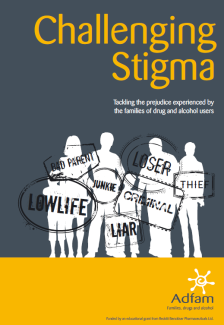
Challenging Stigma: Tackling the Prejudice Experienced by Families of Drug and Alcohol Users
Stigma and drug use have been associated for a long time, and in recent years they have been popular topics of debate and the focus of a growing body of research. But in the same way that families have often been absent in other drug policy...
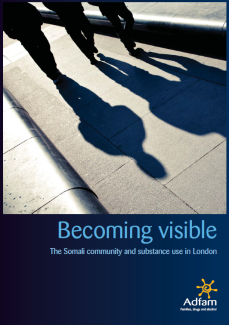
Becoming Visible: The Somali Community and Substance Use in London
In 2006 Adfam was awarded a three year grant by the Department for Communities and Local Government to work with the Somali community around substance use and family support in London. Becoming visible gives an overview of the issues...
Multiple Fentanyl Overdoses — New Haven, Connecticut, June 23, 2016
Summary What is already known about this topic? Fentanyl and its analogs have been substituted for heroin and other opioids, and are usually marketed to persons seeking opioids. Because of fentanyl’s high potency compared with heroin...
Readiness and Barriers to Adopt Evidence-Based Practices for Substance Abuse Treatment in Mexico
Evidence shows a lag in the adoption of evidence-based practices for substance abuse treatment and supports the need for studying the factors involved in this worldwide problem.
Healthier Alternatives and Natural Highs: The Success of the Icelandic Model
Over the past two decades, Iceland has seen teenage smoking, drinking and drug use dramatically decrease. This is partly because of state-funded initiatives which look to promote healthier alternatives, or ‘natural highs’, such as sport, family-orientated activities and cultural provisions.
The Multiple Health Effects of Marijuana Use
In its first report for almost 20 years, the National Academy of Sciences (NAS), has found the use of marijuana seems to be particularly connected to: Breathing problems Mental health issues such as psychosis, social anxiety and suicidal...