
UNODC PTRS is looking for civil society service providers offering drug use disorder treatment or prevention services in humanitarian settings, all over the world.
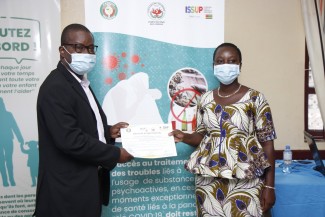
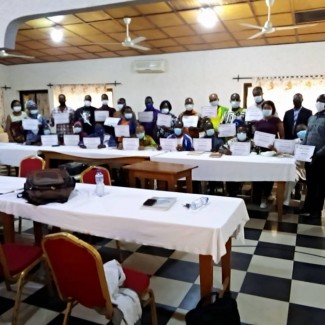
Du O9 au 13 Août 2021, a eu lieu à Kpalimé /Hôtel IZE, un atelier de formation sur la prévention du VIH et la prise en charge chez les usagers de drogue (UD) au Togo.
The abstract submission deadline EXTENDED! Abstract submissions for our event taking place online and in person in Abu Dhabi: 11-16th May, 2022 has been extended to 31st October! Find out more about the event and submit your abstract: issup.net/event2022
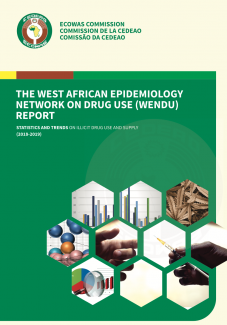
Il rapporto WENDU (West African Epidemiology Network on Drug Use) (2018 -2019) è il secondo rapporto regionale sul traffico illecito di droghe e sull'entità del consumo di droga in Africa occidentale.
Il rapporto fornisce dati sui modelli di consumo di droga e sulle tendenze emergenti per fungere da guida nella progettazione e nell'attuazione di risposte adeguate che affrontino sia la domanda che l'offerta di droga da parte di professionisti e responsabili politici negli Stati membri dell'ECOWAS e in Mauritania.
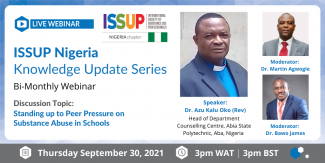
ISSUP Nigeria vorrebbe invitarti a partecipare al prossimo webinar bimestrale nella loro serie di aggiornamenti delle conoscenze. Questo webinar si concentrerà su "Resistere alla pressione dei pari sull'abuso di sostanze nelle scuole".
ICUDDR, INL, ISSUP and NRC are partnering to host a global in person and online event from 11th – 16th May 2022 in Abu Dhabi, UAE. We welcome abstract submissions for sub-plenary and poster presentations at the event. DEADLINE EXTENDED!
Therapeutic Communities: The International Journal of Therapeutic Communities
Introduzione: Data la scarsa letteratura sui disturbi da uso di alcol (AUD) e il loro trattamento nei paesi in via di sviluppo, questo documento mira a esplorare i livelli di motivazione e i loro correlati tra gli utenti di servizi di alcol in due centri di trattamento residenziali a Kampala, in Uganda. Questo studio su come i livelli di motivazione degli utenti ugandesi di servizi alcolici si confrontano con quelli degli studi americani; e i fattori specifici che influenzano la motivazione interna ed esterna nel contesto ugandese.
Progettazione / metodologia / approccio: la motivazione per...
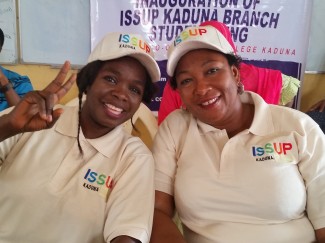
ISSUP Nigeria is pleased to welcome the Federal Cooperative College Kaduna as a student wing member of ISSUP Nigeria National Chapter following their successful inauguration ceremony on Tuesday 17th August 2021. ISSUP Nigeria is even more eager to serve the student body.
Gibbs N, Angus C, Dixon S, et al Effects of minimum unit pricing for alcohol in South Africa across different drinker groups and wealth quintiles: a modelling study BMJ Open 2021;11:e052879. doi: 10.1136/bmjopen-2021-052879
Minimum Unit Pricing (MUP) for alcohol is a policy whereby a set price is introduced, below which a fixed volume of alcohol cannot be sold to the public. Several countries, including Scotland, Canada, certain states of the USA, Russia, Moldova, Ukraine and Uzbekistan, have adopted different forms of MUP.
As a response to concerning levels of harmful alcohol consumption in South Africa, provincial governments, such as the Western Cape, are considering a number of alcohol policy approaches, including the introduction of minimum unit pricing (MUP).
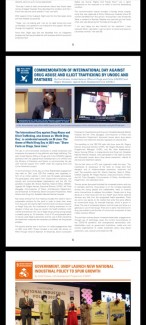
The Bulletin is published by the Uganda UN Communication and Partnership Group in collaboration with partners engaged in activities contributing to the attainment of the 2030 Agenda and the Sustainable Development Goals (SDGs).
Manu, E., Douglas, M., Ntsaba, M.J. et al. Perspectives of illicit marijuana growers and traders on commercial legalisation of marijuana in South Africa: considerations for policy formulation. Subst Abuse Treat Prev Policy 16, 54 (2021). https://doi.org/10.1186/s13011-021-00391-w
Over the past era, there has been a call for legalizing marijuana cultivation and trading for commercial purposes in South Africa. Advocates of the call argue that the criminalization of commercial marijuana cultivation and trading has failed to stop illicit marijuana cultivation and trading. Nevertheless, the views of those who economically benefit from the illicit marijuana trade on its legalization remain empirically unsolicited.
This study aimed to understand the views of illegal marijuana growers and traders from two selected communities in the Eastern Cape Province of South Africa...
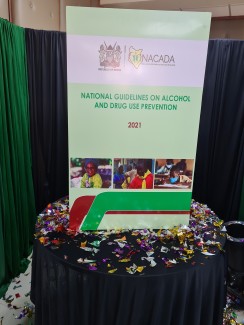
June 26, 2021, Nairobi, Kenya:- As the World commemorated the International Day Against Drug Abuse and Illicit Trafficking (IDADA) on June 26, 2021, Kenya has added another milestone in the journey towards a nation free from alcohol and drug abuse:-The National Guidelines on Drug Use Prevention were launched!
Previously in Kenya, the approach to prevention has been single event activities, development and dissemination of information, education and communication (IEC) materials on myths and the negative effects of alcohol and drug abuse. Now, one of the greatest milestones is the development...
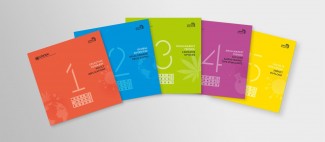
Consisting of five separate booklets, the World Drug Report 2021 provides an in-depth analysis of the global drug markets and paints a comprehensive picture of the measurable effects and potential impact of the COVID-19 crisis on the world drug problem.
The VNGOC together with the UNODC Civil Society Unit will be holding two webinars to present and discuss the World Drug Report 2021, which will be launched on 25th June.
VNGOC are looking for civil society speakers wishing to present at these webinars, on how they use the data compiled in the World Drug Report each year and how these data impact their work.
The first webinar will be held on 13th July 2021 and will focus on Asia, Oceania and Europe.
The second webinar will be held on 15th July 2021 and will focus on Africa and the Americas.
UNODC’s Strategic Vision for Africa 2030 outlines our mission to provide more safety to Africa’s people, government and institutions from drugs, crime, corruption, terrorism and illicit financial flows.
The UNODC Vision 2030 seeks to strengthen crime prevention, enhance justice, address organized crime, ensure a balanced response to drugs, improve the rule of law and bolster resilience.
Il rapporto fornisce informazioni sui fattori di rischio per le malattie non trasmissibili e sulla prevalenza di malattie non trasmissibili selezionate sulla base dell'approccio graduale alla sorveglianza (STEPS) dell'OMS.