
Psychoactive Substances

Psychoactive substances are natural or synthetic substances that act on the central nervous system and alter mental processes such as mood, perception, cognition, consciousness, and behaviour. These substances may be legally prescribed medications (e.g., pain medications or sedatives), legally available substances such as alcohol or caffeine, or controlled or illicit drugs. Psychoactive substances can be used for medical, social, cultural, or recreational purposes, but some carry risks of misuse, dependence, and health or social harms when used in harmful ways. 
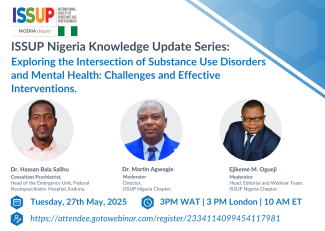
ISSUP Nigeria Knowledge Update Series (27th Session): Exploring the Intersection of Substance Use Disorders and Mental Health: Challenges and Effective Interventions.

Event Date
 - 
Online
- Global -
Attendance
online
ISSUP Nigeria would like to invite you to the 27th session of its bi-monthly webinar in the Knowledge Update Series. This webinar will focus on the topic of 'Exploring the Intersection of Substance Use Disorders and Mental Health: Challenges and Effective Interventions.'.
ISSUP Nigeria Webinar Flyer

2025 ISBRA-RSA Congress on Alcohol and Addictions

Event Date
 - 
New Orleans
United States
Attendance
person

The primary goal of the Annual Scientific Meeting (“Meeting”) is to provide a forum for alcohol researchers – from all disciplines – to present their latest findings and to learn about new research developments in an environment that will provide interaction at both the professional and personal level.

CSAM-SMCA 2025 Scientific Conference and Annual Meeting

Event Date
 - 
Montreal
Canada
Attendance
person

The 2025 CSAM-SMCA Annual Scientific Conference brings Canada’s addiction medicine community together to share new research, ideas and guidance on best practice.

Minimum Unit Pricing: Lessons for England

Event Date
 - 
Online
- Global -
Attendance
online

Join our webinar to learn everything you need to know about Minimum Unit Pricing (MUP) of alcohol. Leading experts will explore the theory behind the policy, its impact in Scotland and Wales, and crucially, what England can learn from their experiences.