
Supply and market disruption refers to coordinated strategies aimed at reducing the production, trafficking, distribution, and availability of illicit substances. These strategies often involve law enforcement, regulatory controls, border management, and financial investigations designed to disrupt drug trafficking networks and weaken illicit drug markets. By targeting supply chains and market dynamics, these efforts aim to reduce the availability of drugs, increase the risks and costs associated with illegal production and distribution, and contribute to broader efforts to reduce substance-related harms. Effective supply and market disruption typically operates alongside public health, prevention, treatment, and recovery responses as part of a comprehensive approach to substance use.
Supply & Market Disruption
Alcohol Outlet Availability and Excessive Alcohol Consumption in Breast Cancer Survivors
Abstract Background: Breast cancer survivors who consume alcohol excessively are at increased risk of recurrence and have worse prognosis. Because the environments in which people live shape many health behaviors, there has been increased...
The Internet and Drug Markets
Summary The last decade has seen the emergence of new internet technologies that have acted as important facilitators of online drug markets. The internet now hosts a range of virtual marketplaces (both on the surface and deep web) for...
Trends in Deaths Involving Heroin and Synthetic Opioids Excluding Methadone, and Law Enforcement Drug Product Reports
Summary What is already known about this topic? Opioid overdose deaths in the United States have been increasing since 1999, initially driven by prescription opioid misuse and more recently by heroin and other illicit opioid use. What is...
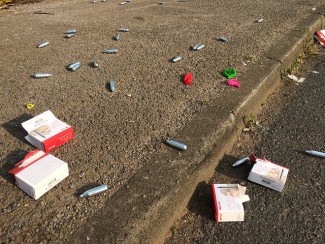
A Serious Matter: Laughing Gas Prompts Review of UK’s Psychoactive Substances Act
Introduced in 2016, The Psychoactive Substances Act is designed to deal with the influx of new drugs often labelled ‘legal highs’. The Act bans any substance that "by stimulating or depressing the person’s central nervous system… affects...
Why Are Many American Adults Misusing Prescription Painkillers?
Prescription painkillers are second only to marijuana as the United States drug of choice. Around 91.8 million Americans aged 18 and above used prescription painkillers in 2014, according to the 2015 National Survey on Drug Use and Health...
1st Regional Multidisciplinary, Multisectoral Conference on Drug Demand Reduction and Supply Suppression
Psychoactive drugs continue to have significant health, social and economic consequences on individuals, families and communities. This negatively impacts on the achievement of the Sustainable Development Goals (SDGs).
Preventing Violence Through Alcohol Consumption Reduction Measures
The World Health Organization has released a series of briefings on violence prevention. Of particular interest is Chapter 3: Preventing Violence by Reducing Availability and Harmful Use of Alcohol. ‘Harmful use of alcohol is a major...
ISSUP at the 60th Session of the Commission on Narcotic Drugs
Earlier this week ISSUP attended the 60th Session of the Commission on Narcotic Drugs (CND) at the Vienna International Centre.
Illuminating the Dark Web
The Economist reports that the drug trade is moving from the street to so-called online ‘cryptomarkets’, or secret virtual-shop-fronts. Online markets currently facilitate a comparatively small amount of illegal drug sales. Nonetheless...
2017 International Narcotics Control Strategy Report
This week the Bureau of International Narcotics and Law Enforcement Affairs (INL) publicly rolled out the 2017 International Narcotics Control Strategy Report (INCSR), an annual report by the Department of State to Congress prepared in...