
The range of medical, psychological, and social services designed to help individuals reduce or stop substance use and manage substance use disorders. Treatment may include assessment, counselling and behavioural therapies, medication-assisted treatment, withdrawal management, and support for co-occurring mental or physical health conditions. Effective treatment is typically person-centred and evidence-informed, and may be provided in outpatient, community, or residential settings. Treatment aims to improve health and functioning, reduce substance-related harms, and support individuals in moving toward recovery and long-term wellbeing.
Treatment
Successful Treatment of Methamphetamine Addiction
Methamphetamine is a drug of rapid addiction and destruction.
This free webinar will focus on the impact of methamphetamine and how this powerful drug changes the brain of the user - a process called addiction.
National Drugs Library: The Irish Situation Factsheets
The Health Research Board have updated their fact sheets relating to drug use and treatment in Ireland. MDMA/ecstasy: the Irish situation Alcohol: the Irish situation Cannabis: the Irish situation. Cocaine: the Irish situation Opioids: the...
As part of the COPOLAD meeting in Panama, multilateral agencies exchange experiences of cooperation and support for drug policies in the countries of
Representatives of PAHO-WHO, CICAD, European Observatory, UNDOC and CARICOM discuss strategies to strengthen the quality of treatments and prevention programmes in countries. How to complement and not overlap; and how to achieve effective...
Drug Demand Reduction
Drug Demand Reduction By Grainne Kenny An estimated 200 million people, or 5% of the global population aged between 15-64yrs have used illicit drugs at least once in the past year. Britain and Ireland have the highest number of drug and...
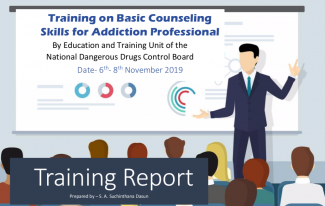
Training on Basic Counselling Skills for Addiction Professional - Final Report
In order to appropriately address the concerning global levels of substance use and substance use disorders, it is vital that staff are trained to deliver evidence-based treatment. At the start of November 2019, the Education and Training...
Cannabis Use during Methadone Maintenance Treatment for Opioid Use Disorder: A Systematic Review and Meta-Analysis
Abstract Background: Rates of cannabis use among patients receiving methadone maintenance therapy are high, and cannabis use may be associated with outcomes of methadone maintenance therapy. We examined the effect of cannabis use on opioid...
Technology Transfer in the Area of Addictions
Summary The knowledge provided by psychology must respond to different problems, which can only be achieved when the findings obtained by scientific evidence are affordable to other scientific groups, and social nuclei, in order for them to...
Impact of a Brief Intervention Program in Clinical Practice
ABSTRACT Introduction: The present study analyzes the main barriers and adaptations to brief interventions that focus on addictive behavior treatments carried out in clinical settings by 756 health professionals during their adoption...
Examining the Profile of High-Potency Cannabis and its Association with Severity of Cannabis Dependence
Abstract Background Cannabis use is decreasing in England and Wales, while demand for cannabis treatment in addiction services continues to rise. This could be partly due to an increased availability of high-potency cannabis. Method Adults...
UNODC-WHO Training in Argentina on the Management of Substance Use & Substance Use Disorders during Pregnancy
A total of 35 participants took part in this training that was organized by WHO and UNODC together with PAHO, SEDRONAR, Hospital der Mar, and the generous support from the U.S. State Department Bureau of International Narcotics and Law...