
The range of medical, psychological, and social services designed to help individuals reduce or stop substance use and manage substance use disorders. Treatment may include assessment, counselling and behavioural therapies, medication-assisted treatment, withdrawal management, and support for co-occurring mental or physical health conditions. Effective treatment is typically person-centred and evidence-informed, and may be provided in outpatient, community, or residential settings. Treatment aims to improve health and functioning, reduce substance-related harms, and support individuals in moving toward recovery and long-term wellbeing.

Treatment
‘Dangerous Data’ Part 5: Inquiries Reject Fraud Allegations. An Effectiveness Bank Hot Topic
‘DANGEROUS DATA’ PART 5: INQUIRIES REJECT FRAUD ALLEGATIONS Establishing fraud seemed the only way to fatally undermine the Sobells’ findings vindicating controlled drinking as a treatment goal, but inquiry after inquiry cleared the couple...
Webinar | Addictive Behaviors: Prevention and Treatment during COVID-19 Pandemic
ISSUP Lebanon are pleased to present their Webinar on the topic of Prevention and Treatment during the COVID-19 Pandemic.
Webinar | Addictive Behaviors: Prevention and Treatment during COVID-19 Pandemic
On March 31st, ISSUP Lebanon would like to invite you to attend their upcoming Webinar on the topic of Prevention and Treatment during the COVID-19 Pandemic.
With Crisis Comes Opportunity: Unanticipated Benefits Resulting from Pivots to Take-Home Naloxone (THN) Programs during the COVID-19 Pandemic
Abstract The COVID-19 pandemic resulted in stay-at-home orders, which presented a significant challenge to the design and operation of an essential harm-reduction strategy in the opioid epidemic: community-based, take-home naloxone (THN)...
Supportive Alternate Site Provision of Buprenorphine: Overcoming Barriers and Improving Patient Outcomes
Abstract Background Improving access to medications for opioid use disorder (MOUD) is a national priority; however, these efforts commonly focus on the provider. Access to buprenorphine through retail pharmacies and stigma associated with...
Take-Home Dosing Experiences among Persons Receiving Methadone Maintenance Treatment during COVID-19
Abstract Purpose Methadone maintenance treatment is a life-saving treatment for people with opioid use disorders (OUD). The coronavirus pandemic (COVID-19) has introduced many concerns surrounding access to opioid treatment. In March 2020...
Consistency between Self-Reported Alcohol Consumption and Biological Markers among Patients with Alcohol Use Disorder – A Systematic Review
ABSTRACT Background No systematic review has yet examined the consistency between self-reports of alcohol consumption and alcohol biomarkers among patients in treatment for alcohol use disorders (AUD). Therefore, we aimed to provide an...
Motivational Interviewing in Practice, An African Journey
William Miller and Stephen Rollnick, co-founders of Motivational Interviewing engage with clinicians and researchers from across Africa, drawing on lessons from existing research and dissemination activities, and exploring the broader...
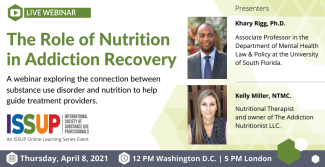
The Role of Nutrition in Addiction Recovery
Join Khary Rigg, Ph.D., Associate Professor, Department of Mental Health Law and Policy, and Kelly Miller, NTMC, Nutritional Therapist and owner of The Addiction Nutritionist LLC for a webinar exploring the connection between substance use disorder and nutrition.
The Role of Nutrition in Addiction Recovery
Join Khary Rigg, Ph.D., Associate Professor, Department of Mental Health Law and Policy, and Kelly Miller, NTMC, Nutritional Therapist and owner of The Addiction Nutritionist LLC for a webinar exploring the connection between substance use disorder and nutrition.