Shumet, S., Zeleke, E. Exploring the lived experiences and coping strategies of mental health caregivers in Ethiopia: implications for supportive interventions. Int J Ment Health Syst (2026). https://doi.org/10.1186/s13033-026-00696-y
Family caregivers of people with mental illness often face significant stress, stigma, and unequal responsibilities that affect their wellbeing and the quality of care they provide. This mixed-methods study in northwest Ethiopia explored coping strategies and experiences among 592 caregivers. Results showed that caregivers had relatively low coping levels, with factors such as being female, older age, farming occupation, longer illness duration, and repeated hospitalizations linked to lower adaptive coping. Higher caregiving burden and psychological distress were strongly associated with...
Kazdin, A.E., Pozuelo, J.R., Harris, M.G. et al. Patterns and predictors of the transition between minimally adequate treatment and effective treatment coverage for mental disorders: results from the World Mental Health Survey. Int J Ment Health Syst (2026). https://doi.org/10.1186/s13033-026-00698-w
Mental disorders remain widely undertreated, and even when individuals receive care, it is not always consistent with evidence-based guidelines. Using data from the World Mental Health surveys across 21 countries, this study examined how often patients receiving minimally adequate treatment (MAT) actually receive effective treatment coverage (ETC). Among 1,119 participants with nine common 12-month mental disorders, fewer than half (47.1%) of those receiving MAT received care that met criteria for effective treatment coverage.
Higher education, milder disorder severity, treatment from a...
As part of the QualityRights Initiative, WHO has developed a comprehensive package of training and guidance materials. The materials can be used to build capacity among mental health practitioners, people with psychosocial, intellectual and cognitive disabilities, people using mental health services, families, care partners and other supporters, nongovernmental organizations, organizations of persons with disabilities and others on how to implement a human rights and recovery approach in the area of mental health in line with the UN Convention on the Rights of Persons with...
Transforming services and promoting human rights. WHO QualityRights training and guidance: mental health and social services. Course guide. Geneva: World Health Organization; 2019. Licence: CC BY-NC-SA 3.0 IGO.
The goal of this module is to provide training and guidance for mental health and social services on how to transform and improve services towards a recovery-oriented approach which respects human rights. This module contains two interrelated sections:
Part 1: Service culture, vision and leadership provides guidance to develop a shared vision and values for service delivery and address negative service cultures and power dynamics between staff and people using the services.
Part 2: Developing and implementing a transformation/improvement plan for service change helps people to understand the...
Community mental health centres: promoting person-centred and rights-based approaches. Geneva: World Health Organization; 2021 (Guidance and technical packages on community mental health services: promoting person-centred and rights-based approaches). Licence: CC BY-NC-SA 3.0 IGO.
Executive summary
Mental health has received increased attention over the last decade from governments, nongovernmental organizations (NGOs) and multilateral organizations including the United Nations (UN) and the World Bank. With increased awareness of the importance of providing person-centred, human rights-based and recovery-oriented care and services, mental health services worldwide are striving to provide quality care and support. Yet often services face substantial resource restrictions, operate within outdated legal and regulatory frameworks and an entrenched overreliance on the...
A massive global genetics study is reshaping how we understand mental illness—and why diagnoses so often pile up. By analyzing genetic data from more than six million people, researchers uncovered deep genetic connections across 14 psychiatric conditions, showing that many disorders share common biological roots. Instead of existing in isolation, these conditions fall into five overlapping families, helping explain why depression, anxiety, PTSD, bipolar disorder, schizophrenia, and substance use disorders so frequently occur together.
Youth mental health is a growing global crisis, with most mental health conditions beginning before the age of 25. Young people today face increasing stress from poverty, academic and social pressure, bullying (including online), climate anxiety, and uncertainty about the future, while mental health services struggle to keep up with demand. Although governments play a critical role, philanthropic investment can help strengthen the social determinants of youth mental health and support prevention at scale. Despite growing global attention, including commitments through the UN Sustainable...
Nivishe Foundation successfully launched “Understanding Emotions,” the first chapter in its groundbreaking Brainwaves Comic Book Series, one of Africa’s first comic books dedicated to mental health education.
The series uses relatable storytelling and vibrant illustrations to help young people understand emotions, break mental health stigma, and build resilience. It transforms complex psychological concepts into simple, accessible lessons that speak directly to the realities of adolescents and youth in Kenya’s informal settlements.
Since its launch in Nairobi, the comic has reached over 2...
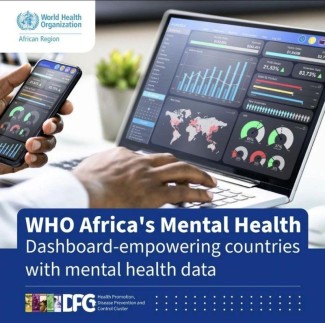
The WHO Africa Mental Health Dashboard, accessible via WHO AFRO Mental Health Dashboard, consolidates key indicators into a single, interactive platform that enables users to track progress, identify gaps and align national efforts with regional and global targets. It is designed to support ministries of health, policymakers, WHO staff, technical partners and the public in making informed decisions and driving action.
The dashboard features an AI-powered chatbot that simplifies complex insights for users, making the data more accessible.
Data is sourced from WHO, GBD, the Mental Health Atlas...
The Mental Health or Nurses and Doctors (MeND) survey, conducted by WHO Regional Office for Europe under a contribution agreement with the European Commission, aimed to explore the mental health, well-being and working conditions of doctors and nurses in the 27 European Union countries plus Iceland and Norway.
The survey was disseminated from October 2024 to April 2025 across all 29 countries, obtaining 122 048 responses, of which 90 171 were valid. The findings indicated a high prevalence of mental health conditions and unsafe working conditions – including violence, extended working hours...
Diapositivas que utilizaron: Argentina, Silvia Pisano, Subsecretaria de atención y prevención, Secretaría de Políticas Integrales sobre Drogas de Argentina (SEDRONAR) Costa Rica, Carolina Garro, Gestora de proyectos, Instituto Costarricense sobre Drogas (ICD) Jamaica, Paulette Spencer, Directora...
Slides used by: Argentina, Silvia Pisano, Undersecretary of Care and Prevention, Secretariat for Comprehensive Policies on Drugs of Argentina (SEDRONAR) Canada, Kim Corace, Vice-President and Senior Scientist, Canadian Centre on Substance Use and Addiction (CCSA) Costa Rica, Carolina Garro, Project...
Admase et al. Substance AbuseTreatment, Prevention, and Policy (2025) 20:43 https://doi.org/10.1186/s13011-025-00660-y
Background
Stigma related to drug use is a well-documented barrier to engaging and remaining on medication for opioid use disorder (MOUD), yet little is known about how stigma operates across multiple social and institutional settings in low-resource contexts.
Methods
This qualitative study draws on 40 in-depth interviews with current and former MOUD clients and four focus groups with 35 current clients at an opioid treatment clinic in Dar es Salaam, Tanzania. Transcripts were thematically analyzed to explore how stigma influenced MOUD adherence and retention.
INTRODUCTION: Declining fertility and rising numbers of only children necessitate understanding their specific characteristics. The main objective of the present research study is to map the area of sibling constellations. It focuses on perfectionism and the Big Five personality traits.
METHODS: Online data were collected from 1,384 Slovak participants aged 15-74 (133 only children, 1,251 with siblings) using the Frost Multidimensional Perfectionism Scale (FMPS) and the Big Five Inventory (BFI 10). MannWhitney U tests compared groups, with effect sizes (AUC) calculated. Spearman’s...
ISSUP Argentina lo invita cordialmente a participar en su seminario web sobre Guía para la respuesta policial en crisis de salud mental relacionadas con el consumo de drogas.
The Asian Association for Substance Abuse Research & Addictive Behavior Prevention and Treatment invites abstract submissions for its conference to be held in Macau. This conference aims to bring together researchers, clinicians...
Mmoto, M., Mwombeki, I., Morawej, Z., Lawala, P., & Nyundo, A. (2024). Posttraumatic Stress Disorder Among Opioid Users in Dodoma, Tanzania: A Comparative Cross-Sectional Study Protocol. Adiktologie, 24(3), pp–pp. https://doi.org/10.35198/01-2024-003-0003
INTRODUCTION:
Post traumatic stress disorder (PTSD) is highly commorbid among individuals with opioid use disorder (OUD). PTSD among people with OUD is associated with severe opioid use, depression, and suicidality. Tanzania has seen a rise in opioid use over the past few years and the presence of PTSD among people with OUD predisposes patients to more negative impacts and impedes the recovery process. We aim to assess the prevalence and factors associated with PTSD among individuals with opioid use disorder (OUD) attending medication-assisted therapy (MAT) clinic in comparison to non-opioid...
ISSUP, in collaboration with Faces & Voices of Recovery, has launched a new Global Recovery Network webinar series to spotlight diverse perspectives on recovery. The first webinar featured Dr. Haner Hernández, a respected expert in the field and a person in long-term recovery. Dr. Hernández currently serves as a Senior Consultant to the Massachusetts Department of Public Health and plays a key role in advancing health equity, workforce development, and recovery support. His presentation provided an insightful and inclusive overview of multiple pathways to recovery, grounded in both...