Salta al contenuto principale

User account menu

  • Accedi

Lingue

  • English
  • Français
  • Português
  • Español
  • العربية
  • Pусский

Navigazione principale

  • About ISSUP

    • 10 Years of ISSUP
    • ISSUP Rationale
    • Membership
      • Membership Criteria
      • Code of Ethics
      • Who is ISSUP for?
    • News
      • Newsletters
    • ISSUP Events
    • International Partners
    • Governance
    • ISSUP Scientific Council
    • Friends of ISSUP (USA)
    • ISSUP Awards
      • Evidence-Based Award
      • Local Initiative Award
      • Services Award
      • Excellence in Training Provision
      • Outstanding Contribution to ISSUP Award
    • In Memoriam
    • Acknowledgements
    • ISSUP Website Guides
    • Contact ISSUP
    • FAQs - Frequently Asked Questions
    • Donate to ISSUP
  • Professional Development

    • Online Learning Hub
      • How to Register
      • UTC Self Led Courses
    • Universal Curricula (UC)
      • Currículo de Prevenção Universal
      • Currículo de Tratamento Universal
      • Universal Recovery Curriculum
    • Resources
      • Drug Data Hub
      • Glossary
      • The ISSUP Exchange
      • ISSUP Webinars
      • IEP
      • INEP Plus
      • Prevention Insights Video Series
      • Prevention Lists
      • Recovery Support
      • Quality in Treatment
      • ICAP certification
      • HealthEKnowledge
    • Jobs and Opportunities
  • Knowledge Share

    • Search in the Knowledge Share
    • ADDICTOLOGY Journal
      • Latest Issue
  • National Chapters

    • Africa
      • ISSUP Botswana
      • ISSUP Côte d’Ivoire
      • ISSUP Egypt
      • ISSUP Ethiopia
      • ISSUP The Gambia
      • ISSUP Ghana
      • ISSUP Kenya
      • ISSUP Liberia
      • ISSUP Mauritius
      • ISSUP Morocco
      • ISSUP Namibia
      • ISSUP Nigeria
      • ISSUP South Africa
      • ISSUP Tanzania
      • ISSUP Togo
      • ISSUP Uganda
      • ISSUP Zambia
    • The Americas
      • ISSUP Argentina
      • ISSUP The Bahamas
      • ISSUP Barbados
      • ISSUP Brazil
      • ISSUP Canada
      • ISSUP Chile
      • ISSUP Colombia
      • ISSUP Ecuador
      • ISSUP El Salvador
      • ISSUP Guatemala
      • ISSUP Mexico
      • ISSUP Panama
      • ISSUP Paraguay
      • ISSUP Peru
      • ISSUP United States
    • Asia
      • ISSUP Afghanistan
      • ISSUP Bangladesh
      • ISSUP India
      • ISSUP Indonesia
      • ISSUP Kazakhstan
      • ISSUP Korea
      • ISSUP Lebanon
      • ISSUP Malaysia
      • ISSUP in Pakistan
      • ISSUP Philippines
      • ISSUP Qatar
      • ISSUP Singapore
      • ISSUP Sri Lanka
      • ISSUP Thailand
      • ISSUP Türkiye
      • ISSUP United Arab Emirates
      • ISSUP Uzbekistan
      • ISSUP Vietnam
    • Europe
      • ISSUP Bosnia & Herzegovina
      • ISSUP Czech Republic
      • ISSUP Greece
      • ISSUP Italy
      • ISSUP Spain
      • ISSUP Ukraine
      • ISSUP United Kingdom
    • Oceania
      • ISSUP Australia
      • ISSUP Fiji
      • ISSUP New Zealand
    • How to Become a National Chapter
    • ISSUP National Chapters' Advisory Committee
    • ISSUP National Chapter Spotlight
  • Events

    • Search through all events
    • ISSUP Events
      • ISSUP 2026
      • Indonesia 2025
      • Thessaloniki 2024
      • Buenos Aires 2023
      • Manila 2022
      • Abu Dhabi 2022
      • Virtual 2021
      • Africa 2020
      • Vienna 2019
      • Nairobi 2018
      • Cancún 2017
      • Campinas 2016
      • Bangkok 2015
  • Networks

    • A–Z
  • My ISSUP

    • Member Directory
    • Apply for membership

Messaggio di errore

Could not retrieve the oEmbed resource.

Treatment Research

Treatment Research

Moderators

Profile picture for user livia.edegger
Livia
ISSUP
Profile picture for user MoralesBA
Brian Morales
U.S. Department of State
DiscussionsFileImmaginiVideosCollegamentiEventsKnowledge ShareTutti
Livia

Effectiveness Bank Analysis: Feedback on Client Progress among Most Effective Ways to Improve Outcomes

Shared by Livia - 21 February 2019
Format
Scientific article
Published by / Citation
Psychotherapy: 2018, 55(4), p. 520-537.

Findings amalgamated for the American Psychological Association show that providing therapists real-time feedback from the client (including substance use clients) on their progress and how to improve it is among the most effective ways available to services to improve outcomes.

  • Per saperne di più su Effectiveness Bank Analysis: Feedback on Client Progress among Most Effective Ways to Improve Outcomes
  • ISSUP members can join Networks to comment – Sign in or become a member
Jose Luis Vazquez Martinez

Nora Volkow, Director, National Institute on Drug Abuse National Institutes of Health

Jose Luis Vazquez Martinez - 20 February 2019
"Molecular Imaging in SUD: Opportunities for Translation into Basic and Clinical Neuroscience" from the Cellular Biology of Drug Addiction course 8/9/2013
  • Per saperne di più su Nora Volkow, Director, National Institute on Drug Abuse National Institutes of Health
  • ISSUP members can join Networks to comment – Sign in or become a member
Edie

Relapse prevention interventions for smoking cessation

Edie - 20 February 2019
A number of treatments can help smokers make a successful quit attempt, but many initially successful quitters relapse over time. Several interventions have been proposed to help prevent relapse. A recent study has examined whether specific interventions for relapse prevention reduce the proportion...
Click here to read a summary of the findings.
  • Per saperne di più su Relapse prevention interventions for smoking cessation
  • ISSUP members can join Networks to comment – Sign in or become a member
Edie

Review article: Effective management of opioid withdrawal symptoms: A gateway to opioid dependence treatment

Edie - 20 February 2019
Kosten, T. R., & Baxter, L. E. (2019). Effective management of opioid withdrawal symptoms: A gateway to opioid dependence treatment. The American journal on addictions.doi: 10.1111/ajad.12862
Review article: Effective management of opioid withdrawal symptoms: A gateway t…
  • Per saperne di più su Review article: Effective management of opioid withdrawal symptoms: A gateway to opioid dependence treatment
  • ISSUP members can join Networks to comment – Sign in or become a member
Livia

Análisis de efectividad Banco: Regla Fundamental para los terapeutas: conocer y ser quien eres

Shared by Livia - 19 February 2019
Format
Scientific article
Published by / Citation
Psychotherapy: 2018, 55(4), p. 424-433.

Message from an amalgamation of research findings for the American Psychological Association is that conveying genuineness and authenticity - at least during therapy, being and giving of yourself as an integrated character - is one way therapists underpin an effective therapeutic relationship. But what if a therapy’s mandates demand a less than genuine response?

  • Per saperne di più su Análisis de efectividad Banco: Regla Fundamental para los terapeutas: conocer y ser quien eres
  • ISSUP members can join Networks to comment – Sign in or become a member
Edie

Risk and responsibilization: resistance and compliance in Swedish treatment for youth cannabis use

Edie - 13 February 2019
Online and open access Ekendahl, Mats, Josefin Månsson, and Patrik Karlsson. "Risk and responsibilization: resistance and compliance in Swedish treatment for youth cannabis use." Drugs: Education, Prevention and Policy (2018): 1-9.
Risk and responsibilization: resistance and compliance in Swedish treatment for…
  • Per saperne di più su Risk and responsibilization: resistance and compliance in Swedish treatment for youth cannabis use
  • ISSUP members can join Networks to comment – Sign in or become a member
Livia

Survey: The National Centre for Clinical Research on Emerging Drugs

Shared by Livia - 12 February 2019
Format
News

The purpose of this survey is to seek your opinions on areas for the treatment of substance use disorder due to methamphetamine and other emerging drugs of concern that would benefit from the conduct of clinical research.

Emerging drugs of concern include new drugs appearing in the market and known drugs of emerging concern, that are causing harm, or have the potential to have a population health impact. 

For the purposes of this survey, clinical research is intervention focused and conducted in a range of community and health care settings by a range of different health professionals.

Whet...

  • Per saperne di più su Survey: The National Centre for Clinical Research on Emerging Drugs
  • ISSUP members can join Networks to comment – Sign in or become a member
Jose Luis Vazquez Martinez

Why Addiction is a “disease” and why is it important

Jose Luis Vazquez Martinez - 8 February 2019
This webcast, Why addiction is a “disease” and why it’s important, defines what is a disease and why it is important to emphasize addiction/substance use disorder (SUD) as a brain disease from a neurobiological perspective as well as from a biopsychosocial perspective. Discussion will also include...
  • Per saperne di più su Why Addiction is a “disease” and why is it important
  • ISSUP members can join Networks to comment – Sign in or become a member
Jose Luis Vazquez Martinez

Substance Abuse Treatment Centers and Local Crime

Jose Luis Vazquez Martinez - 5 February 2019
At the county-level, an additional Substance Abuse Treatment (SAT) facility reduces drug-related mortality by 0.50% annually, and municipal felony-type crimes by 0.10 % annually, according to the authors. This publication provides support for the idea that there are broad-based benefits of SAT...
dp10208.pdf
  • Per saperne di più su Substance Abuse Treatment Centers and Local Crime
  • ISSUP members can join Networks to comment – Sign in or become a member
Jose Luis Vazquez Martinez

Patient and staff experiences of quality in Swedish forensic psychiatric care: a repeated cross‑sectional survey with yearly sampling at two clinics

Jose Luis Vazquez Martinez - 4 February 2019
Abstract Background Systematic efforts to improve the quality, safety and value of health care have increased over the last decades. Even so, it is hard to choose priorities and to know when the desired results are reached, especially in forensic psychiatric care where there can be a discrepancy...
s13033-019-0265-z.pdf
  • Per saperne di più su Patient and staff experiences of quality in Swedish forensic psychiatric care: a repeated cross‑sectional survey with yearly sampling at two clinics
  • ISSUP members can join Networks to comment – Sign in or become a member
Jose Luis Vazquez Martinez

Hooked: Why bad habits are hard to break

Jose Luis Vazquez Martinez - 3 February 2019
CBS: Dr. Nora Volkow, the head of the National Institute on Drug Abuse, has revolutionized how science and medicine view addiction: as a disease, not a character defect. Morley Safer reports.
  • Per saperne di più su Hooked: Why bad habits are hard to break
  • ISSUP members can join Networks to comment – Sign in or become a member
Jose Luis Vazquez Martinez

Applying Technology to Substance Use Disorders: The State of Science and Future Opportunities

Jose Luis Vazquez Martinez - 1 February 2019
This webinar is part of the NIDA CTN's "Using Mobile Technologies in the CTN" series. Find more information, and links to the other webinars in the series, here: http://ctndisseminationlibrary.org/display/1173.htm
  • Per saperne di più su Applying Technology to Substance Use Disorders: The State of Science and Future Opportunities
  • ISSUP members can join Networks to comment – Sign in or become a member
Livia

Website: End of Life Care for People with Problematic Substance Use

Shared by Livia - 1 February 2019
Format
Website

This website offers resources developed from a two-year research programme on end of life care for people with alcohol and other drug problems. The research programme was the first of its kind to explore current practice and service experience from a range of perspectives.

The findings have been used to develop information and resources on how best to support people with substance use problems, or how substance use services can support people with serious and life-limiting conditions.

Traduzioni
Urdu
  • Per saperne di più su Website: End of Life Care for People with Problematic Substance Use
  • ISSUP members can join Networks to comment – Sign in or become a member
Jose Luis Vazquez Martinez

Why do our brains get addicted?

Jose Luis Vazquez Martinez - 1 February 2019
Neuroscientist Nora Volkow, director of the National Institute on Drug Abuse at the NIH, applies a lens of addiction to the obesity epidemic.
  • Per saperne di più su Why do our brains get addicted?
  • ISSUP members can join Networks to comment – Sign in or become a member
Jose Luis Vazquez Martinez

Stima della copertura del trattamento per le persone con disturbi da uso di sostanze: un'analisi dei dati delle indagini mondiali sulla salute mentale

Shared by Jose Luis Vazquez Martinez - 24 Gennaio 2019
Format
Scientific article
Published by / Citation
Degenhardt, L., Glantz, M., Evans‐Lacko, S., Sadikova, E., Sampson, N., Thornicroft, G., … Zaslavsky, A. M. (2017). Estimating treatment coverage for people with substance use disorders: an analysis of data from the World Mental Health Surveys. World Psychiatry, 16(3), 299–307. http://doi.org/10.1002/wps.20457

Astratto

L'uso di sostanze è una delle principali cause di disabilità a livello globale. Ciò è stato riconosciuto nei recenti obiettivi di sviluppo sostenibile delle Nazioni Unite (SDG), in cui la copertura del trattamento per i disturbi da uso di sostanze è identificata come uno degli indicatori. Non ci sono state stime di questa copertura del trattamento a livello transnazionale, rendendo difficile sapere quale sia la linea di base per quell'obiettivo SDG. Qui riportiamo i dati del World Mental Health Surveys (WMHS) dell'Organizzazione Mondiale della Sanità (OMS), basati su indagini...

Traduzioni
English
  • Per saperne di più su Stima della copertura del trattamento per le persone con disturbi da uso di sostanze: un'analisi dei dati delle indagini mondiali sulla salute mentale
  • ISSUP members can join Networks to comment – Sign in or become a member
Kimberly Johnson

Dissemination Recommendations from the UK's Health Foundation

Kimberly Johnson - 22 January 2019
There is no point in doing research if your results aren't implemented in the real world!
The Spread Challenge
  • Per saperne di più su Dissemination Recommendations from the UK's Health Foundation
  • ISSUP members can join Networks to comment – Sign in or become a member
Edie

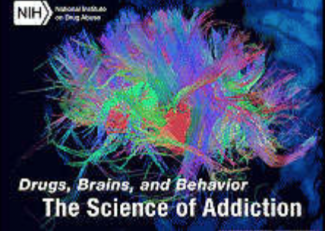
Drugs, Brains and Behavior: The Science of Addiction

Shared by Edie - 18 January 2019
Format
Book
Published by / Citation
The National Institute on Drug Abuse (NIDA)

Since the 1930s, the response to drug addiction has moved from one that focuses on the need to punish users to another that recognises the importance of prevention and treatment approaches.

In other words, thanks to scientific advances, substance abuse has evolved from a judicial to a heath issue.

Drawing on the latest evidence-based knowledge, Drugs, Brains and Behavior: The Science of Addiction, a new publication from the National Institute on Drug Abuse (NIDA), looks to explain why people become dependent on drugs, as well as how changes in the brain can foster drug addiction.

It also...

Traduzioni
Česky
  • Per saperne di più su Drugs, Brains and Behavior: The Science of Addiction
  • ISSUP members can join Networks to comment – Sign in or become a member
Edie

Cognitive and Mindfulness‐based therapy for adolescents with co‐occurring post‐traumatic stress and substance use disorder

Shared by Edie - 16 January 2019
Format
Scientific article
Published by / Citation
Fortuna, Lisa R., Michelle V. Porche, and Auralyd Padilla. "A treatment development study of a cognitive and mindfulness‐based therapy for adolescents with co‐occurring post‐traumatic stress and substance use disorder." Psychology and Psychotherapy: Theory, Research and Practice 91, no. 1 (2018): 42-62.

Early life experiences of trauma are known to significantly increase the risk of substance use in adolescence and adulthood. It has been suggested that individuals may use alcohol or drugs as a means of temporarily relieving themselves from psychological distress, however this can lead to increased emotional dysregulation in the long term.

Mindfulness-Based Cognitive Therapy (MBCT) for adolescent suffering from PTSD and SUDs focuses on developing awareness of unhelpful thought patterns and cognitive restructuring. 

Results suggest feasibility, safety, and effectiveness of Mindfulness-Based Cognitive Therapy for adolescents with PTSD, depression, and substance use.
Results suggest feasibility, safety, and effectiveness of Mindfulness-Based Cognitive Therapy for adolescents with PTSD, depression, and substance use. 

A recent study, published in the Journal of Psychology and Psychotherapy, has...

  • Per saperne di più su Cognitive and Mindfulness‐based therapy for adolescents with co‐occurring post‐traumatic stress and substance use disorder
  • ISSUP members can join Networks to comment – Sign in or become a member
Edie

Podcast Addiction Journal - Gennaio 2019

Shared by Edie - 14 Gennaio 2019
Format
Book

The Addiction Journal Podcast accompagna l'ascoltatore attraverso il contenuto dell'edizione di gennaio della rivista, seleziona e discute alcuni dei punti salienti e include interviste, che sono state condotte con alcuni degli autori.

Traduzioni
English
  • Per saperne di più su Podcast Addiction Journal - Gennaio 2019
  • ISSUP members can join Networks to comment – Sign in or become a member
Edie

Risk Factors for Neonatal Abstinence Syndrome

Shared by Edie - 14 January 2019
Format
Scientific article

Recent studies carried out by researchers from Vanderbilt University and Johns Hopkins University have examined characteristics linked with the heightened risk NAS.

The researchers found that boys are more likely to receive a diagnosis of NAS and need treatment compared to girls. The researchers suggest this may be because males may be more sensitive to the methadone and buprenorphine used to treat their mothers' opioid use disorder (OUD).

Their analysis also found that maternal polysubstance use and high doses of buprenorphine were also linked with greater infant NAS severity. 

These...

Traduzioni
Pashto
Dari
  • Per saperne di più su Risk Factors for Neonatal Abstinence Syndrome
  • ISSUP members can join Networks to comment – Sign in or become a member

Paginazione

  • Prima pagina « First
  • Pagina precedente ‹ Previous
  • …
  • Pagina 8
  • Pagina 9
  • Pagina 10
  • Pagina 11
  • Pagina 12
  • Pagina 13
  • Pagina 14
  • Pagina attuale 15
  • Pagina 16
  • Pagina successiva Next ›
  • Ultima pagina Last »

Upcoming Events

There aren't any upcoming events
All Events
Contact Us

Stay Connected

Newsletter

ISSUP is funded by the U.S. Department of State via the Bureau of International Narcotics and Law Enforcement Affairs (INL). INL works to keep Americans safe by countering crime, illegal drugs, and instability abroad.

Copyright © International Society of Substance Use Prevention and Treatment Professionals Privacy Policy