Admase et al. Substance AbuseTreatment, Prevention, and Policy (2025) 20:43 https://doi.org/10.1186/s13011-025-00660-y
Background
Stigma related to drug use is a well-documented barrier to engaging and remaining on medication for opioid use disorder (MOUD), yet little is known about how stigma operates across multiple social and institutional settings in low-resource contexts.
Methods
This qualitative study draws on 40 in-depth interviews with current and former MOUD clients and four focus groups with 35 current clients at an opioid treatment clinic in Dar es Salaam, Tanzania. Transcripts were thematically analyzed to explore how stigma influenced MOUD adherence and retention.
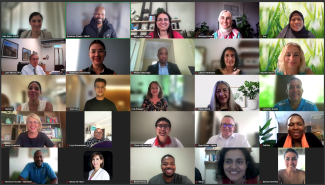
We’re excited to share that ISSUP has successfully launched the pilot of the Investing in Evidence-Based Prevention (IEP) Workshop, attended by 18 participants from 17 countries. The workshop was delivered in two online sessions, held on 14 and 21 August, bringing together policy-makers, decision-makers and funders.
The IEP workshop was developed by Jeff Lee, and Rachele Donini, together with the Scientific Support Team (SST). The pilot was delivered by Rachele Donini as trainer.
The first session, Introduction to Prevention Science, focused on the fundamentals of prevention...
Recovery is not a one-size-fits-all process—it is dynamic, multifaceted, and deeply individual. To truly support individuals on their recovery journey, practitioners must access tools, systems, and knowledge that reflect the realities of those they serve.
The WHO Global Status Report on Alcohol and Health and Treatment of Substance Use Disorders provides a comprehensive snapshot of global trends in alcohol consumption, related harms, and national policy responses, alongside the availability and quality of treatment services for alcohol and drug use disorders.
Key Highlights:
Presents the latest data from WHO Member States, aligned with SDG Health Target 3.5: “Strengthen prevention and treatment of substance abuse, including narcotic drug abuse and harmful use of alcohol.”
Offers updated insights on global alcohol consumption patterns...
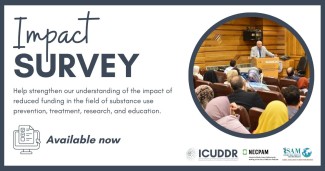
This survey is a collaborative effort by ICUDDR, NECPAM and ISAM. Together, we are trying to assess the impact recent reductions in funding have had to the workforce of fields dealing with substance use related issues.
ISSUP-KENYA in partnership with Mshauri Therapy Hub and Pro Care, is organising the 2025 International "Mental Health Conference & Excursion" to be held in Kigali, Rwanda.*
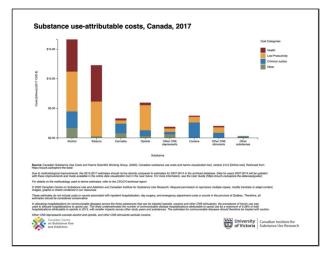
CSUCH’s data visualisation tool can be used to estimate substance use trends across the country. The data helps inform programs, practices, and research to protect communities, save lives, and improve the well-being of people in Canada.
Spotlight: Top 3 causes of death due to substance use in Canada
More than 200 people died each day due to substance use (SU) in 2020 (the latest year for which data are available). That works out to 73,994 deaths that year. The average age of death due to SU was 45 years. Tobacco use caused 63% (46,366) of SU-related deaths, followed by alcohol at 23%...
Addiction and obesity share similar neurological pathways, both linked to compulsive behaviors and the brain's reward system. Research has highlighted the potential of GLP-1 receptor agonists, originally developed for diabetes, to help manage both appetite and addictive cravings. These medications, such as semaglutide, may regulate addictive behaviors by influencing reward circuits in the brain. However, they come with potential side effects, and their long-term effects are still under investigation.
In addition, a new compound, 5-Methoxy-2-aminoindane (MEAI), is being researched for its...
This week, we say goodbye to our dear friend and mentor, Jeff Lee, the founding Executive Director of ISSUP. Jeff was a steadfast advocate for the professionalization of prevention, insisting that those working in this field should be appropriately specialized. He often reminded us that while generalists and treatment specialists are well-meaning and deeply embedded within their communities, they are not always best placed to develop and implement evidence-based prevention systems. Jeff emphasized that prevention must be treated as a distinct science—one that is grounded in rigorous research...
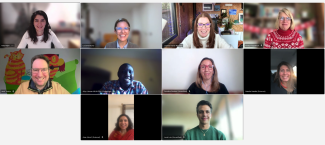
The National Chapters Team held a pivotal 2-day virtual meeting from 10th – 11th December 2024 to evaluate the current operational model for National Chapters and identify opportunities for improvement and growth. The meeting was dubbed a ‘Vision Meeting’ to reflect the core agenda: Crafting a forward-looking plan for the ISSUP National Chapters.
The African Union Commission (AUC) has held an annual continental consultation for Drug Demand Reduction (DDR) since 2015. AUC member states are each represented by their respective DDR national focal points, allowing member states an opportunity to present national DDR activities in a peer-review platform that also allows engagement with invited subject matter experts. This year’s consultation was held in Arusha, Tanzania from 10-13 December 2024, and included Traditional Leaders from Southern Africa. The theme for this year’s consultation was “Prevention is better than Cure: Towards...
The Global Recovery Network is committed to providing valuable and relevant content for our community.
To ensure our upcoming webinar series aligns with the needs and interests of our audience, we have developed this survey with U.S. based Faces and Voices of Recovery to determine which topics may be of most relevance. Our goal is to offer webinars that not only inform but also develop and build skills that support recovery, advocacy, and professional growth.
Your feedback is crucial in helping us design a webinar series that resonates with and benefits you.
ISSUP Tanzania would like to invite you its upcoming webinar titled, "Strengthening Substance Use Prevention in Tanzania through Evidence-Based Interventions"
Don't miss our latest newsletter for details of recent meetings and activities in Latin America and Africa. This issue also includes information on how to gain advanced clinical skills with the UTC16 Self Led Course.