Interoceptive dysfunction, or a lack of body/sensory awareness processing, is common among people with substance use disorders. This webinar will describe the importance of body awareness/interoceptive skills, using Mindful Awareness in Body-oriented Therapy (MABT), for promoting emotion regulation...
This webinar next week might be of interest. I have collaborated with Dr. Williams in the past. The results described are evidence that medication needs to be provided for a long time - probably indefinitely for people with OUD.
This paper presents the results of a study on the factors promoting the rehabilitation of adolescents treated for paco addiction, from the point of view of resilience, i.e. the understanding and ability to cope with life's difficulties, overcome them and be transformed positively by them. A cross-sectional study was conducted with key informants and the application of quantitative and qualitative methods for data collection with the aim of identifying resilient areas in young people under treatment for paco addiction in the village 21/24, in Barracas ( Buenos Aires, Argentina, 2010). The...
INL just released a video on its efforts to support prevention, treatment and recovery worldwide in this short video in support of recognizing recovery month
BU School of Public Health Highlight from SPH Reads, a school-wide program hosted by the Office of Diversity and Inclusion. The 2019 selection, nominated by the Queer Alliance, is The Desire to Heal: A Doctor’s Education in Empathy, Identity, and Poetry, by Rafael Campo. A memoir published in 1997...
Fuente: Verdejo-García, A. (2016). Evaluación neuropsicológica en adicciones: guía clínica [Neuropsychological assessment in addiction: A clinical guideline]. Acción Psicológica, 13(1), 1-6. doi: https://doi.org/10.5944/ap.13.1.17392 Resumen El objetivo de este artículo de opinión es proporcionar...
Admitting that you, or someone you care about has a chemical-dependency problem isn’t easy. How do you know when drinking or drugs have gotten out of hand? Join us as we interview Cleveland Clinic section head of the Alcohol & Drug Recovery Center, David Streem, MD. We will be taking your questions...
The spatial distribution of substance use services impacts their use, with greater access to services associated with more positive outcomes. Findings from availability of primary healthcare indicate service shortages exist in areas characterized by social deprivation. This study investigated whether community social deprivation was associated with a lack of availability of substance use treatment or mutual aid recovery support services.
Methods
This is an ecological analysis investigating the availability of substance use services at a community level in the state of...
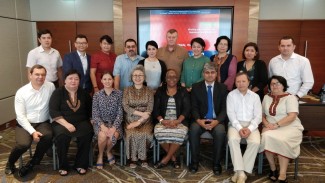
From 23-31 July 2019, a team of master trainers from Central Asia attended the Regional Training of Trainers for Central Asia held in Dubai, United Arab Emirates.
The training was organized by Colombo Plan Drug Advisory Programme (DAP) within the framework of UNODC joint capacity building activity with Colombo Plan.
There were 14 regional master trainers from five Central Asia countries trained on the two following Advanced UTC courses:
From 15-21 July 2019 team of national trainers from Turkmenistan attended the National Training of Trainers held in Ashgabat, Turkmenistan.
There were 12 representatives of drugdependencetreatment service of the Ministry of Health of Turkmenistan and non-profit organizations (ICAP 1 holders) trained on the two following courses of Advanced Level UTC:
Trainer-led presentations, small-group and reflective exercises, role-plays and case study discussions helped participants to improve their knowledge and...
This webinar is part 3 of a 3-part webinar series on Stimulant Use Disorder, sponsored by the Northwest and Great Lakes ATTCs. While the first two installments of this webinar series focused on effective treatment strategies and models for addressing stimulant use disorders, this last installment...
This webinar is part 2 of a 3-part webinar series on Stimulant Use Disorder, sponsored by the Northwest and Great Lakes ATTCs. This webinar featured a panel of providers presenting their experiences with effective treatment strategies and evidence-based practices for working with individuals with...
Source: https://www.york.ac.uk/spsw/research/epra/ Blueprints for the treatment and throughcare of prisoners with histories of drug and alcohol dependence. Previous research has shown a ‘cliff-edge’ of support for released prisoners recovering from substance abuse. Whilst prison interventions can...
The Training of Trainers on Advance UTC Courses 9 & 14 in Malaysia ran from 17-25 June 2019. It was held at NADA Training Center, Sungai Petani, Kedah.
El objetivo del Estándar es establecer las competencias básicas e indispensables en el ejercicio de la consejería en adicciones en nuestro país, principalmente las que se ejercen en establecimientos con modalidad residencial y que sirven de referente para el proceso de evaluación. Está integrado por...
This webinar is part 1 of a 3 part webinar series on Stimulant Use Disorder, sponsored by the Northwest and Great Lakes ATTCs. Presented by Richard Rawson, PhD, Emeritus Professor in the Department of Psychiatry and Biobehavioral Science, UCLA School of Medicine and a Research Professor at the...
The UNODC Programme Office for Indonesia in collaboration with the Ministry of Social Affairs, Directorate for People Who Use Drugs organized a National Symposium and Training on the Universal Treatment Curriculum (UTC) for DrugDependence Treatment and Care Professionals in Jakarta, from 24 to 28 June 2019. One goal of the event was to provide a platform for a national discussion and sharing of information and best practices between the Ministry of Social Affairs, Directorate of People Who Use Drugs, the National Narcotics Board, Directorate of Community-Based Drug Treatment, the Ministry of...
This paper provides many pieces of research in the search for the most effective treatments for Opioid Use Disorder (OUD). They touch on the effectiveness of Medication-Assisted Treatment. The authors also describe the most at-risk populations of OUD and the importance of recognizing the comorbidity of other disorders.