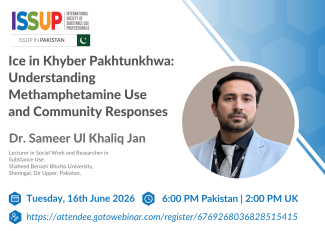
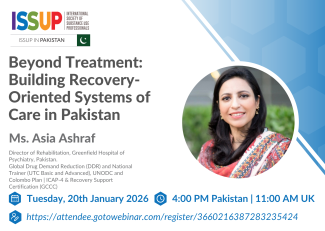
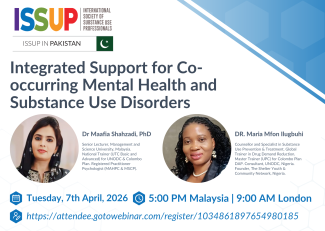
ISSUP in Pakistan presents 'Ice in Khyber Pakhtunkhwa: Understanding Methamphetamine Use
and Community Responses', a webinar with Dr. Sameer Ul Khaliq Jan.
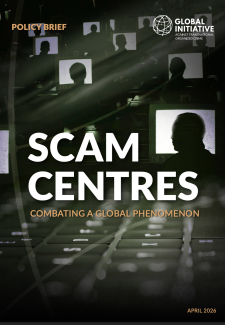
Global Initiative Against Transnational Organized and Crime
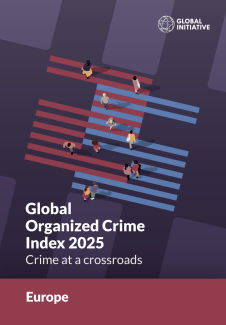
The 2025 Global Organized Crime Index shows that overall crime levels in Europe remain stable, and the region continues to rank among the least affected globally. However, this stability hides a more complex reality, with criminal markets and actors evolving and expanding.
Financial crime is the most widespread threat, driven by online fraud and cross-border schemes, while cybercrime continues to grow, often linked to state-backed or hybrid actors. Drug markets are also shifting, with cocaine and synthetic drugs increasing, while trafficking and smuggling networks remain deeply entrenched.
Global Initiative Against Transnational Organized Crime.
Short Summary
Scam centres are a fast-growing global organized crime threat, generating over $1 trillion in losses in 2024. They use technology and psychological manipulation to target victims worldwide, supported by global criminal networks and easy-to-access tools.
Despite enforcement efforts, scams are expanding and adapting, often moving to low-governance environments and exploiting geopolitical gaps.
Key Actions
Increase international coordination and intelligence sharing
Pressure safe havens and strengthen regulation of tech and financial platforms
The Central East ATTC-
Addiction
Technology Transfer Center Network managed by the Danya Institute
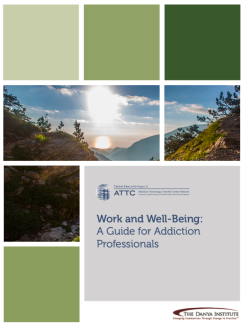
This guide highlights the critical importance of maintaining personal well-being in a field that is both highly rewarding and emotionally demanding. The guide explores common workplace stressors, such as high caseloads, complex client needs, and organisational pressures, and how these can lead to burnout, compassion fatigue, and reduced effectiveness if left unaddressed.
It presents a whole-health approach to well-being, emphasising multiple dimensions including emotional, physical, social, and occupational health, and underscores the shared responsibility between individuals and...
A new chapter in training has begun at ISSUP. A new Training Team has been formed with the goal of improving the accessibility and relevance of ISSUP’s training, while ensuring it reflects the learning needs of members worldwide.
In the early months of its work, the team carried out a training needs assessment to better understand members’ online learning needs. At the same time, the team engaged with several Learning Management System (LMS) providers to explore options for a new platform that supports accessible, high-quality learning. The proposals received are now being reviewed.
We’re excited to share that ISSUP has successfully launched the pilot of the Investing in Evidence-Based Prevention (IEP) Workshop, attended by 18 participants from 17 countries. The workshop was delivered in two online sessions, held on 14 and 21 August, bringing together policy-makers, decision-makers and funders.
The IEP workshop was developed by Jeff Lee, and Rachele Donini, together with the Scientific Support Team (SST). The pilot was delivered by Rachele Donini as trainer.
The first session, Introduction to Prevention Science, focused on the fundamentals of prevention...
Recovery
is not a one-size-fits-all process—it is dynamic, multifaceted, and deeply individual. To truly support individuals on their recovery journey, practitioners must access tools, systems, and knowledge that reflect the realities of those they serve.
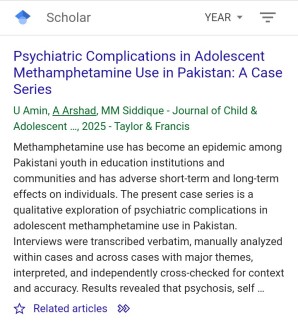
Amin, U., Arshad, A., & Siddique, M. M. (2025). Psychiatric Complications in Adolescent Methamphetamine Use in Pakistan: A Case Series. Journal of Child & Adolescent Substance Use, 1-8.
Methamphetamine use has become an epidemic among Pakistani youth in education institutions and communities and has adverse short-term and long-term effects on individuals. The present case series is a qualitative exploration of psychiatric complications in adolescent methamphetamine use in Pakistan. Interviews were transcribed verbatim, manually analyzed within cases and across cases with major themes, interpreted, and independently cross-checked for context and accuracy. Results revealed that psychosis, self-harm, suicidality, aggression, and insomnia are major psychiatric complications among...
The WHO Global Status Report on Alcohol and Health and
Treatment
of Substance Use Disorders provides a comprehensive snapshot of global trends in alcohol consumption, related harms, and national policy responses, alongside the availability and quality of treatment services for alcohol and drug use disorders.
Key Highlights:
Presents the latest data from WHO Member States, aligned with SDG Health Target 3.5: “Strengthen prevention and treatment of
substance abuse
, including narcotic
drug abuse
and harmful use of alcohol.”
Offers updated insights on global alcohol consumption patterns...
The ICUDDR Center for Credentialing & Accreditation (CCA) has announced that all ICAP Exams will be offered in Bali, Indonesia, on 18 September 2025, during the upcoming ISSUP 2025 event.
This survey is a collaborative effort by ICUDDR, NECPAM and ISAM. Together, we are trying to assess the impact recent reductions in funding have had to the workforce of fields dealing with substance use related issues.
ISSUP in Pakistan invites you to its upcoming webinar: "Breaking the Silence: Raising Awareness and Reducing
Stigma
Around Substance Use Disorder and Mental Health"