De Pourcq, K. Deneckere, S., & De Wachter, D. (2023). Implementing quality measurement in the field of drug treatment and harm reduction: A case study in Flanders. Adiktologie, 23(1), 63–72. https://doi.org/10.35198/01-2023-002-0005
الخلفية: لا يزال تنفيذ قياس الجودة يمثل تحديا في مجال العلاج من تعاطي المخدرات والحد من الضرر. في دراسة الحالة هذه، نبحث في الاستراتيجيات التي يمكن استخدامها لتعزيز تنفيذ سياسة يتم فيها نشر مؤشرات الجودة على الملأ.
الأساليب: بناء على منهجية قائمة على الأدلة ، توضح دراسة الحالة هذه كيف تقوم منظمة في فلاندرز - المعهد الفلمنكي لجودة الرعاية - بتطوير مؤشرات الجودة جنبا إلى جنب مع استراتيجياتها لتنفيذ قياس المؤشرات.
النتائج: تظهر الدراسة ثلاثة أنواع من مؤشرات الجودة في مجال العلاج الدوائي والحد من الضرر ، والتي تقيس الوقاية من الانتحار ، وعلاج التهاب الكبد الوبائي سي ، وتجربة المرضى / العملاء...
Mutatayi, C. (2023). The ASPIRE standards: Taking a step towards quality assurance in drug prevention in France – A case study. Adiktologie, 23(1), 55–61. https://doi.org/10.35198/01-2023-002-0001
مقدمة: في المناخ السياسي المواتي في منتصف عام 2010 ، تم تطوير معايير تقييم واختيار برامج الوقاية الصادرة عن مراجعة EDPQS (ASPIRE) لدعم تخطيط المشاريع في الوقاية من المخدرات.
الأساليب: دراسة الحالة هذه عبارة عن سرد من المنسق الرئيسي المسؤول عن صياغة مادة ضمان الجودة هذه.
النتائج: تم وصف الإطار الذي أدى إلى إنشاء معايير ASPIRE. ثم يتم شرح عملية الإنتاج ، وبالتالي يتم تقديم معايير ASPIRE ال 12 الناتجة عنها. تشكل معايير الجودة هذه والسمات المرتبطة بها قائمة مرجعية متماسكة لتقييم الجودة توفر إرشادات لتقييم الاحتياجات والأساس النظري والموارد المخطط لها. يتم تقييم امتثال الجودة مقابل نظام التسجيل...
Coughlan, E., Mckeown, P., Corrigan, N., & Harris, A. (2023). The implementation of quality standards (QS) at Coolmine Therapeutic Community. Adiktologie, 23(1), 47–53. https://doi.org/10.35198/01-2023-002-0003
BACKGROUND: Coolmine’s implementation of quality standards involves a period of change management, strategic planning, and national policy development.
METHODS: A narrative case study focusing on national policy and internal strategic planning.
CONCLUSIONS: From 2000, Coolmine embarked on a change management journey that kept the organisation at the forefront of drug and alcohol treatment in Ireland and internationally while maintaining fidelity to the Therapeutic Community. The strategy for quality assurance is replicable across similar organisations.
Kyprianou, E., Mina, Ch., Stylianou, K., Yiasemi, I., Gaist, B., Symeonidou E., Matheou, M., & Mavrou, J. (2023). National implementation of quality standards in prevention and treatment services for substance use/addictions – A case study of Cyprus. Adiktologie, 23(1), 41–46. https://doi.org/10.35198/01-2023-002-0004
مقدمة: الهيئة الوطنية القبرصية للإدمان (NAAC) هي هيئة التنسيق الرئيسية لجميع المسائل المتعلقة بالمواد المشروعة وغير المشروعة وكذلك المقامرة المرضية في قبرص وهي مسؤولة ، من بين أمور أخرى ، عن الترخيص والتقييم والتمويل (حيثما أمكن) والتنسيق وتعزيز جميع البرامج والإجراءات والأنشطة المتعلقة بالمواد والمقامرة. يعتمد الترخيص والتمويل على استيفاء معايير معينة ومستوى معين من الجودة.
الطريقة: تم وصف العملية التي أدت إلى إنشاء نظام معايير الجودة لترخيص وتمويل جميع البرامج التي يتم تنفيذها في قبرص (العلاج ، الوقاية ، الحد من الضرر ، إلخ).
المناقشة: تتم مناقشة تحديات وفوائد عملية ضمان الجودة.
Subata, E. (2023). Substance use disorder treatment quality standards in Lithuania 1992–2022: From grassroots initiatives to nationwide strategies. Adiktologie, 23(1), 31–39. https://doi.org/10.35198/01-2023-002-0002
خلفية: لم يتم توثيق تنفيذ معايير الجودة في علاج اضطرابات تعاطي المخدرات في ليتوانيا بشكل جيد في الأدبيات. AIMS: وصف عملية تطوير معايير الجودة من المبادرات الشعبية إلى دمجها في الرعاية الصحية الرئيسية تحت قيادة وزارة الصحة.
الأساليب: مراجعة سردية للوثائق المسترجعة ، بما في ذلك الإجراءات القانونية ذات الصلة ، يليها تحليل لاحق للمحتوى.
النتائج: تم تقسيم التنفيذ إلى ثلاث مراحل تميزت بأنشطة محددة ، وأصحاب المصلحة الرئيسيين ، ودرجة الاندماج في نظام الرعاية الصحية الوطني. تبين أن العنصر الدافع في المرحلة الأولية هو المبادرات الشعبية من الجمعيات المهنية ومقدمي الرعاية الصحية. وبسبب توافر التمويل من...
انضم إلى قمة توافق آراء روما 2.0 القادمة التي ستعقد في الفترة من 2 إلى 5 مايو 2023. وتعد القمة فرصة فريدة للالتقاء والمشاركة في مناقشات مع كبار الخبراء والمهنيين والناشطين وقادة الصليب الأحمر والهلال الأحمر في اجتماع تشاركي مصمم استنادا إلى تجارب المشاركين الوطنية والدولية.
وستقدم الحلقة الدراسية لمحة عامة عن عمل مكتب الأمم المتحدة المعني بالمخدرات والجريمة بشأن علاج الاضطرابات الناجمة عن تعاطي المخدرات مع التركيز بوجه خاص على الجهود التي تدعم التعاون في مجالي الصحة والعدالة من أجل زيادة فرص الحصول على الخدمات...
Rychlá, K., & Šťastná, L. (2022). Psychoactive prescription drug abuse: Selected psychological symptoms and quality of life in addiction treatment. Study protocol. Adiktologie, 22(4), 258–263. https://doi.org/10.35198/01-2022-004-0002
خلفية: أصبح تعاطي العقاقير ذات التأثير النفساني أمرا شائعا بشكل متزايد في الجمهورية التشيكية. تشمل هذه الأدوية المهدئات والمنومات ومزيلات القلق (البنزوديازيبينات والمنومات Z) والمواد الأفيونية. المرضى الذين يعانون من إدمان هذه الأدوية الموصوفة تظهر عليهم أعراض مرتبطة بالاستخدام طويل الأمد ، وخاصة المشاكل النفسية والجسدية ، واضطرابات النوم ، وضعف الأداء المعرفي ، والتهيج. وهناك حاجة إلى استجابة مرنة لاحتياجاتهم.
AIMS: الهدف من البحث هو وصف الأعراض النفسية المختارة ونوعية حياة متعاطي المخدرات ذوي التأثير النفساني في علاج الإدمان. ستشمل المخرجات الرئيسية للبحث دراسة عامة ونتائج تحليل البيانات.
Riegel, K. D. (2022). Bion’s basic assumption groups in the regimen treatment of addictions: Clinical implications. Adiktologie, 22(4), 250–256. https://doi.org/10.35198/01-2022-004-0004
This article provides reflection on the potential application of Bion’s model of basic assumption groups in patients undergoing midterm inpatient addiction treatment. The clinical implications are discussed in terms of the usability of Bion’s model and its possible benefits for patients in regimen addiction treatment, as well as the pitfalls associated with its application in this treatment modality. Despite the highly theoretical nature of this model, clinical experience to date confirms that analysis of the underlying assumptions and associated protomental patterns can provide valuable...
This live training on Motivational Interviewing takes place weekly on Thursdays from 10am till 11am SAST on the following dates: 9, 16, 23 & 30 March 2023.
Motivational Interviewing is a best-evidence approach for tackling harmful substance use and general motivation-related change, including that treatment non-adherence. It is an approach that does not seek to replace other therapeutic approaches, but that seeks instead to support and strengthen them.
We strongly recommend that you complete this Online Tour of Motivational Interviewing before attending this training: https:/...
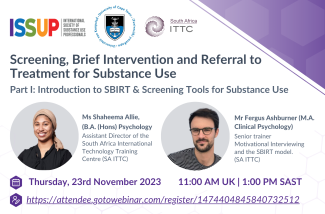
This training on Screening Brief Intervention, and Referral to Treatment (SBIRT) for harmful substance use takes place weekly on Thursdays from 12 noon till 1pm SAST on the following dates: 9, 16, 23, 30 March & 6 April 2023.
Source: Shapiro, C. J., Watson MacDonell, K., & Moran, M. (2021). Provider self-efficacy in delivering evidence-based psychosocial interventions: A scoping review. Implementation Research and Practice. https://doi.org/10.1177/2633489520988258 Plain language abstract: Provider self-efficacy is known...
Substance Abuse and Mental Health Services Administration (SAMHSA)
This guide highlights strategies for behavioural health and housing providers to conduct outreach and engage with individuals experiencing homelessness, initiate use of behavioural health treatment as they wait to receive stable housing and retain them in their recovery efforts once housed.
This guide contains a foreword and five chapters. Each chapter is designed to be brief and accessible to program administrators, clinicians, direct care staff, and community partners interested in interventions for treating individuals experiencing sheltered and unsheltered homelessness who have mental...
Mills, L., Dunlop, A., Montebello, M. et al. Correlates of treatment engagement and client outcomes: results of a randomised controlled trial of nabiximols for the treatment of cannabis use disorder. Subst Abuse Treat Prev Policy 17, 67 (2022).
Introduction
There is increasing interest and evidence for the use of cannabinoid medications in the treatment of cannabis use disorder, but little examination of the correlates of successful treatment. This paper is a secondary analysis of a randomised placebo-controlled trial of nabiximols for the treatment of cannabis use disorder (CUD), aiming to identify which client and treatment characteristics impact treatment engagement and outcomes.
Method
Bayesian multiple regression models were used to examine the impact of age, gender, duration of regular cannabis use, daily quantity of...
Hall, K., Higgins, F., Beach, K.F. et al. Disruptions to U.S. local public health’s role in population-based substance use prevention and response during COVID-19. Subst Abuse Treat Prev Policy 17, 73 (2022). https://doi.org/10.1186/s13011-022-00499-7
Background
COVID-19 dramatically limited the scale and scope of local health department (LHD) work, redirecting resources to the response. However, the need for essential public health services—including substance use prevention—was not reduced.
Methods
Six quantitative data sources were examined, collected between 2016 and 2021, to explore the impact of the COVID-19 pandemic on LHD substance use-related services.
Results
Before the pandemic, the proportion of LHDs providing some level of substance use prevention services was increasing, and many were expanding their level of provision...