
The activities of authorised agencies such as police, customs, border services, and investigative bodies to enforce drug control laws and address criminal activities related to the production, trafficking, and distribution of illicit substances. These activities may include investigations, intelligence gathering, interdiction, and collaboration with national and international partners to disrupt organised crime networks. Law enforcement plays an important role in protecting public safety and maintaining the rule of law, and is most effective when coordinated with broader public health, prevention, treatment, and recovery efforts as part of a balanced and comprehensive response to substance use.
Law Enforcement
The Emerging Role of Toxic Adulterants in Street Drugs in the US Illicit Opioid Crisis
This article introduces the emergence of adulterant cutting agents in street drugs in the United States and considers the synergistic effects that is compounding the opioids crisis in the U.S. The article outlines the role of the Colombo...
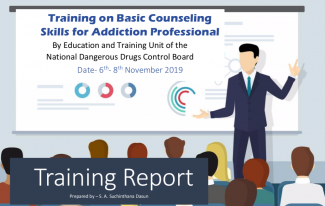
Training on Basic Counselling Skills for Addiction Professional - Final Report
In order to appropriately address the concerning global levels of substance use and substance use disorders, it is vital that staff are trained to deliver evidence-based treatment. At the start of November 2019, the Education and Training...
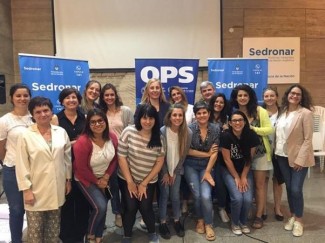
UNODC-WHO Training in Argentina on the Management of Substance Use & Substance Use Disorders during Pregnancy
A total of 35 participants took part in this training that was organized by WHO and UNODC together with PAHO, SEDRONAR, Hospital der Mar, and the generous support from the U.S. State Department Bureau of International Narcotics and Law...
Dual Relationships
In psychotherapy, a dual relationship occurs when a therapist has a second, significantly different relationship with their client in addition to the traditional client-therapist bond. For example, a therapist may find that the person...
UNODC-WHO Joint Programme on Drug Dependence Treatment and Care
Both the WHO and UNODC strive to address the complex issues presented by drug use and dependence. The vision: The effective and humane treatment for all people with drug use disorders. Nothing less than would be expected for any other...
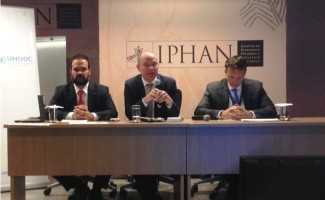
UNODC Conducts Training on Psychoactive Substance Use for Policymakers
The United Nations Office on Drugs and Crime (UNODC) held a training for high-level participants to address the nature, prevention and treatment of drug use disorders from 22-24 October 2019, in Brasilia, Brazil. The meeting gathered about...
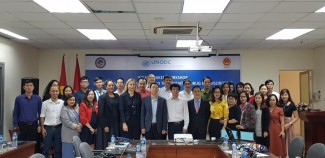
Vietnamese Policymakers Attend UNODC Training on the Nature, Prevention and Treatment of Drug Use Disorders
More than thirty (30) Vietnamese high-level decision makers from the Department of Social Vice Prevention, Ministry of Labour, Invalids and Social Affairs (MOLISA), the Office of the Government (OOG), Ministry of Health (MOH), Ministry of...
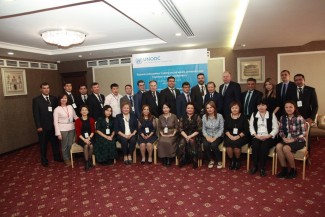
UNODC Training on the Nature, Prevention and Treatment of Drug Use Disorders for Policymakers from Central Asia
Twenty-four (24) high-level decision makers from the Kyrgyz Republic, Republic of Kazakhstan, Republic of Tajikistan, Republic of Uzbekistan, and Turkmenistan are participating in a three-day workshop on creating humane, effective and...
IGP Sees Decline in Street Crime
KARACHI: There is a visible decline in street crime and vehicle thefts in the city after the police started action against drug peddlers. This was stated by Sindh Inspector General of Police Dr Kaleem Imam at a meeting chaired by Chief...
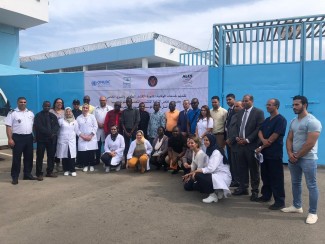
Experts from Côte d'Ivoire Attend a Study Tour in Morocco
From 6 to 12 October 2019, as part of the UNODC - PTRS / GLOK32 activities to guide the introduction of assisted pharmacological treatment of opioid dependence, 10 representatives, policy makers and treatment experts, and 2 psychiatrists...