Law

Recruitment of minors into organised crime

Scientific article
 - 
The recruitment of minors into serious and organised crime has increasingly become a tactic used by criminal networks to avoid detection, capture and prosecution. By using minors, the criminal networks increase the distance between the...


Drug production and precursors — EUDA ongoing activities

Website
The European Union Drugs Agency (EUDA) continues to monitor illicit drug production and precursor chemicals across Europe to improve understanding of how drug markets are evolving. Production within the European Union is primarily focused...
EUDA

2025 National Drug Threat Assessment (NDTA) - Drug Enforcement Administration (DEA)

Report
The U.S. Drug Enforcement Administration (DEA) has released its 2025 National Drug Threat Assessment (NDTA), providing an overview of the threats posed by illicit drugs and the transnational criminal organizations involved in their production and trafficking. The report highlights the continuing impact of synthetic drugs, particularly fentanyl and methamphetamine, on public health, public safety, and national security.
The Drug Enforcement Administration (DEA)

UN Toolkit on Synthetic Drugs

Toolkit
The UN Toolkit on Synthetic Drugs is a practical online resource coordinated by UNODC that brings together tools, guidance, and operational resources from across the UN system to support responses to the global synthetic drug problem...

New UNODC Toolkit Module on Security Document Examination: Launching event

Event Date
 - 
Online
- Global -
Attendance
online

UNODC has launched a new Security Document Examination module within the UN Toolkit on Synthetic Drugs to help law enforcement, border control, and forensic professionals detect and respond to document fraud linked to synthetic drug trafficking.

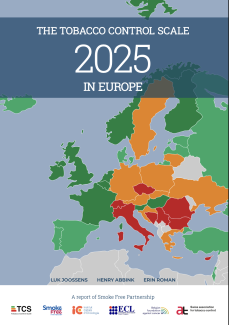
The Tobacco Control Scale 2025 in Europe

Report
 - 
The Tobacco Control Scale 2025 shows that progress in tobacco control across Europe has slowed, with more countries recording lower scores than in previous years. Key reasons include the failure to regulate heated tobacco products in the same way as cigarettes and the lack of adjustments to tobacco taxes and prices to keep pace with inflation.