
The range of medical, psychological, and social services designed to help individuals reduce or stop substance use and manage substance use disorders. Treatment may include assessment, counselling and behavioural therapies, medication-assisted treatment, withdrawal management, and support for co-occurring mental or physical health conditions. Effective treatment is typically person-centred and evidence-informed, and may be provided in outpatient, community, or residential settings. Treatment aims to improve health and functioning, reduce substance-related harms, and support individuals in moving toward recovery and long-term wellbeing.
Treatment
Guidance for Mental Health and Psychosocial Support for COVID-19
This document provides guidance to African Union Member States on key mental health and psychosocial support (MHPSS) considerations in relation to the coronavirus disease 2019 (COVID-19) pandemic. It contains useful guidance on MHPSS for...
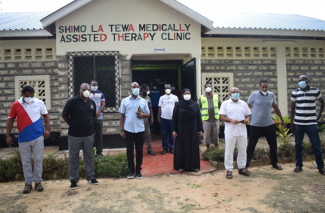
Drug Use and COVID-19 in Prisons: First Clinic Dedicated to the Treatment of People Living in Prisons with Opioid Use Disorders in Kenya
In 2018, Mombasa planned to set up a methadone programme for heroin injecting drug users living in prisons. As a follow up, UNODC worked together with the County of Mombasa and the Kenya Prison Service in 2019, to support and expand...
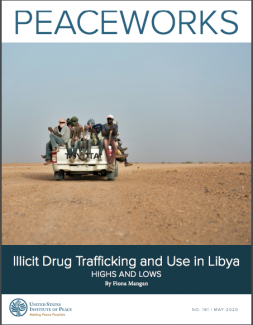
Illicit Drug Trafficking and Use in Libya: Highs and Lows
Following the overthrow of Muammar Gadhafi in 2011, Libya has faced security and economic challenges. Drug trafficking and consumption have also increased significantly over the past years. This report by the U.S. Institute of Peace...
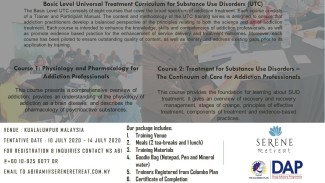
UTC / UPC Workshop for Addiction Professionals
Basic Level Universal Treatment Curriculum for Substance Use Disorders (UTC) The Basic Level UTC consists of eight courses that cover the broad spectrum of addiction treatment. Each course consists of a Trainer and Participant Manual. The...
How Many Drinkers Should Be in Treatment? An Effectiveness Bank Hot Topic
HOW MANY DRINKERS SHOULD BE IN TREATMENT? What proportion of England’s problem drinkers are in treatment, how far does that fall short of the number who *should* be – and how do we judge ‘should’? Depending on where you draw the line...
Training on Drug Prevention in Conjunction with 23rd Session of the Commission of Narcotic Drugs (CND 2-6 March 2020 in Vienna, Austria
Mr. Kasirye Rogers attended a meeting on drug prevention in conjunction with the 23rd Sessions of the Commission of Narcotic Drugs (CND 2-6 March, 2020 in Vienna Austria). It was organized by Drug Free America Foundation Inc., a world drug...
Mental-Health Physicians and Psychotherapists Teamed Up to Provide Support to the Population of Kazakhstan
In today’s conditions of the COVID-19 pandemic and necessary quarantine measures taken by the Government of Kazakhstan psychosocial support and assistance, as well as self-education of stress management, supportive communication with each...
Insights on the Impact of COVID-19 Pandemic and Substance Use Disorders in Kenya
The UNODC Kenya mentor has participated at the webinar on the impact of COVID-19 pandemic and Substance Use Disorders in Kenya on Friday, 15 May 2020. Together with Hussein Manji, Public Health Consultant at UNODC ROEA, the mentor outlines...
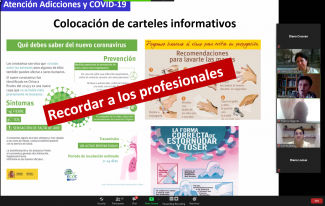
Video: UNODC Ecuador COVID-19 Training
Webinar on Good Practices in Mental Health Care in Residential Centers in Context of COVID-19 Internal work agenda Activity Institutions Responsible Link home UNODC-EC Francis Negrete, UNODC Specialist, Ecuador Words of welcome UNODC-EC...
The Treatment Organisation Is the Healing Context. Effectiveness Bank Alcohol Treatment Matrix cell D2
THE TREATMENT ORGANISATION IS THE HEALING CONTEXT Seminal and key research on how treatment organisations create an environment affecting whether staff and alcohol-dependent patients realise their potential. Starts with the US resource...