
The range of medical, psychological, and social services designed to help individuals reduce or stop substance use and manage substance use disorders. Treatment may include assessment, counselling and behavioural therapies, medication-assisted treatment, withdrawal management, and support for co-occurring mental or physical health conditions. Effective treatment is typically person-centred and evidence-informed, and may be provided in outpatient, community, or residential settings. Treatment aims to improve health and functioning, reduce substance-related harms, and support individuals in moving toward recovery and long-term wellbeing.
Treatment
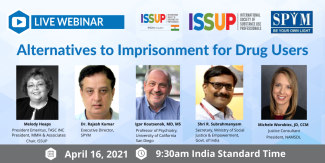
Alternatives to Imprisonment for Drug Users
ISSUP India, in collaboration with ISSUP, organized a webinar on alternatives to incarceration for persons with substance use disorders and opportunities for interventions along the justice system.
Alternatives to Imprisonment for Drug Users
ISSUP India, in collaboration with ISSUP, is organizing a webinar on alternatives to incarceration for persons with substance use disorders and opportunities for interventions along the justice system.
Why is the record so poor? Highlight from Effectiveness Bank Alcohol Treatment Matrix row 5
See this message as a web page: WHY IS THE RECORD SO POOR? The first cell of row 5 presented a catalogue of negative evaluations of attempts to treat problem drinking among sentenced offenders in Britain, a record also seen internationally...
The Short-Term Impact of 3 Smoked Cannabis Preparations versus Placebo on PTSD Symptoms: A Randomized Cross-Over Clinical Trial
Abstract Importance There is a pressing need for development of novel pharmacology for the treatment of Posttraumatic Stress Disorder (PTSD). Given increasing use of medical cannabis among US military veterans to self-treat PTSD, there is...
Using Nutrition to Promote Addiction Recovery
In this article Khary Rigg, Ph.D and Kelly Miller, NTMC introduce us to the importance of nutrition in addiction recovery and highlight some practical, evidence-based actions to consider when advocating for nutritional interventions in recovery care.
Nutrition in Addiction Recovery: Reading List
It is not uncommon for individuals with substance use disorder (SUD) to experience conditions which make healthy eating and proper nutrition more challenging.
Why harmful drinkers reject change coping & cognition in maintaining heavy drinking
Abstract Public Health England identifies approximately 600,000 dependent drinkers as the target treatment population. However, they identify an additional 1.3 million ‘harmful’ drinkers who do not have serious dependency but are drinking...
‘Dangerous Data’ Part 8: Controlled Drinking: What Do the Authorities Say? An Effectiveness Bank Hot Topic
‘DANGEROUS DATA’ PART 8: CONTROLLED DRINKING: WHAT DO THE AUTHORITIES SAY? Official guidance on controlled drinking as a treatment goal from Britain’s National Institute for Health and Care Excellence, how the National Treatment Agency for...
Teleintervenção fundamentada na entrevista motivacional para familías que convivem com um parente com problemas por consumo de álcool e outras Drogas
Cassandra Borges Bortolon, a Clinical Psychologist, Postgraduate Professor in Cognitive-Behavioural Therapy, Director of Acurarte, President of AMTEPA, Founder of the Acurartech Company, and an Independent Research Consultant, presented...
Internet‐Based Therapy versus Face‐To‐Face Therapy for Alcohol Use Disorder: A Randomized Controlled Non‐Inferiority Trial
Abstract Background and aims Most people with alcohol use disorder (AUD) are never treated. Internet‐based interventions are effective in reducing alcohol consumption and could help to overcome some of the barriers to people not seeking or...