
Benzodiazepines for Anxiety: Uses, Risks, Dependence and Safer Long-Term Alternatives
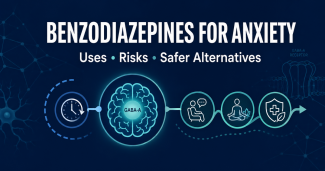
Quick Answer
Benzodiazepines such as Xanax (alprazolam), Ativan (lorazepam), Klonopin (clonazepam) and Valium (diazepam) are fast-acting sedatives that relieve severe or acute anxiety by enhancing GABA, the brain's main calming neurotransmitter. They are highly effective in the short term, but tolerance and physical dependence can develop within days to weeks, so clinical guidance generally limits them to brief use — often two to four weeks — while longer-term treatments such as SSRIs, SNRIs, buspirone and cognitive behavioral therapy take effect. A person who has taken a benzodiazepine regularly should never stop abruptly without medical guidance.
Key Takeaways
- Benzodiazepines provide rapid relief for acute anxiety and panic, often within 15 to 60 minutes depending on the medication.
- They are generally intended for short-term or intermittent use because tolerance and physical dependence develop quickly with daily use.
- The FDA requires its most prominent warning on the entire benzodiazepine class covering abuse, misuse, addiction, physical dependence and withdrawal reactions.
- Combining benzodiazepines with alcohol, opioids or other sedatives can cause life-threatening respiratory depression.
- First-line treatments for chronic anxiety — SSRIs, SNRIs and cognitive behavioral therapy — are non-habit-forming and suitable for long-term use.
- Stopping a benzodiazepine after regular use requires a gradual, medically supervised taper. Abrupt discontinuation can cause seizures.
Article Contents
- How benzodiazepines treat anxiety
- Commonly prescribed benzodiazepines for anxiety
- Why benzodiazepines are a short-term treatment
- The "bridge" role alongside long-term medications
- Side effects
- Who should generally avoid benzodiazepines
- Dangerous combinations
- Long-term alternatives for anxiety
- When benzodiazepine use becomes a problem
- Stopping safely
- Frequently asked questions
- Medical references
How Benzodiazepines Treat Anxiety
Benzodiazepines bind to GABA-A receptors in the brain and amplify the effect of gamma-aminobutyric acid, the neurotransmitter that slows neural firing. The result is a rapid reduction in the physical and mental symptoms of anxiety: racing thoughts, muscle tension, restlessness and the surge of a panic attack.
That speed is the defining clinical advantage of the class. No first-line anxiety medication works faster. It is also the source of the class's central limitation: the brain adapts to regular benzodiazepine exposure, and both the benefit and the body's dependence on the medication change with continued use.
Commonly Prescribed Benzodiazepines for Anxiety
Prescribers choose among benzodiazepines primarily based on how quickly each takes effect and how long it lasts.
| Medication | Speed of Onset | Duration of Effect | Typical Role in Anxiety Care |
|---|---|---|---|
| Alprazolam (Xanax) | Fast | Short | Acute panic and severe episodic anxiety; rapid relief with a higher misuse liability |
| Lorazepam (Ativan) | Moderate | Short to intermediate | Generalized anxiety and acute episodes; predictable metabolism preferred for older adults |
| Clonazepam (Klonopin) | Slower | Long | Sustained panic-symptom prevention rather than as-needed rescue dosing |
| Diazepam (Valium) | Fast | Very long | Severe anxiety with muscle tension; long action also used in supervised tapers |
These medications are not interchangeable. A full medication-by-medication review of onset, potency, metabolism and dependence risk is available in Xanax vs. Valium vs. Ativan vs. Klonopin: Key Differences.
Why Benzodiazepines Are a Short-Term Treatment
Clinical guidance generally limits daily benzodiazepine use to a period of weeks — commonly cited as two to four — because of three predictable adaptations:
- Tolerance. The same dose produces less effect over time, which invites dose escalation.
- Physical dependence. The nervous system adapts to the medication's presence, and withdrawal symptoms appear when the dose drops. The FDA notes this can develop after steady use for several days to weeks, even at prescribed doses.
- Withdrawal risk. Abrupt discontinuation after regular use can cause severe reactions, including seizures — which is why the FDA benzodiazepine boxed warning covers abuse, misuse, addiction, physical dependence and withdrawal for the entire class.
None of these adaptations requires misuse. They are the normal pharmacology of the class, which is why duration of use — not just dose — is the variable prescribers watch most closely.
The "Bridge" Role Alongside Long-Term Medications
One of the most common evidence-supported uses of benzodiazepines in anxiety care is as a temporary bridge. First-line antidepressants for anxiety — SSRIs and SNRIs — typically take two to six weeks to reach full effect, and some patients experience a temporary increase in anxiety when starting them. A short benzodiazepine course can control symptoms during that window, then be tapered as the daily medication takes over.
The bridge model works when the endpoint is planned from the start. Problems tend to arise when a bridge quietly becomes a permanent structure: the benzodiazepine continues for months, tolerance develops, and discontinuing becomes harder than it would have been at week four.
Side Effects
Common side effects of benzodiazepines include:
- Drowsiness and daytime sedation
- Impaired coordination and slowed reaction time
- Memory problems, particularly forming new memories
- Confusion, more pronounced in older adults
- Dizziness
These effects impair driving and increase fall risk — one of the main reasons prescribing guidance urges particular caution in adults over 65.
Who Should Generally Avoid Benzodiazepines
Benzodiazepines warrant heightened caution or avoidance for:
- People with a history of substance use disorder. The reinforcement cycle of rapid relief makes the class a poor fit; non-habit-forming alternatives are usually preferred.
- People who use opioids or drink regularly. Combined central nervous system depression is the class's most dangerous interaction.
- Older adults. Slower metabolism prolongs effects, raising fall, fracture and confusion risk.
- People with significant respiratory conditions. Sedation can worsen breathing problems.
- Pregnancy. Risks and alternatives should be discussed with the prescriber.
These are prescribing considerations, not judgments. The right decision is made between a patient and a clinician who knows the full history — which is why disclosing substance use honestly during assessment matters so much.
Dangerous Combinations
Benzodiazepines, opioids and alcohol all depress the central nervous system. Combined, their effects multiply rather than add: profound sedation, blackouts, slowed or stopped breathing, coma and death. The FDA specifically warns that benzodiazepines taken with opioids, alcohol or other CNS depressants can cause severe respiratory depression and fatal overdose, and the National Institute on Drug Abuse reports that benzodiazepines are involved in a substantial share of overdose deaths that also involve opioids.
A separate danger applies to pills bought outside licensed pharmacies: counterfeit tablets sold as Xanax frequently contain fentanyl or unpredictable sedative combinations, and appearance cannot confirm a pill's contents.
Long-Term Alternatives for Anxiety
Because tolerance and dependence limit benzodiazepines to short-term use, first-line treatment for chronic anxiety and panic disorders relies on options that are safe to continue indefinitely:
- SSRIs (selective serotonin reuptake inhibitors) — daily antidepressants such as escitalopram or sertraline; the most common first-line medications for generalized anxiety and panic disorder.
- SNRIs (serotonin-norepinephrine reuptake inhibitors) — such as venlafaxine or duloxetine.
- Buspirone — a non-sedating, non-habit-forming anti-anxiety medication that takes several weeks to reach full effect.
- Hydroxyzine — a prescription antihistamine sometimes used for mild to moderate anxiety, particularly for patients who should not take benzodiazepines. It works without the GABA mechanism and carries no dependence risk.
- Cognitive behavioral therapy (CBT) — the best-studied psychotherapy for anxiety disorders, with durable benefits that persist after treatment ends. Exposure-based therapy and CBT for insomnia address specific presentations.
For many patients the most effective long-term plan combines a daily medication with therapy — treating the anxiety itself rather than repeatedly sedating its symptoms.
When Benzodiazepine Use Becomes a Problem
Warning signs that benzodiazepine use has moved beyond its intended role include needing higher doses for the same effect, running out of prescriptions early, anxiety between doses that feels worse than the original problem, obtaining pills from multiple sources, and continuing use despite memory problems, accidents or conflict at home or work.
Importantly, physical dependence and addiction are not the same thing — a person can be dependent on a correctly used prescription without having a use disorder, and the distinction changes what treatment is needed. That distinction is covered in depth in Benzodiazepine Dependence vs. Addiction: Physical Dependence, Tolerance, Withdrawal and Benzodiazepine Use Disorder.
Stopping Safely
A person who has taken benzodiazepines regularly should not stop abruptly. Withdrawal can include rebound anxiety, insomnia, tremor, sensory sensitivity and — in serious cases — seizures. The 2025 Joint Clinical Practice Guideline on Benzodiazepine Tapering recommends gradual, individualized, patient-centered dose reduction under clinical supervision when the risks of continued use outweigh the benefits, with the pace adjusted to the individual's response rather than a fixed schedule.
Patients and families who want to understand the typical phases of discontinuation can review this overview of How Long Does Benzodiazepine Withdrawal Last?
When dependence is accompanied by loss of control, use from multiple sources, or combined alcohol or opioid use, a broader clinical assessment is appropriate. People and families seeking practical information about levels of care can review this guide to benzodiazepine addiction treatment on Long Island.
Frequently Asked Questions
Are benzodiazepines good for anxiety?
They are highly effective for acute, severe anxiety and panic in the short term. For chronic anxiety, tolerance and dependence make them a poor long-term strategy, which is why SSRIs, SNRIs and cognitive behavioral therapy are first-line treatments.
How long can you take benzodiazepines for anxiety?
Clinical guidance generally limits daily use to a period of weeks — commonly two to four — because tolerance and physical dependence develop quickly. Longer courses are sometimes clinically justified, but they require a plan for monitoring and, eventually, a gradual taper.
Which benzodiazepine is best for anxiety?
There is no single best choice. Xanax acts fastest and suits acute panic; Klonopin's long duration suits sustained symptom prevention; Ativan's predictable metabolism suits older adults and people on multiple medications; Valium's long action suits anxiety with muscle tension. The right choice depends on the symptom pattern, health history and interaction risks.
What is the safest anxiety medication long term?
SSRIs, SNRIs and buspirone are non-habit-forming and designed for long-term daily use, and cognitive behavioral therapy provides durable benefit without medication risks. Hydroxyzine is a non-addictive option for milder anxiety. Which is safest for a given person depends on their health profile and should be decided with a prescriber.
Do benzodiazepines stop working over time?
With regular use, tolerance commonly reduces the effect of the same dose. Escalating the dose without medical direction raises the risks of sedation, dependence and withdrawal rather than restoring the original benefit.
Can you take benzodiazepines with an SSRI?
Prescribers sometimes combine them deliberately — a short benzodiazepine bridge while an SSRI takes effect. The combination should always be physician-managed, with a planned endpoint for the benzodiazepine.
What happens if you stop taking benzodiazepines suddenly?
After regular use, abrupt discontinuation can trigger severe withdrawal, including seizures. Stopping should always happen through a gradual, medically supervised taper.
Related Guides
- Xanax vs. Valium vs. Ativan vs. Klonopin: Key Differences
- Benzodiazepine Dependence vs. Addiction: Physical Dependence, Tolerance, Withdrawal and Benzodiazepine Use Disorder
- Valium vs. Lorazepam: Differences in Uses, Duration and Safety
- How Long Does Benzodiazepine Withdrawal Last?
- Benzodiazepine Addiction Treatment on Long Island
Medical References and Primary Sources
- U.S. Food and Drug Administration. FDA requiring Boxed Warning updated to improve safe use of the benzodiazepine drug class. September 23, 2020.
- American Society of Addiction Medicine and partner organizations. Joint Clinical Practice Guideline on Benzodiazepine Tapering: Considerations When Benzodiazepine Risks Outweigh Benefits. 2025.
- National Institute on Drug Abuse. Benzodiazepines and Opioids.
- National Institute of Mental Health. Anxiety Disorders.
Written by: Benjamin Zohar, NCACIP
Medical review: Brandon McNally, RN
Medical disclaimer: This article is intended for educational and public-health purposes. It does not provide individualized medical advice, diagnosis or a tapering schedule. Do not start, stop or alter a prescription medication without consulting a qualified healthcare professional. Call emergency services for seizures, difficulty breathing, loss of consciousness, severe confusion or other life-threatening symptoms.