
Benzodiazepine Dependence vs. Addiction and Withdrawal
Medical Review: Brandon McNally, RN | Published: July 23, 2026 | Last Updated: July 23, 2026
Quick Answer
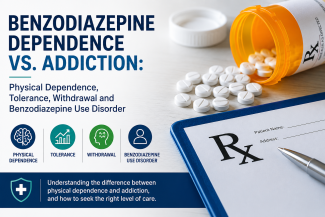
Benzodiazepine dependence and benzodiazepine addiction are not the same condition. Physical dependence means the body has adapted to regular exposure and may produce withdrawal symptoms when the dose is reduced. Addiction involves loss of control, compulsive use, or continued use despite harm. A person may experience dependence without addiction, or both at the same time.
Safety warning: Do not stop a regularly used benzodiazepine suddenly without medical guidance. Abrupt discontinuation or rapid dose reduction can cause severe withdrawal reactions, including seizures. Call emergency services for difficulty breathing, seizures, hallucinations, severe confusion, loss of consciousness, or suicidal thoughts.
Key Takeaways
- Physical dependence can develop even when a benzodiazepine is taken exactly as prescribed.
- Withdrawal alone does not prove that a person has an addiction.
- Addiction is identified by the pattern and consequences of use, not only by dose or duration.
- Tolerance means the same dose produces less of the previous effect over time.
- Misuse includes taking more than prescribed, using another person's medication, or using the drug for intoxication.
- Benzodiazepines should usually be reduced gradually through an individualized, clinician-supervised plan.
- Combining benzodiazepines with opioids, alcohol, or other sedatives increases overdose risk.
Article Contents
- What Are Benzodiazepines?
- Physical Dependence
- Benzodiazepine Addiction
- Dependence vs. Addiction
- Tolerance
- Misuse
- Withdrawal
- Tapering
- When Treatment May Be Needed
- Alcohol and Opioids
- Counterfeit Pills
- When to Seek an Assessment
- FAQs
- Related Guides
- References
What Are Benzodiazepines?
Benzodiazepines are prescription medications that reduce central nervous system activity by enhancing the effects of gamma-aminobutyric acid, commonly called GABA. They may be prescribed for anxiety, panic disorder, insomnia, seizures, muscle spasms, and selected acute medical conditions.
Common benzodiazepines include alprazolam (Xanax), clonazepam (Klonopin), lorazepam (Ativan), diazepam (Valium), temazepam (Restoril), and chlordiazepoxide (Librium).
The FDA benzodiazepine boxed warning addresses abuse, misuse, addiction, physical dependence, and withdrawal reactions. For a medication-by-medication comparison, see Xanax vs. Valium vs. Ativan vs. Klonopin: Key Differences.
What Is Physical Dependence?
Physical dependence is the body's adaptation to repeated benzodiazepine exposure. When the nervous system adjusts to the medication's continued presence, reducing or stopping the drug may produce withdrawal symptoms.
Dependence can occur during medically appropriate treatment, while following the prescribed dose, and without intoxication, compulsive drug-seeking behavior, or a substance use disorder. The FDA states that physical dependence may develop during regular benzodiazepine use, including when the medication is taken as prescribed.
Clinical pearl: Withdrawal symptoms show physiological adaptation. They do not, by themselves, establish addiction.
What Is Benzodiazepine Addiction?
Benzodiazepine addiction involves a problematic pattern of use that has become difficult to control or continues despite harm. Clinically, it may be diagnosed as a sedative, hypnotic, or anxiolytic use disorder.
Possible signs include:
- Taking more medication or taking it more often than directed
- Persistent cravings or preoccupation with obtaining the medication
- Repeated unsuccessful attempts to reduce nonmedical use
- Using the medication to become intoxicated or emotionally numb
- Continuing despite medical, occupational, legal, or relationship consequences
- Combining benzodiazepines with alcohol, opioids, or other sedatives
- Giving up important activities because of use
The defining issue is not simply whether withdrawal occurs. It is whether use has become compulsive, hazardous, or persistently harmful.
Physical Dependence vs. Benzodiazepine Use Disorder
Physical dependence describes a biological adaptation. Benzodiazepine use disorder describes a harmful behavioral pattern. They can occur separately or together.
| Physical Dependence | Benzodiazepine Use Disorder |
|---|---|
| The body adapts to regular medication exposure. | Use becomes problematic, compulsive, or difficult to control. |
| Can occur during prescribed treatment. | May involve use outside medical direction. |
| Withdrawal may occur after dose reduction. | Use may continue despite clear harm. |
| Does not automatically involve cravings. | Cravings, loss of control, or drug-seeking may be present. |
| May be managed through reassessment and a supervised taper. | May require addiction treatment, psychiatric care, and continuing support. |
A person may fit one column, both columns, or neither. A clinical evaluation is required to understand the individual situation.
What Is Benzodiazepine Tolerance?
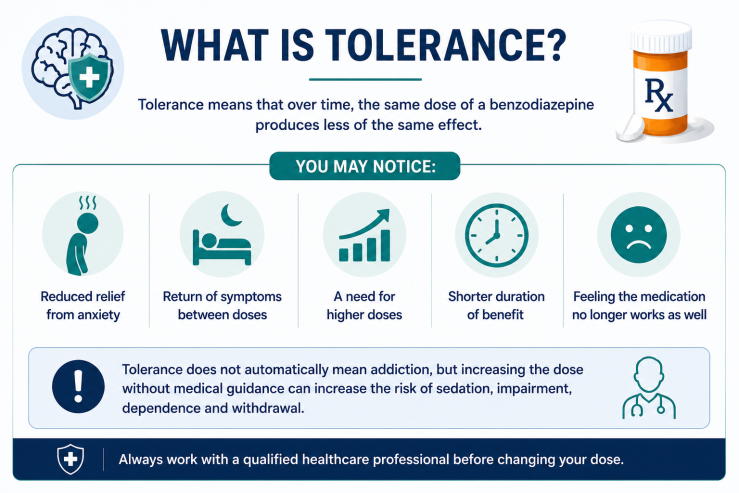
Tolerance means the same dose produces less of the previous effect over time. A person may notice reduced anxiety relief, symptoms returning between doses, a shorter duration of benefit, or a desire for a larger dose.
Tolerance does not automatically mean addiction. However, increasing the dose without medical direction may increase sedation, impairment, physical dependence, and withdrawal risk.
The return of symptoms may reflect the original condition, rebound anxiety, symptoms between doses, medication tolerance, or fear that the medication is wearing off. These possibilities should be evaluated rather than assumed.
What Is Benzodiazepine Misuse?
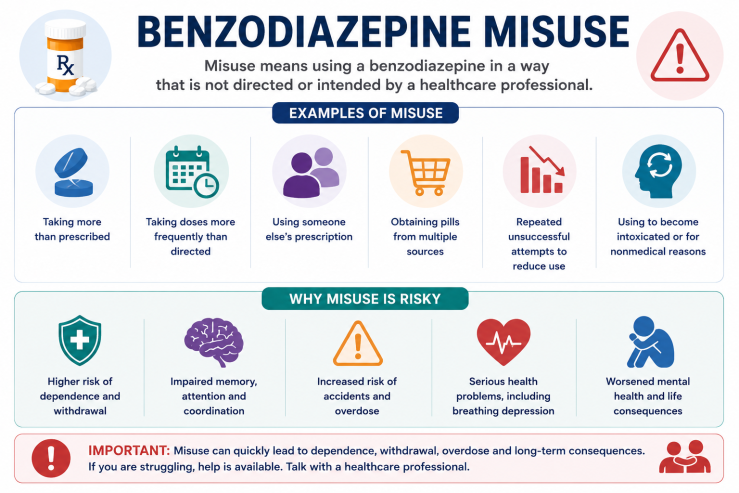
Misuse occurs when a benzodiazepine is used in a way that is not directed or intended by a healthcare professional.
Examples include:
- Taking a larger dose or taking doses closer together than prescribed
- Using medication prescribed to someone else
- Obtaining pills from multiple or unlicensed sources
- Crushing, altering, or using tablets in an unintended way
- Using the medication for intoxication or emotional escape
- Combining it with alcohol or other drugs without medical direction
Misuse can increase the risk of impaired coordination, memory problems, accidents, dependence, withdrawal, overdose, and addiction.
Can Someone Be Physically Dependent Without Being Addicted?
Yes. A person may take a benzodiazepine exactly as prescribed, become physically dependent, and experience withdrawal during dose reduction without showing compulsive use or continued use despite harm.
This situation may require review of the original diagnosis, reassessment of risks and benefits, monitoring for withdrawal, treatment of the underlying condition, and an individualized taper when discontinuation is appropriate. It should not automatically be labeled as addiction.
Can Someone Have Addiction Without Severe Physical Dependence?
Yes. A person may show loss of control, repeated nonmedical use, or continued harmful behavior even when withdrawal symptoms are not severe or obvious. Addiction is evaluated through the pattern and consequences of use, not solely through withdrawal intensity.
Why the Distinction Matters
Confusing dependence with addiction can lead to two opposite errors: labeling every dependent patient as addicted, or assuming prescribed use can never become problematic. Both errors can delay appropriate care.
| Myth | Fact |
|---|---|
| Withdrawal means a person is addicted. | Withdrawal shows physical adaptation. Addiction requires a broader pattern of problematic use. |
| A prescription prevents addiction. | Prescribed use can still become harmful or difficult to control. |
| Everyone who is dependent needs residential treatment. | The appropriate level of care depends on withdrawal risk, behavior, medical history, concurrent substance use, and available support. |
What Is Benzodiazepine Withdrawal?
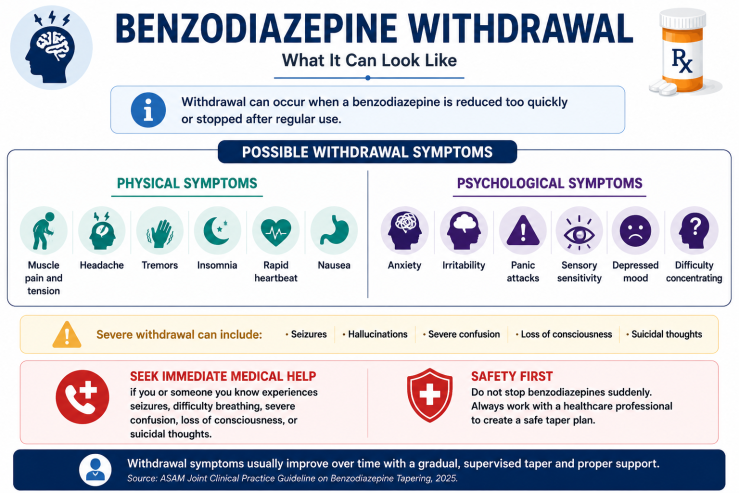
Benzodiazepine withdrawal may occur when regular exposure is stopped suddenly or reduced too quickly. Symptoms may be physical, psychological, or both, and severe withdrawal can become life-threatening.
Possible symptoms include anxiety, panic, insomnia, irritability, restlessness, tremor, sweating, muscle pain, nausea, difficulty concentrating, sensory sensitivity, perceptual disturbances, depression, confusion, hallucinations, and seizures.
The FDA warns that abrupt discontinuation or rapid dose reduction can cause acute withdrawal reactions, including seizures. Families seeking additional context may also review How Long Does Benzodiazepine Withdrawal Last?.
Why Withdrawal Varies
Withdrawal does not follow one universal timeline. The course may be affected by the specific medication, whether it is shorter- or longer-acting, daily dose, duration and frequency of use, metabolism, previous withdrawal experiences, seizure history, alcohol or opioid use, other medications, and co-occurring medical or psychiatric conditions.
Shorter-acting medications may produce symptoms sooner, while longer-acting medications may have a delayed onset. Either pattern can become clinically serious. The FDA also describes reports of prolonged withdrawal symptoms in some patients.
Why Abrupt Discontinuation Can Be Dangerous
Regular benzodiazepine exposure changes nervous system activity. Sudden removal may produce excessive nervous system activation, with potential complications including seizures, delirium, severe agitation, hallucinations, psychosis, severe depression, suicidal thoughts, and autonomic instability.
When Benzodiazepine Tapering May Be Appropriate
Tapering may be considered when the risks of continued treatment outweigh the benefits. The 2025 Joint Clinical Practice Guideline on Benzodiazepine Tapering emphasizes gradual, individualized dose reduction under clinical supervision.
A taper may need to account for the current medication and dosage, duration of treatment, prior withdrawal reactions, seizure history, other sedating medications, alcohol or opioid use, medical conditions, psychiatric symptoms, social support, and the patient's response to each reduction.
This article does not provide an individualized tapering schedule. There is no single schedule suitable for every patient. A taper may need to be slowed, paused, or modified when clinically significant withdrawal symptoms develop.
When Tapering Alone May Not Be Sufficient
A taper addresses physical dependence and withdrawal risk, but it may not address addiction. Broader treatment may be needed when there is compulsive use, repeated intoxication, illicit pill use, polysubstance use, continuing harm, psychiatric instability, unsafe housing, or repeated relapse.
Depending on the assessment, treatment may include addiction counseling, psychiatric care, individual or group therapy, residential treatment, partial hospitalization, intensive outpatient care, family education, relapse-prevention planning, and continuing recovery support.
When dependence is accompanied by loss of control, repeated misuse, polysubstance use, or continued harm, families can review Benzodiazepine Addiction Treatment on Long Island.
Benzodiazepines, Alcohol, and Opioids
Combining benzodiazepines with opioids, alcohol, or other central nervous system depressants can sharply increase overdose risk. The combination may cause severe sedation, memory loss, poor coordination, loss of consciousness, slowed or stopped breathing, coma, or death.
The FDA warns about severe respiratory depression and fatal overdose when benzodiazepines are combined with opioids, alcohol, or other depressants. The National Institute on Drug Abuse overview of benzodiazepines and opioids provides additional information about this interaction.
Counterfeit Benzodiazepines
Tablets obtained outside licensed pharmacies may not contain the medication shown on the pill. Counterfeit tablets sold as Xanax or another benzodiazepine may contain fentanyl, illicitly manufactured benzodiazepines, other sedatives, unexpected drug combinations, or unpredictable doses.
Visual appearance cannot confirm a pill's contents. Families can review Counterfeit Xanax Bars on Long Island: What Families in Nassau and Suffolk County Should Know for warning signs and harm-reduction context.
Treating the Underlying Condition
Many people began taking benzodiazepines for genuine symptoms involving anxiety, panic attacks, insomnia, trauma, seizures, muscle spasms, or another medical condition. Those symptoms still require care if benzodiazepine risks emerge.
Depending on the diagnosis, treatment may include cognitive behavioral therapy, exposure-based therapy, trauma-informed care, sleep-focused behavioral treatment, non-benzodiazepine medication when clinically appropriate, psychiatric follow-up, and treatment for co-occurring depression or other mental health conditions.
When to Seek a Professional Assessment
A professional assessment may be appropriate when medication use, withdrawal risk, or related behavior can no longer be managed safely.
Seek an assessment when someone:
- Cannot reduce use without becoming ill
- Takes more than prescribed or repeatedly runs out early
- Uses multiple prescribers, pharmacies, or unlicensed sources
- Combines benzodiazepines with alcohol or opioids
- Experiences blackouts, falls, accidents, seizures, or overdose
- Continues use despite serious consequences
- Has worsening depression, suicidal thoughts, or psychiatric instability
- Cannot safely manage the medication at home
An assessment does not automatically establish addiction. It helps clinicians evaluate physical dependence, withdrawal risk, misuse, co-occurring conditions, and the safest level of care.
Frequently Asked Questions
Is benzodiazepine dependence the same as addiction?
No. Dependence means the body has adapted to regular exposure and may produce withdrawal when the dose is reduced. Addiction involves problematic use, loss of control, or continued use despite harm. A person may have dependence without addiction, addiction with dependence, or both.
Can you become dependent while taking Xanax or Klonopin as prescribed?
Yes. Physical dependence can occur during prescribed benzodiazepine use. This does not automatically mean the patient has misused the medication or developed a substance use disorder.
Does withdrawal mean someone is addicted?
Not necessarily. Withdrawal demonstrates physical adaptation. Addiction is determined by the person's overall pattern of use, ability to control use, and continued use despite consequences.
Can benzodiazepine withdrawal cause seizures?
Yes. Abrupt discontinuation or reducing the dose too quickly can cause seizures and other severe withdrawal reactions. Anyone with seizure symptoms should receive emergency medical attention.
Should someone stop benzodiazepines immediately if dependence develops?
No. A person taking benzodiazepines regularly should consult a qualified clinician before changing the dose. An individualized, gradual taper may be required.
Is a taper enough to treat benzodiazepine addiction?
Not always. A taper may reduce physical dependence and withdrawal risk, but compulsive use, polysubstance use, psychiatric symptoms, and continued use despite harm may require broader behavioral-health and addiction treatment.
Can benzodiazepines be used safely with alcohol?
Combining benzodiazepines with alcohol can increase sedation, respiratory depression, overdose, and death. Patients should discuss alcohol use honestly with their clinician.
Does every physically dependent person need residential treatment?
No. The appropriate level of care depends on withdrawal risk, concurrent substance use, psychiatric stability, medical history, previous complications, home support, and the ability to follow an outpatient plan safely.
Related Guides
- Xanax vs. Valium vs. Ativan vs. Klonopin: Key Differences
- Counterfeit Xanax Bars on Long Island: What Families in Nassau and Suffolk County Should Know
- How Long Does Benzodiazepine Withdrawal Last?
- Benzodiazepine Addiction Treatment on Long Island
- Valium vs. Lorazepam: Differences in Uses, Duration and Safety
Conclusion
Physical dependence, tolerance, misuse, and addiction are related but distinct concepts. Some people need medication reassessment and a supervised taper. Others need withdrawal management, psychiatric care, addiction treatment, or a combination of services.
No one who has used benzodiazepines regularly should stop abruptly without medical guidance.
Medical References and Primary Sources
- U.S. Food and Drug Administration. FDA Requiring Boxed Warning Updated to Improve Safe Use of the Benzodiazepine Drug Class. September 23, 2020.
- American Society of Addiction Medicine and partner organizations. Joint Clinical Practice Guideline on Benzodiazepine Tapering: Considerations When Benzodiazepine Risks Outweigh Benefits. 2025.
- National Institute on Drug Abuse. Benzodiazepines and Opioids.
About the Author and Medical Reviewer
Written by: Benjamin Zohar, NCACIP
Medical review: Brandon McNally, RN
Medical disclaimer: This article is intended for educational and public-health purposes. It does not provide individualized medical advice, diagnosis, or a tapering schedule. Do not start, stop, or alter a prescription medication without consulting a qualified healthcare professional. Call emergency services for seizures, difficulty breathing, loss of consciousness, severe confusion, or other life-threatening symptoms.