
Suboxone, Kratom, and 7-Hydroxymitragynine (7-OH): A Guide to Withdrawal Risks, Buprenorphine Treatment, and Clinical Considerations
Kratom, 7-OH, and Suboxone: Withdrawal, Blocking Effects, and Treatment Options
Quick answer: Yes, Suboxone can block the effects of kratom because buprenorphine binds strongly to the brain’s opioid receptors. However, taking Suboxone too soon after kratom or 7-OH may trigger precipitated withdrawal, so it should only be used under medical supervision.
Table of Contents
- What Is Kratom?
- What Is 7-OH?
- Can Kratom Cause Dependence?
- Will Suboxone Block Kratom?
- Can Suboxone Cause Precipitated Withdrawal?
- How Long After Kratom Can You Take Suboxone?
- Can Suboxone Help With Kratom Withdrawal?
- Kratom vs. Suboxone
- Kratom vs. 7-OH
- Treatment Options
- Frequently Asked Questions
What Is Kratom?
Kratom comes from the leaves of the Mitragyna speciosa tree, which is native to Southeast Asia. Kratom products are commonly sold as powders, capsules, drinks, extracts, gummies, and concentrated tablets.
The two most discussed active alkaloids in kratom are mitragynine and 7-hydroxymitragynine, also known as 7-OH. These compounds interact with opioid receptors in the brain. At lower doses, some people report stimulant-like effects. At higher doses, kratom may produce sedating or opioid-like effects.
What Is 7-OH?
7-OH, or 7-hydroxymitragynine, is one of the most potent opioid-like alkaloids associated with kratom. While small amounts may occur naturally in kratom leaves, many modern 7-OH products are concentrated or enhanced.
Because 7-OH acts on opioid receptors, frequent use may lead to tolerance, dependence, cravings, and withdrawal. Concentrated 7-OH products may carry higher risk than traditional kratom powder because of their potency and inconsistent dosing.
Can Kratom Cause Dependence?
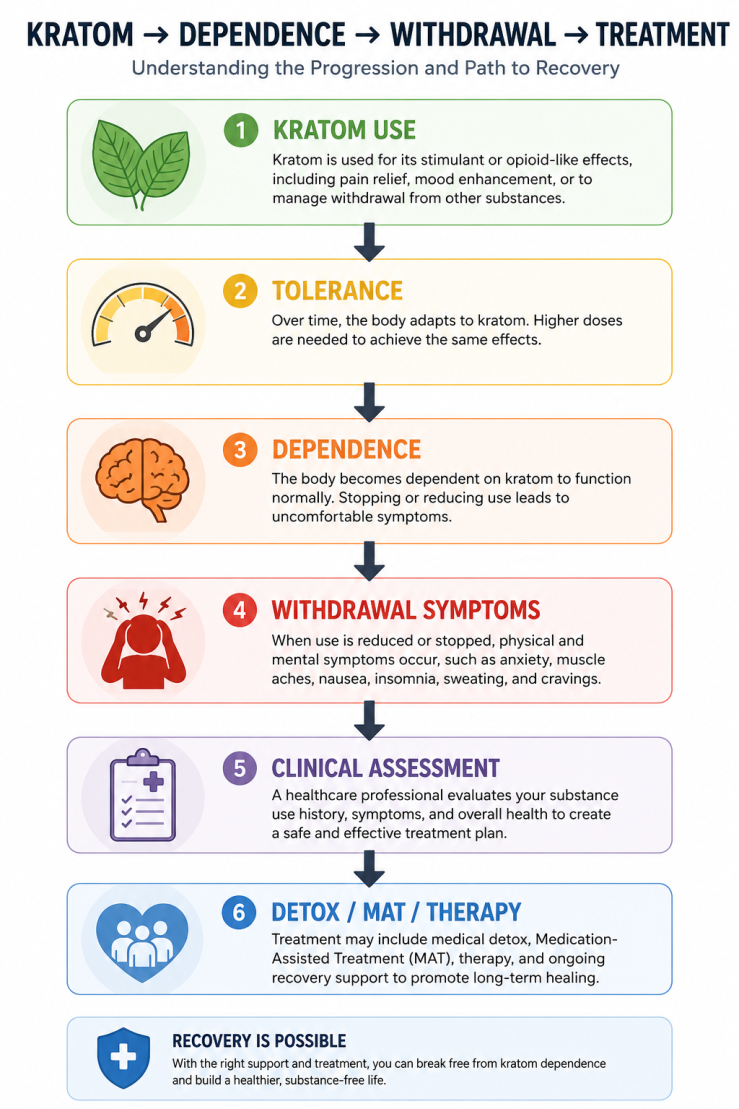
Yes. Kratom can cause physical dependence, especially when used daily, in high doses, or in concentrated extract form. Dependence means the body has adapted to the substance and withdrawal symptoms may occur when use is reduced or stopped.
- Muscle aches
- Restlessness
- Anxiety or irritability
- Insomnia
- Sweating
- Nausea or diarrhea
- Hot and cold flashes
- Cravings
- Depression or low mood
Will Suboxone Block Kratom?
Yes. Suboxone can block kratom’s opioid-like effects. Suboxone contains buprenorphine and naloxone. Buprenorphine binds very tightly to mu-opioid receptors, which can prevent kratom’s active alkaloids from attaching to those same receptors.
This means that if someone is stabilized on Suboxone, kratom may produce little to no opioid-like effect. However, this same receptor-blocking action is also why timing matters.
Can Taking Suboxone After Kratom Cause Precipitated Withdrawal?
Yes. Taking Suboxone too soon after kratom or 7-OH may trigger precipitated withdrawal. This can happen when buprenorphine displaces other opioid-like substances from the receptors before the body is ready.
Possible precipitated withdrawal symptoms include:
- Severe nausea
- Vomiting
- Diarrhea
- Muscle pain
- Shaking
- Sweating
- Panic or intense anxiety
- Restlessness
- Elevated heart rate
- Strong cravings
How Long After Kratom Can You Take Suboxone?
There is no single safe waiting period that applies to everyone. Timing depends on the amount used, whether the person used powder, extracts, or 7-OH products, the duration of use, metabolism, withdrawal severity, and other substances involved.
In general, buprenorphine is usually started after a person is already in mild to moderate withdrawal, not while they are still feeling kratom’s effects. A clinician may use symptom assessment and withdrawal scoring tools to determine when it is safer to begin medication.
Can Suboxone Help With Kratom Withdrawal?
Suboxone may be used by some medical providers to help manage severe kratom or 7-OH dependence, especially when withdrawal symptoms are intense or when a person has been unable to stop despite repeated attempts.
Suboxone is FDA-approved for opioid use disorder. Kratom use disorder is not always treated the same way as traditional opioid use disorder, but because kratom and 7-OH affect opioid receptors, some clinicians may consider buprenorphine-based treatment when clinically appropriate.
Kratom vs. Suboxone
| Category | Kratom | Suboxone |
|---|---|---|
| Regulatory status | Not FDA-approved for medical use | FDA-approved for opioid use disorder |
| Main active compounds | Mitragynine and 7-OH | Buprenorphine and naloxone |
| Product consistency | Often unregulated and variable | Prescription medication with controlled dosing |
| Dependence risk | Yes, especially with daily use or extracts | Yes, but medically supervised |
| Medical supervision | Often used without supervision | Prescribed and monitored by clinicians |
Kratom vs. 7-OH
| Category | Kratom Powder | 7-OH Products |
|---|---|---|
| Potency | Usually lower | Often much stronger |
| Dependence risk | Possible with frequent use | Potentially higher |
| Withdrawal risk | Mild to severe | May be more severe |
| Product type | Powder, capsules, tea | Tablets, extracts, shots, enhanced products |
Treatment Options for Kratom and 7-OH Dependence
Medical Detox
Medical detox may be appropriate for people with severe withdrawal, heavy 7-OH use, polysubstance use, or medical complications. Detox provides monitoring, symptom management, and support during early withdrawal.
Medication-Assisted Treatment
Some people may benefit from medication support, including buprenorphine-based treatment when clinically appropriate. Medication should be prescribed and monitored by a qualified provider.
Outpatient Treatment
Outpatient treatment can help people continue work, school, or family responsibilities while receiving therapy, relapse prevention support, and clinical care.
Dual Diagnosis Treatment
Many people use kratom to cope with anxiety, depression, trauma, chronic stress, or opioid withdrawal. Dual diagnosis treatment addresses both substance use and underlying mental health conditions.
Frequently Asked Questions
Does Suboxone block kratom?
Yes. Suboxone can block kratom’s opioid-like effects because buprenorphine binds strongly to opioid receptors.
Can you take kratom while on Suboxone?
Taking kratom while on Suboxone is not recommended. It may reduce treatment effectiveness, increase side effects, or lead to unsafe substance use patterns.
Can Suboxone cause kratom withdrawal?
Suboxone can trigger precipitated withdrawal if taken too soon after kratom or 7-OH use.
Is Suboxone approved for kratom addiction?
Suboxone is FDA-approved for opioid use disorder. Some clinicians may use it off-label for severe kratom or 7-OH dependence when medically appropriate.
Is 7-OH stronger than regular kratom?
Concentrated 7-OH products may be significantly stronger than traditional kratom powder and may carry greater risk for dependence and withdrawal.
How do I stop taking kratom safely?
The safest approach depends on dose, duration of use, product type, withdrawal symptoms, and medical history. A clinical assessment can help determine whether tapering, detox, outpatient treatment, or medication support is appropriate.
Bottom Line
Suboxone can block kratom, and it may help some people manage severe kratom or 7-OH withdrawal under medical supervision. However, taking Suboxone too soon after kratom can cause precipitated withdrawal, and mixing substances without medical guidance can be dangerous.
If kratom or 7-OH use has become difficult to control, professional treatment can help. A safe recovery plan may include medical detox, medication support, therapy, outpatient treatment, or dual diagnosis care depending on the person’s needs.