
Crack vs. Cocaine: Differences, Effects, Risks & Treatment
Written by Christopher Veto, NCACIP | Medically reviewed by Brandon McNally, RN, BSN
Crack vs. Cocaine: What's the Difference?
Crack and powder cocaine are chemically the same drug, but they are not the same in how they are made, used, or experienced. Both come from the coca plant and act as powerful central nervous system stimulants. The critical differences lie in their chemical form, how quickly they reach the brain, and the intensity of the addiction risk each carries. Understanding these distinctions matters for anyone trying to recognize a problem in themselves or a loved one, and for anyone weighing treatment options.
This guide breaks down the chemistry, the methods of use, the health and legal consequences, and the paths toward recovery, including professional cocaine treatment options available to people ready to take the first step.
Are Crack and Cocaine the Same Drug?
Pharmacologically, crack and powder cocaine are forms of the same substance. Powder cocaine is the hydrochloride salt form of the drug. Crack is the freebase form, created when powder cocaine is processed with baking soda (or ammonia) and water, then heated to remove the hydrochloride. This chemical change is what allows crack to be smoked, while powder cocaine is typically snorted or dissolved and injected.
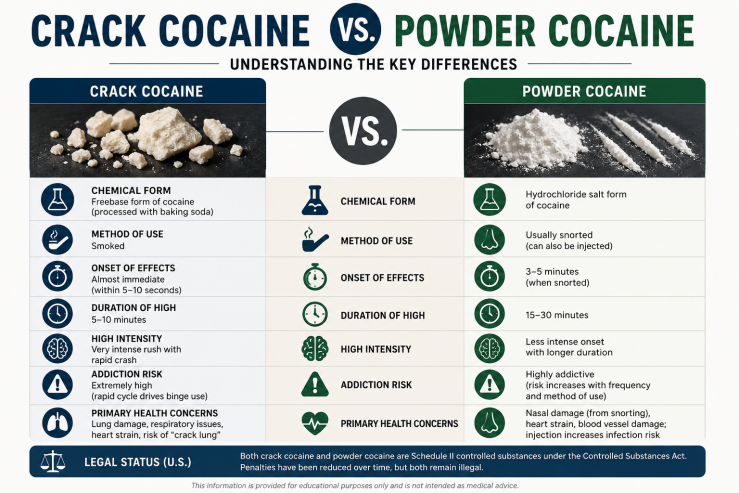
The shared active ingredient means both drugs produce similar core effects: euphoria, increased energy, elevated heart rate, and heightened blood pressure. What changes is the speed and intensity of delivery, and that single difference reshapes nearly everything about how each drug affects the body and the risk of addiction.
How Is Crack Made From Cocaine?
Crack is produced by dissolving powder cocaine in a mixture of water and baking soda or ammonia. The solution is heated until the hydrochloride salt separates out, a process often described as "freeing the base." What remains hardens into a solid, rock-like substance that crackles when heated, which is where the name "crack" comes from. The rocks are then broken into smaller pieces and smoked, usually through a glass pipe.
Because crack is cheaper to produce and sold in small quantities, it has historically been more accessible and less expensive per dose than powder cocaine, a factor that contributed heavily to the crack epidemic of the 1980s.
Key Differences at a Glance
| Feature | Powder Cocaine | Crack Cocaine |
|---|---|---|
| Chemical Form | Hydrochloride salt form | Freebase form (salt removed via baking soda + water) |
| Appearance | Fine white crystalline powder | Solid, rock-like crystals (white to off-white) |
| Method of Use | Snorted, dissolved & injected, or rubbed on gums | Smoked (heated and vapor inhaled) |
| Onset of Effects | 3–5 minutes (snorted) | Almost immediate (within ~10 seconds) |
| Duration of High | 15–30 minutes | 5–10 minutes |
| Addiction Liability | Highly addictive | Extremely high (rapid rush + abrupt crash drive binge use) |
| Typical Cost | More expensive per gram | Cheaper per dose (sold in small "rocks") |
| Primary Organ Risks | Nasal/septum damage, cardiovascular strain, IV infection risk (HIV, hepatitis C) | Lung damage, worsened asthma, "crack lung," cardiovascular strain |
| Legal Classification | Schedule II (Controlled Substances Act) | Schedule II — historically harsher penalties, now reduced |
| Sentencing History | Baseline; 100-to-1 disparity reduced to 18-to-1 (Fair Sentencing Act, 2010) | Mandatory minimums eased; First Step Act (2018) applied reductions retroactively |
Method of Use: Smoking vs. Snorting vs. Injecting
Powder cocaine is most often snorted, where it is absorbed through the nasal tissues, though it can also be dissolved in water and injected for a faster, more intense effect. It is sometimes rubbed onto the gums. Crack, by contrast, is almost always smoked. The vapor reaches the lungs and crosses into the bloodstream within seconds, delivering an intense but very short "rush."
This is the heart of the difference between the two. The faster a stimulant reaches the brain, the more intense the high and the steeper the crash that follows. Smoking crack produces the quickest, most powerful effect, which is precisely why it carries such a high potential for compulsive, repeated use.
Effects: Onset, Intensity, and Duration
The route of administration determines how a person experiences the drug. Smoking crack brings on effects almost instantly, often within ten seconds, but those effects fade in five to ten minutes. Snorting powder cocaine takes longer to take hold, around three to five minutes, but the high lasts somewhat longer, typically fifteen to thirty minutes.
Short-term effects of either form can include constricted blood vessels, dilated pupils, nausea, elevated body temperature, raised blood pressure, a rapid or irregular heartbeat, muscle tremors, and restlessness. Larger doses may produce bizarre, erratic, or violent behavior. The shorter the high, the more frequently a person tends to redose, which fuels the cycle of binge use common with crack.
Why Is Crack Considered More Addictive?
Both crack and powder cocaine are powerfully addictive, but the way crack is used makes it especially dangerous. Smoking delivers the drug to the brain almost immediately and produces an intense, fleeting rush followed by an abrupt crash. That rapid cycle of intense reward and sharp withdrawal encourages frequent redosing and binge patterns, which accelerates the development of dependence.
Powder cocaine, when snorted, reaches the brain more slowly and produces a longer, less explosive high, which can make the addiction develop somewhat more gradually. But injecting powder cocaine carries a risk profile similar to smoking crack, since both deliver the drug quickly and intensely. The method of use, more than the chemical itself, drives the difference in addiction liability. People struggling with either form often benefit from structured medically supervised cocaine detox to manage the early withdrawal phase safely.
Health Effects of Crack and Cocaine
Prolonged use of cocaine in any form can damage the cardiovascular and neurological systems, along with the liver, kidneys, and other organs. The two forms tend to harm the body in somewhat different ways because of how they are taken.
Smoking crack can cause significant lung damage, worsen asthma, and lead to a condition sometimes called "crack lung." Snorting powder cocaine can damage the nasal cavity, causing chronic nosebleeds, a persistent runny nose, and over time a loss of the sense of smell. Injecting cocaine raises the risk of bloodborne infections such as HIV and hepatitis C. Both forms strain the heart and carry a serious risk of stroke, heart attack, seizure, and overdose.
Can You Overdose on Crack or Cocaine?
Yes. Both crack and powder cocaine carry a high risk of overdose, which can be fatal. A cocaine overdose can cause heart attack, stroke, seizures, dangerously high body temperature, and respiratory failure. Because crack delivers an intense dose so quickly and encourages repeated use in a short period, the risk of taking too much in a binge is significant. Mixing either form with alcohol or opioids dramatically increases the danger.
Legal Status and the Sentencing Disparity
Both cocaine and crack are classified as Schedule II controlled substances under the Controlled Substances Act, meaning they have a recognized but tightly restricted medical use and a high potential for abuse. It is illegal to manufacture, distribute, or possess either drug outside of narrow, supervised medical contexts.
For decades, federal law treated crack far more harshly than powder cocaine. A 100-to-1 sentencing ratio meant that possessing a small amount of crack triggered the same mandatory minimum sentence as a much larger amount of powder cocaine, a disparity widely criticized as a source of racial inequity in the criminal justice system. The Fair Sentencing Act of 2010 reduced that ratio to 18-to-1, and the First Step Act of 2018 made those reductions retroactive, easing penalties for many people previously sentenced under the old framework. Both drugs still carry heavy legal consequences.
Recognizing Cocaine Addiction
Addiction to cocaine or crack is clinically classified as a stimulant use disorder. Only a licensed professional can diagnose it, but common warning signs include using larger amounts or for longer than intended, repeated unsuccessful attempts to cut down, spending a great deal of time obtaining and using the drug, intense cravings, neglecting responsibilities at work, school, or home, continued use despite relationship or health problems, using in physically dangerous situations, needing more of the drug to feel the same effect, and experiencing withdrawal when use stops.
Cocaine withdrawal is rarely life-threatening on its own, but it can be intensely uncomfortable, producing fatigue, vivid and unpleasant dreams, sleep disturbances, increased appetite, slowed movements, depression, and strong cravings. These symptoms are a major reason people relapse early, which is why structured support matters so much during the first days and weeks.
When to Consider an Intervention for Crack or Cocaine Use
One of the hardest realities of stimulant addiction is that the person using often does not see, or will not admit, how serious the problem has become. The intense rush and abrupt crash that define crack and cocaine use can drive a cycle of denial, where each binge is rationalized and the consequences are minimized. For families watching a loved one spiral, waiting for that person to "hit rock bottom" on their own can be dangerous, and sometimes fatal, given the overdose and cardiovascular risks involved.
An intervention is a structured, planned conversation in which family members, friends, and often a trained professional come together to help someone recognize the impact of their drug use and accept help. It is not an ambush or a confrontation meant to shame the person. Done correctly, it is a compassionate, carefully prepared effort to break through denial and present a clear, immediate path to treatment.
Why Stimulant Addiction Often Requires a Different Approach
Crack and cocaine interventions carry their own challenges. Because the high is so short and the cravings so powerful, people who use stimulants can be especially resistant, irritable, or unpredictable, particularly during a crash or withdrawal. The binge-and-crash pattern means a person may swing between seeming fine and being in acute distress within the same day. Timing and preparation matter enormously, and this is where a professional interventionist's experience becomes critical.
A trained interventionist understands the behavioral patterns specific to stimulant use, helps the family avoid common mistakes like accusations or ultimatums delivered in anger, and keeps the conversation focused on care and a concrete next step. They also help the family prepare for the possibility of refusal and establish clear, consistent boundaries that protect everyone involved.
What a Successful Intervention Looks Like
A well-run intervention typically involves several elements working together: a small, carefully chosen group of people the person trusts and respects; a rehearsed plan so the conversation stays calm and on track; specific, factual examples of how the addiction has affected each person, shared without blame; and a treatment option arranged in advance so the person can say yes and act on it immediately, often the same day. The goal is to make accepting help the easiest and most supported choice in the room.
Families considering this step do not have to navigate it alone. Working with experienced professionals who specialize in crack and cocaine intervention and treatment can mean the difference between a conversation that pushes a loved one away and one that opens the door to recovery. If a stimulant use disorder has taken hold, a timely, well-planned intervention can be the turning point that leads to structured cocaine addiction treatment and a real chance at lasting change.
Treatment Options for Crack and Cocaine Addiction
Recovery from crack or cocaine addiction is possible, and effective treatment is tailored to the individual's needs, history, and circumstances. Care often begins with a period of detox to clear the drug from the body and stabilize the person, followed by ongoing treatment that may take place in an inpatient or outpatient setting.
Behavioral therapies are central to cocaine addiction treatment. Cognitive-behavioral therapy helps people identify and change the thought patterns and triggers that drive use, while contingency management and motivational approaches reinforce sustained abstinence. Many people also benefit from mutual-help groups such as Narcotics Anonymous and from recovery housing or sober-living communities that provide a substance-free environment during early recovery.
If you or someone you love is struggling with crack or cocaine, reaching out for help is the most important first step. Comprehensive cocaine addiction treatment programs can connect you with the right level of care and a clear path forward.
Frequently Asked Questions
What is crack slang for?
"Crack" is the common name for the freebase, smokable form of cocaine. The term comes from the crackling sound the rocks make when heated. Street names also include "rock," "base," and "hard."
Is freebase the same as crack?
Crack is a type of freebase cocaine. Both involve removing the hydrochloride salt to create a smokable form, but traditional freebasing uses ammonia and ether, while crack is made with baking soda, which is cheaper and avoids the flammable solvents.
How does crack show up on a drug test compared to cocaine?
Because crack and powder cocaine are the same drug, they produce the same metabolite, benzoylecgonine, on a drug test. Standard tests cannot distinguish between the two. Cocaine is typically detectable in urine for two to four days, though heavy use can extend that window.
Which is stronger, crack or cocaine?
Crack produces a more intense, faster-hitting high because it is smoked and reaches the brain within seconds, but that high is also much shorter. Powder cocaine produces a milder, longer-lasting effect when snorted. Neither is "safer," and both are highly addictive.
What replaced cocaine in Coca-Cola?
Coca-Cola removed cocaine from its formula in the early 1900s and switched to a cocaine-free coca leaf extract used only for flavor. Caffeine remains the active stimulant in the modern beverage.
This article is for informational and educational purposes only and is not a substitute for professional medical advice, diagnosis, or treatment. If you or someone you know is struggling with substance use, please consult a qualified healthcare provider. This is a sensitive topic; support and resources are available.