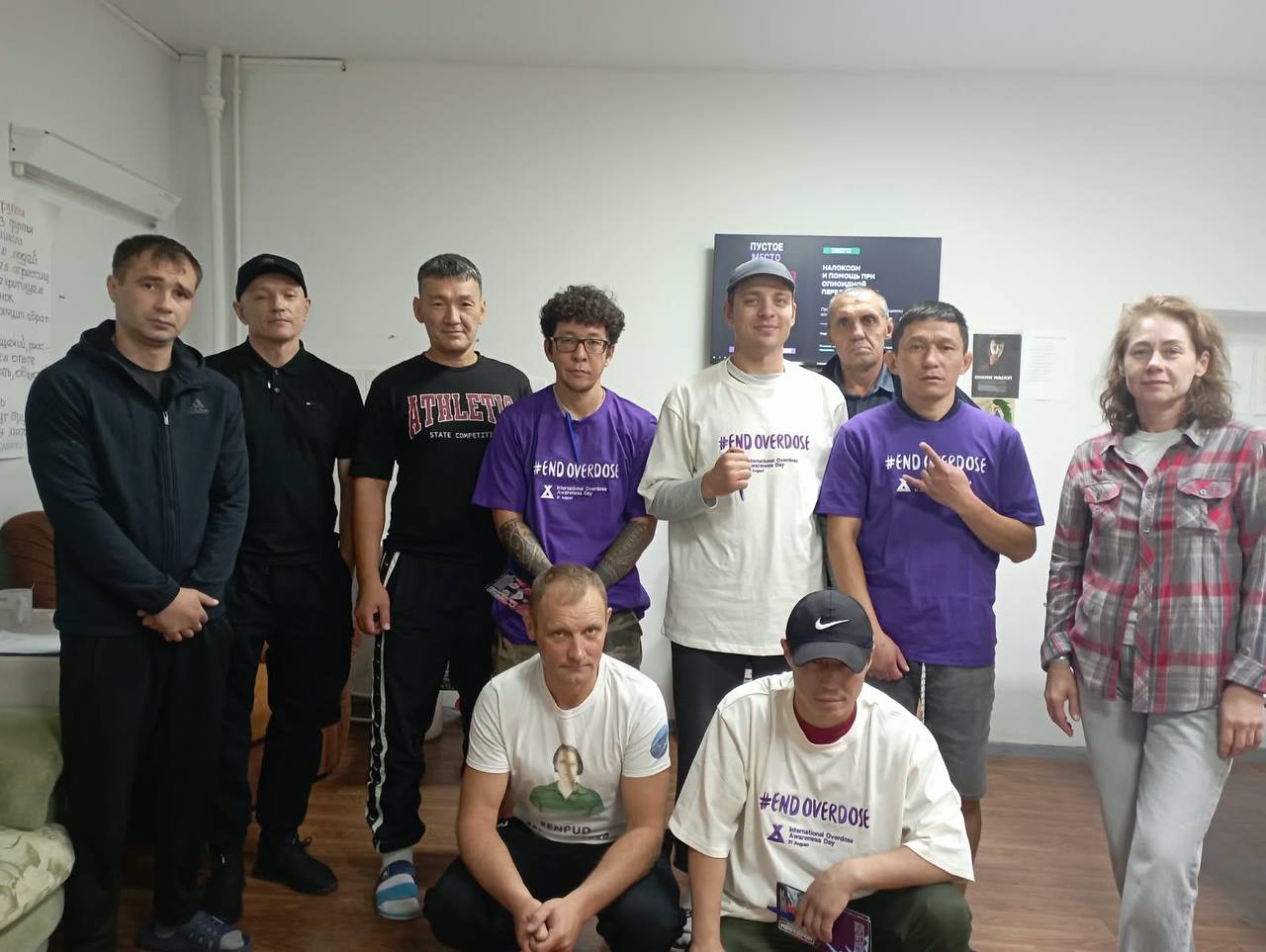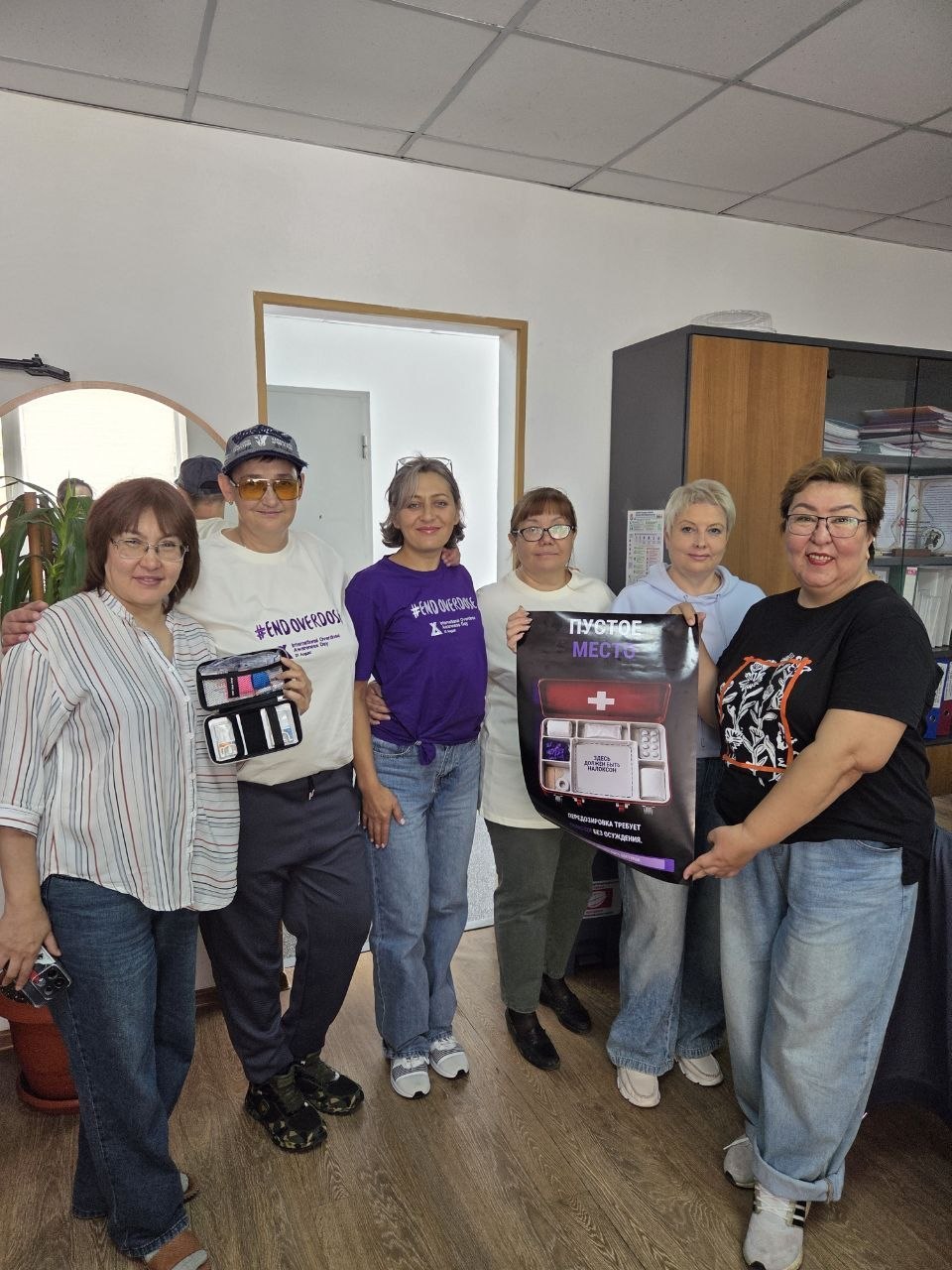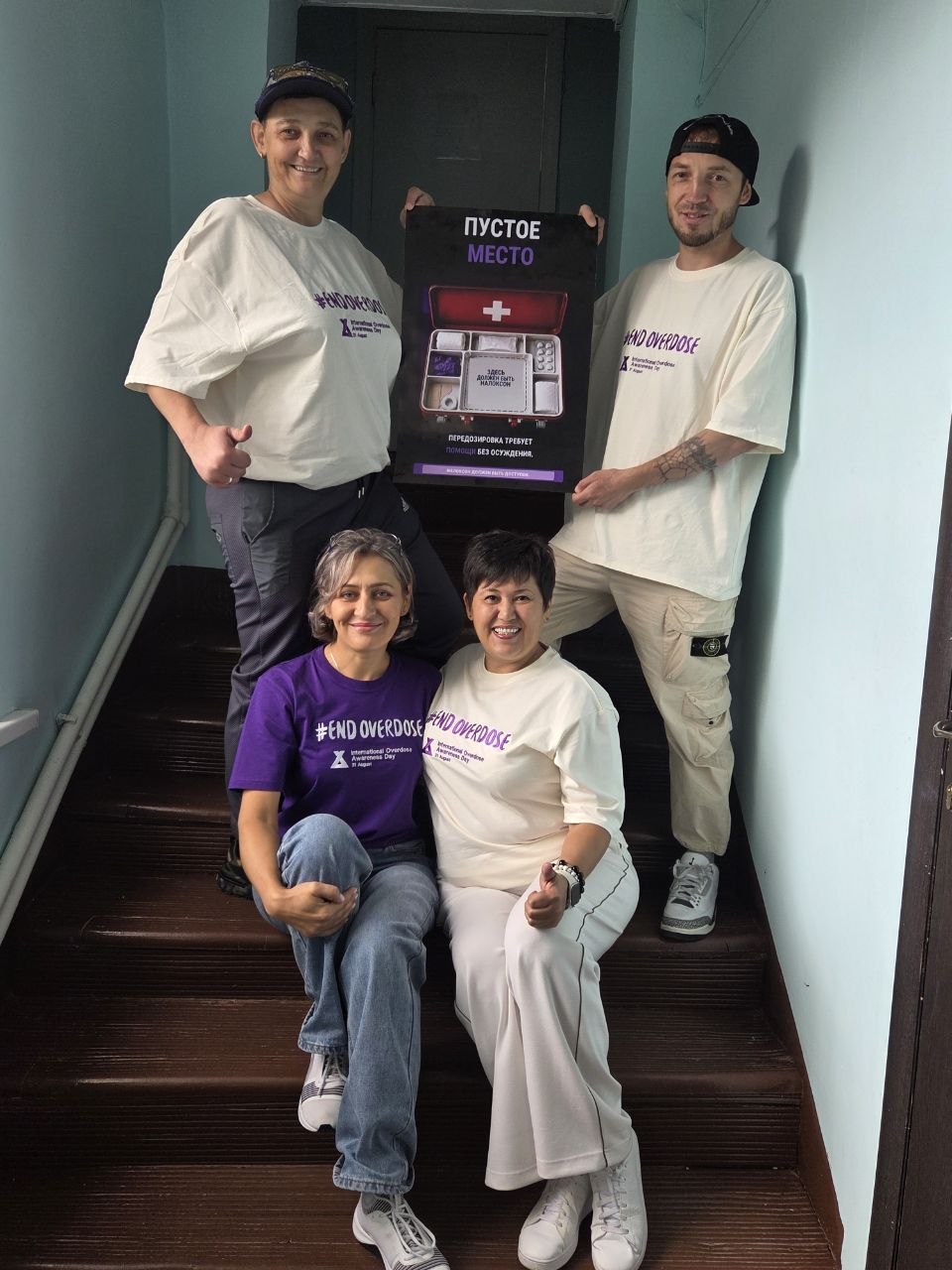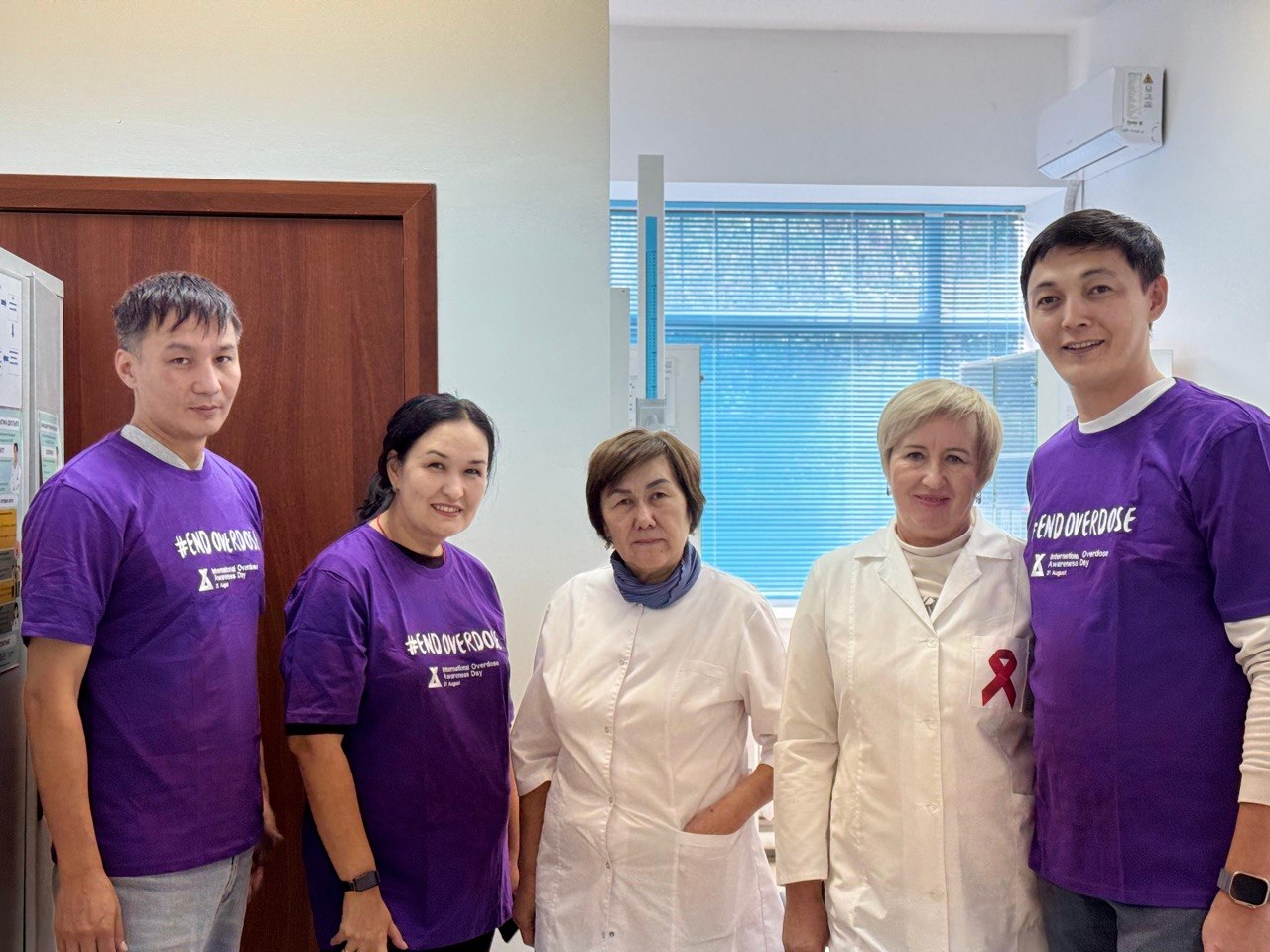
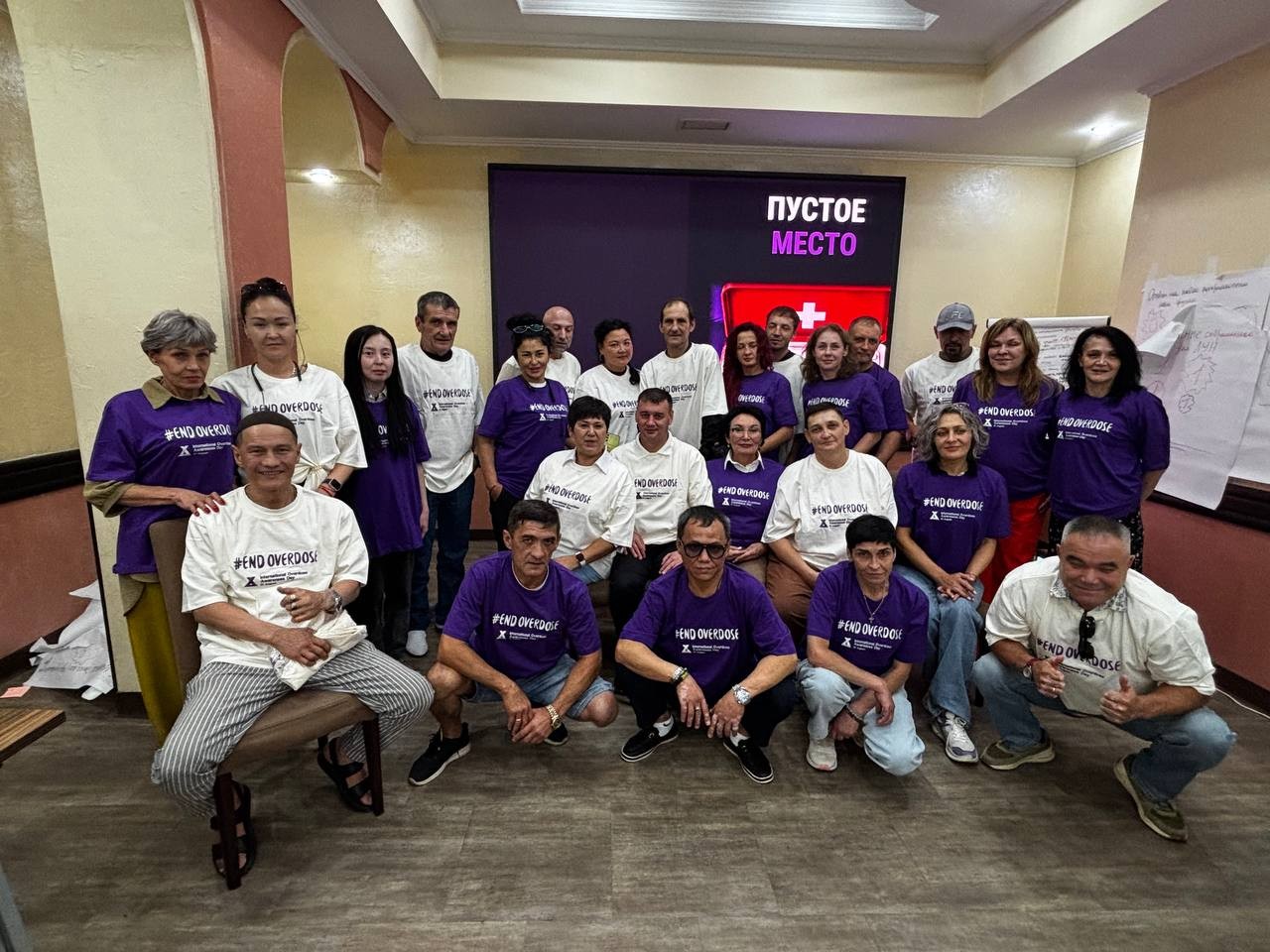
To mark International Overdose Awareness Day on 31 August, the Kazakhstan Forum of People Who Use Drugs, together with the Republican Scientific and Practical Centre for Mental Health as ISSUP Kazakhstan, held a national information and advocacy campaign on overdose prevention under the title “Empty Chair”.
The campaign brought together representatives of the community of people who use drugs, non-governmental organisations, medical and social service providers, and other partners across seven regions of Kazakhstan: Almaty, Almaty Region, Astana, Karaganda, Kostanay, Pavlodar, and Ust-Kamenogorsk.
The “Empty Chair” campaign was designed to draw attention to the lives lost to overdose and to remind society that every preventable death leaves an empty place in families, communities, and support networks. Through public awareness activities, community engagement, and dialogue with professionals and decision-makers, the campaign aimed to increase knowledge about overdose prevention, reduce stigma towards people who use drugs, and strengthen public and professional support for improved access to naloxone in Kazakhstan.
Naloxone is a life-saving medication used to reverse opioid overdose. Expanding access to naloxone is an essential public health measure that can help reduce preventable deaths and improve emergency response to overdose in communities and healthcare settings.
By uniting community voices, civil society, health professionals, and social services, the campaign highlighted the importance of evidence-based overdose prevention, timely emergency assistance, and a more supportive and humane approach to people affected by drug use.
ISSUP Kazakhstan and Kazakhstan Forum of People Who Use Drugs reaffirm their commitment to supporting national efforts to prevent overdose deaths, promote access to life-saving interventions, and advance evidence-based and stigma-free approaches in public health.
Gallery