All Resources for 'Research, Data & Evaluation'
New Synthetic Drugs Increase Overdose Risks in Scotland
Scotland’s illicit drug market is becoming increasingly complex with the emergence of highly potent synthetic substances, including synthetic cannabinoids and opioids such as nitazenes. Some of these substances can be considerably more...
Recent U.S. drug alerts: Turning emerging evidence into workforce preparedness
Synthetic cannabinoids: Reflections from Mauritius
During a recent engagement in Mauritius, I had the opportunity to hear the National Agency for Drug Control (NADC) present the National Drug Control Master Plan 2026–2030 and to share the suite of resources available through ISSUP. This...
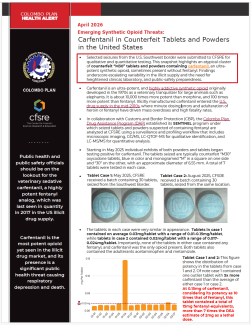
Carfentanil Detected in Counterfeit Tablets and Powders: What the Substance Use Workforce Should Know
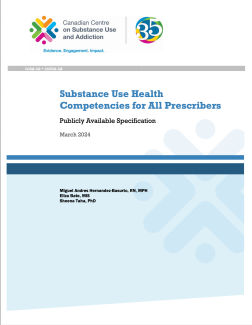
Substance Use and Health Competencies for All Prescribers
Developed by the Canadian Centre on Substance Use and Addiction (CCSA), the Workforce Competencies provide an evidence-informed framework outlining the knowledge, skills, values and behaviours needed by professionals working in substance...
Rehabilitation and Re-entry Programmes for Justice-Involved Individuals and Their Effectiveness in Social Reintegration: A Systematic Review
Prison rehabilitation and community re-entry programmes implemented during incarceration or in the transitional period serve as significant mechanisms for facilitating justice-involved individuals in their post-release adaptation. This...
Connecting Civil Society with the United Nations: Opportunities for Engagement in Drug Policy, Crime Prevention and Criminal Justice
Do Drug Diversion Schemes Work? Insights from the Thames Valley Police Drugs Diversion Pilot
This paper examines the development and early outcomes of the Thames Valley Police Drugs Diversion Pilot in West Berkshire, which offers people found in possession of drugs an opportunity to engage with treatment rather than receive a...
Drug Diversion Schemes Linked to Lower Reoffending Rates, New Research Finds
New research examining more than 62,000 criminal incidents across 13 police forces in England found that police-led drug diversion schemes are associated with significantly lower reoffending rates than traditional prosecution for drug...