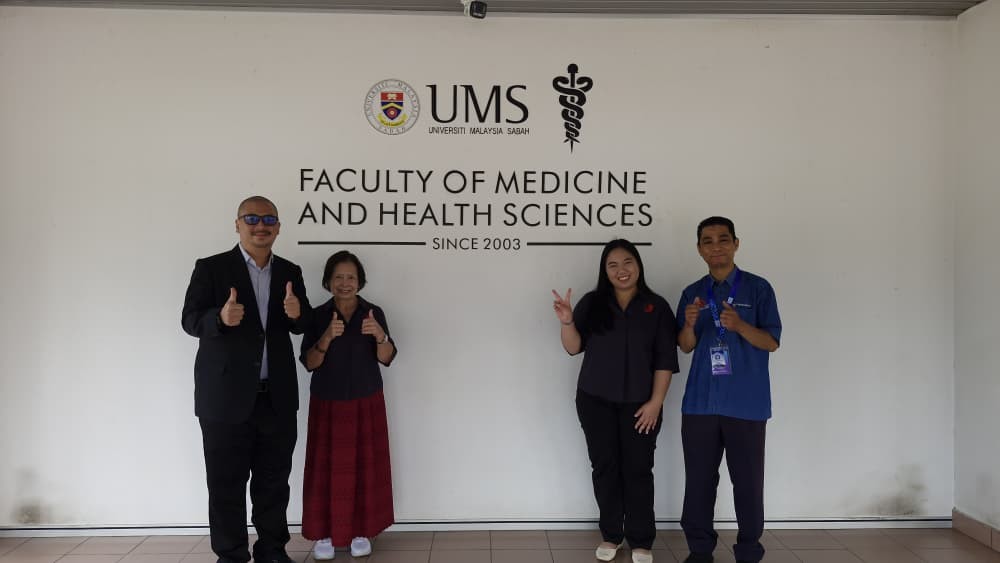
The recent visit by Madam Cindy Biding, Director of ISSUP Malaysia, and her team to Universiti Malaysia Sabah (UMS) opened new opportunities for future collaboration in the field of addiction. Beyond discussions on the proposed ISSUP Borneo Conference 2028, the visit also created an opportunity to explore how UMS can strengthen its role in addiction prevention, treatment, recovery, education, research and professional development.
An important part of the visit was the meeting with Associate Prof Dr Fairrul Bin Masnah @ Kadir, Dean of the Faculty of Medicine and Health Sciences, Universiti Malaysia Sabah (FPSK UMS), together with the faculty leadership. The discussion highlighted the potential role of FPSK in supporting addiction-related education, clinical services, professional training, research and community programmes. Substance use problems are complex and require contributions from many disciplines. UMS has the potential to bring together medicine, family medicine, psychiatry, psychology, social work, education and community-based services to support a more integrated response to addiction.
Future collaboration with ISSUP Malaysia may support several important areas. These include evidence-based prevention, early identification and intervention, addiction treatment, recovery support, research, community engagement and continuing professional development. Education is also an important part of this direction. Training opportunities can be developed for healthcare professionals, counsellors, psychologists, social workers, teachers, students, community leaders and non-governmental organisations. Activities may include workshops, webinars, short courses, conferences and other capacity-building programmes. Research is another important area. Sabah has its own geographical, cultural and social context. Local research can help improve understanding of substance use patterns, risk factors, barriers to treatment and recovery needs. This evidence can support better programmes, clinical services and policy recommendations.
UMS students can also be involved in future research, community activities, professional programmes and conferences. Early exposure to addiction-related education may help develop future professionals who are better prepared to respond to substance use problems and reduce stigma. The proposed ISSUP Borneo Conference 2028 can therefore become more than a single event. It can serve as an important milestone in building a longer-term partnership between ISSUP Malaysia and UMS.
With the leadership and support of Associate Prof Dr Fairrul Bin Masnah @ Kadir and the Faculty of Medicine and Health Sciences, UMS has the opportunity to strengthen its contribution to addiction prevention, treatment, recovery, education and professional development in Sabah and the wider Borneo region. Towards 2028 and beyond, ISSUP Malaysia and UMS can work together to build knowledge, strengthen the addiction workforce and support healthier communities.