Medications for Opioid Use Disorder Save Lives
This publication assesses various evidence-based treatments for Opioid Use Disorder and specifically highlights the effectiveness of medication-based treatment when done correctly.
This publication assesses various evidence-based treatments for Opioid Use Disorder and specifically highlights the effectiveness of medication-based treatment when done correctly.
This article is a review and analysis of past research that finds substantial evidence for the positive results of Medication-assisted treatment (MAT) in treating Opioid Use Disorder.

The UNODC Mentor from Indonesia participated as a trainer at the workshop organized by Colombo Plan on The Universal Treatment Curriculum (UTC) for the Philippine Criminal Justice System. It was inaugurated with the generous support of the...

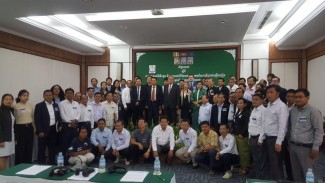
More than 60 policy-makers participated at UNODC Workshop on the Nature, Prevention and Treatment of Drug Use Disorders for Policy Makers in Siem Reap, Cambodia from 12 to 14 June 2019. This high-level workshop was inaugurated by H.E Prof...
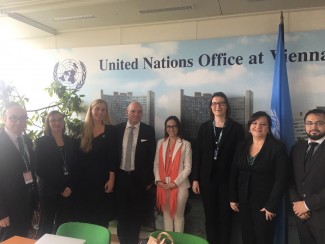
Following an assessment mission in 2017 and two policy maker training on the nature, prevention and treatment of drug use disorders in 2018, UNODC and the Ministry of Health (on behalf of the Ecuadorian government) signed a Memorandum of...
Applications are now open for the 2019 round of UNSW Medicine Neuroscience, Mental Health and Addiction Theme and SPHERE Clinical Academic Group (CAG) Collaborative Research Seed Funding.
The UNSW Medicine Neuroscience, Mental Health and...

Despite the high rate of traumatic events in clients with substance use disorders, trauma exposure often remains undetected in a majority of treatment-seeking clients. Improving health professionals’ knowledge and skills in the inquiry of...
Despite the high rate of traumatic events in clients with substance use disorders, trauma exposure often remains undetected in a majority of treatment-seeking clients. Improving health professionals’ knowledge and...
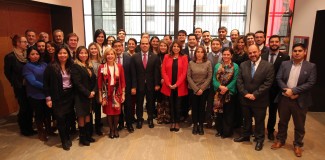
30 policy makers attended the training event in Chile which was organized from 28-30 May 2019 in coordination with the National Service for the Prevention and Rehabilitation of Drug and Alcohol Consumption (SENDA) and with the support of...
Introduction:
The present study analyzes the main barriers and adaptations to brief interventions that focus on addictive behavior treatments carried out in clinical settings by 756 health professionals during their adoption...
Monthly Newsletter from April 1, 2019 – April 30, 2019
During this month, Drug Free Pakistan Foundation (DFPF) had organized CVE training program for the hostel superintendents and faculty of University of Education, Lahore. DFPF field...
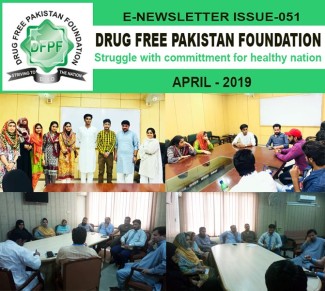
The 28th Commission on Crime Prevention and Criminal Justice (CCPCJ) is being held from 20 - 24 May 2019. On Monday, 20 May 2019 UNODC's Prevention Treatment and Rehabilitation Section organized a side event on We are Family: Families and...
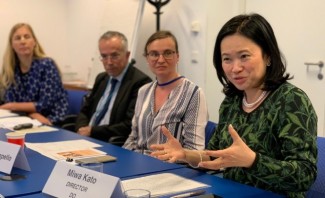
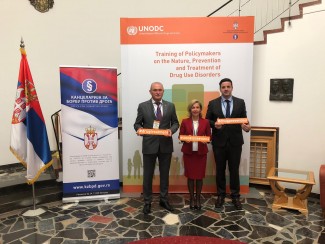
More than twenty-five (25) Serbian high-level decision makers from Ministries of Health, Education, Social Affairs and Counternarcotics are participating in the three-day workshop on creating humane, effective and evidence-based drug use...
Globally, substance use disorders are prevalent and remain an intractable public health problem for health care systems. This study aims to provide a global picture of substance use disorders research.
The...
(UTC 2 & 3 Training Day 4) M A Jinnah Foundation (Regd), Sialkot in Collaboration with Nishan Rehab Pakistan, (A Colombo Plan (DAP) recognized Education Provider), conducted a six-days Training on Universal Treatment Curriculum (UTC) 2...

(UTC 2 & 3 Training Day 3) M A Jinnah Foundation (Regd), Sialkot in Collaboration with Nishan Rehab Pakistan, (A Colombo Plan (DAP) recognized Education Provider), conducted a six-days Training on Universal Treatment Curriculum (UTC) 2...

The programme of work of UNODC in any region of the world is developed in a consultative process together with the concerned Member States. That is why UNODC organised a Regional Consultative Meeting on the Development of the Sub-Programme...
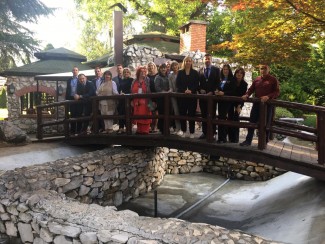
Geographical location and diverse cultural influence make Bangladesh vulnerable for substance use related problems. It is impairing public health, corrupting institutions, retarding socio-economic development, and in some cases, impacting...