
Prevention, treatment, facilitator specialisms
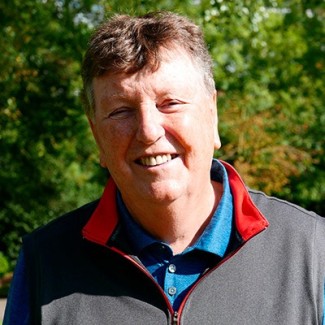
A contribution by Jeff Lee from the ISSUP INEP Plus facilitators training course.
A specialist treatment provider for substance use disorder may have the skill to be a comprehensive care provider for substance use disorder but...
Let us consider whether it is possible for one to be a trainer or facilitator for substance use disorder prevention and for treatment irrespective of background expertise, experience and focus of work. This is a question which has remained a regular matter for discussion over many years and where many people of significant expertise and experience share different views. The reflections in the below discussion are made in the context of ISSUP’s work with INEP Plus.
The first consideration is whether a “treatment specialist” can potentially also be seen as a “prevention specialist” based on their treatment expertise and experience?
Treatment expertise in substance use disorders does not infer expertise in substance use disorder prevention. While the spectrum for substance use disorder treatment possesses inherent elements of prevention, from preventing the start of use, to prevention of return to harmful use, there is some risk that a practitioner with a treatment background might approach prevention work from an ”indicated” perspective, being based on addressing a specific “problem”, specifically a return to use instead of being grounded in the necessary “universal” and occasionally “selective” nature of prevention interventions. This seeks to say that in order for treatment professionals to reliably provide interventions geared towards prevention, it is wise that they might receive specific additional training to capacitate them, appropriately to consider prevention more broadly and inclusively than a treatment-focussed approach might entail. One could certainly make the argument that treatment itself, done correctly should involve a comprehensive case management strategy that is also inclusive and broad, akin to what we are suggesting as necessary for prevention specifically.
Treatment of substance use disorder, generally relies on protocols developed from best evidence, and may be perceived as having a series of actions and steps that should be taken in the management of substance use disorder, and those which must be avoided. Prevention in contrast, from the outset must involve a wide range of stakeholders with a multi-disciplinary strategy delivered across a broad range of settings. The additional breadth of activity in the field of prevention presents the need for prevention practitioners to have knowledge of human development, human behaviour, legislation, communication, social behaviours, group dynamics, physiology, pharmacology, research, epidemiology within their prevention repertoire as this will feed into their engagement with the evidence base as well as in their development of prevention activities. This demands a specific expertise and training.
Target groups and settings for prevention activities vary. Additionally, as alluded above, the approach varies and may be universal, selective or indicated. The field of prevention science, in being responsive to this stratification of settings and approach, provides specific training in evidence-based best practice. The result is that practitioners may achieve varying levels of expertise in prevention work depending on the extent of training exposure received, so some may be generalist practitioners in prevention while others can be viewed as more specialised “preventionists”, who, for example, can contribute to prevention within schools but a different group of specialists for those who focus on, for example, environmental prevention.
In conclusion, as experienced as a treatment specialist might be, additional training is required to assure appropriate expertise in prevention.
The second consideration is whether a treatment specialist can become a trainer and/or facilitator for a prevention programme. This question could easily be asked in the contrary direction as well, as to whether it is possible for a prevention specialist to be a trainer and/or facilitator for a treatment programme.
First, we might consider what constitutes a treatment or prevention specialist. One approach might be to consider this to be someone who has the appropriate knowledge, skills and competencies and who has received relevant training and where possible qualifications with respect to their specialism alongside relevant experience of applying their specialism in the “real world”. Such a background places a practitioner on the path towards becoming a specialist or an expert in their field, while not negating the need for growth through experience and new training, as well as exposure to new research and evolving best practice.
A treatment “expert” therefore might be an individual with the prerequisite background noted above, applies their expertise to their work within a treatment focussed context and undertakes their work using what is understood to be evidenced-based practice principles. The same applies to the prevention expert who may possess an overview of the breadth and complexity of prevention but may only have the opportunity to apply it with certain settings or contexts. In this sense “preventionists” may be specialists in certain aspects of prevention from the experience perspective within a general understanding and perhaps limited experience of working in all areas of the overall dimensions of prevention.
Having considered the above, let’s consider how this relates to the trainer/facilitator role. The reality is that having expertise in a field does not necessarily translate to also having the expertise to be a good facilitator and/or trainer. There have been reports, for example of medical doctors, who while very skilled, lack communication skills, an essential component of a consultation, that facilitates the formation of a therapeutic alliance. What one communicates and how one communicates it are key factors in successful provision of care. What constitutes a good trainer and facilitator is a similarly essential factor in the successful delivery of training for impactful knowledge and skills transfer.
A “specialist” trainer or facilitator must show their repertoire includes the following abilities, skills, and competencies within their training/facilitation expertise. The below list is by no means exhaustive but begins to consider some important characteristics.
A competent or “specialist” trainer/facilitator should reflect the following in their practice:
Communication skills, reflected by an understanding of and ability to:
- Listen attentively and be seen to listen
- Reflect learning and contributions
- Communicate verbally
- Understand and identify non-verbal communications
- Be aware of the needs and concerns of individuals in a group, as well as those of the group
Clarity:
- Objectives of the training and specific interactions during the training
- Desired learning outcomes from both a content perspective and as expressed by the group
Sensitivity to human factors which may impact how training recipients interact with content and with the training group, including:
- Gender
- Culture
- Language
- Social norms (both shared and disparate)
Group dynamics:
- Understanding how groups operate, and roles undertaken by group members
- Ability to manage a group and its learning
- Ability to provide group activities and sharing
- Appreciation of the learning process
Knowledge, indicated by:
- An understanding of the subject matter or access to where to find information relevant to the issue under discussion
- An understanding of which information is relevant and essential and which information is superfluous
- An ability to help people deliberate and find answers to questions rather than always providing answers
Promoting learning rather than teaching or lecturing:
- Seeing training as a process for sharing and learning to empower the learner rather than just provide the knowledge of the person leading the group
Appropriate methodologies:
- An understanding of methodologies required to engage the group in working together to ask questions, share and promote learning and understanding
Humility
- Sense of humour
The argument therefore is that for an individual to be a successful trainer/facilitator for a prevention programme, is that in addition to having the background knowledge and expertise, the individual must also possess the above set of characteristics to ensure successful knowledge and skills transfer in a training.
In the context of INEP Plus training however, there is an important consideration that not all who receive the training to become trainer/facilitators will have the prior expertise as prevention specialists. It is possible for example that an individual might already possess strong trainer/facilitator skills and while having the background and capacity to take on board new information for the purposes of facilitating training may not necessarily have an existing background in prevention science. In such circumstances it stands to reason that such individuals might acquire the knowledge while receiving the training to become INEP facilitators. This then necessitates that measures are in place to ensure that individuals receiving this training successfully acquire the necessary knowledge to make them safe facilitators. In other words, with respect to INEP Plus individuals receiving training to become trainers should be able to access and learn the “content” and principles of prevention to the necessary level that will enable them to apply their training/facilitation specialism or competencies when they run the programme with others. There may be instances where some on the INEP Plus programme need to acquire trainer/faciliatory skills simultaneously during the training. This necessitates that at the end of an INEP Plus training an evaluation is presented that assures the successful uptake of both the knowledge and the crucial training/facilitation skills. The treatment expertise background is not essential for this process. Rather it is the level of knowledge and understanding of what INEP Plus is aiming to achieve, and at what level, using the facilitation skills that are the key to the learning process. The facilitator should not, and is not being asked to run a higher-level course such as a Masters Course that would demand far more expertise. This is a beginner’s course opening the route to a better and more detailed understanding of prevention. The trainer/facilitator must show and be accepted as a competent facilitator who understands the basic content and principles of prevention.
In summary therefore, the prerequisite to becoming a prevention trainer/facilitator, and specifically with reference to INEP Plus, the key competencies are those of the trainer/facilitator. Alongside this is an understanding of the content and principles of prevention as offered through the INEP content. This will allow the trainer/facilitator to communicate the learning and content of INEP using their facilitation skills. Those whose specialism on taking on the role of facilitating INEP Plus is treatment may need to put that aside and may be best advised to consider the INEP prevention content from the perspective of someone new to prevention and as someone who wishes to take on new learning as well as become a competent facilitator exhibiting the necessary skills and abilities.
(Original by Jeff Lee and Rachele Donini, updated version by Goodman Sibeko and ISSUP’s Scientific Support Team)